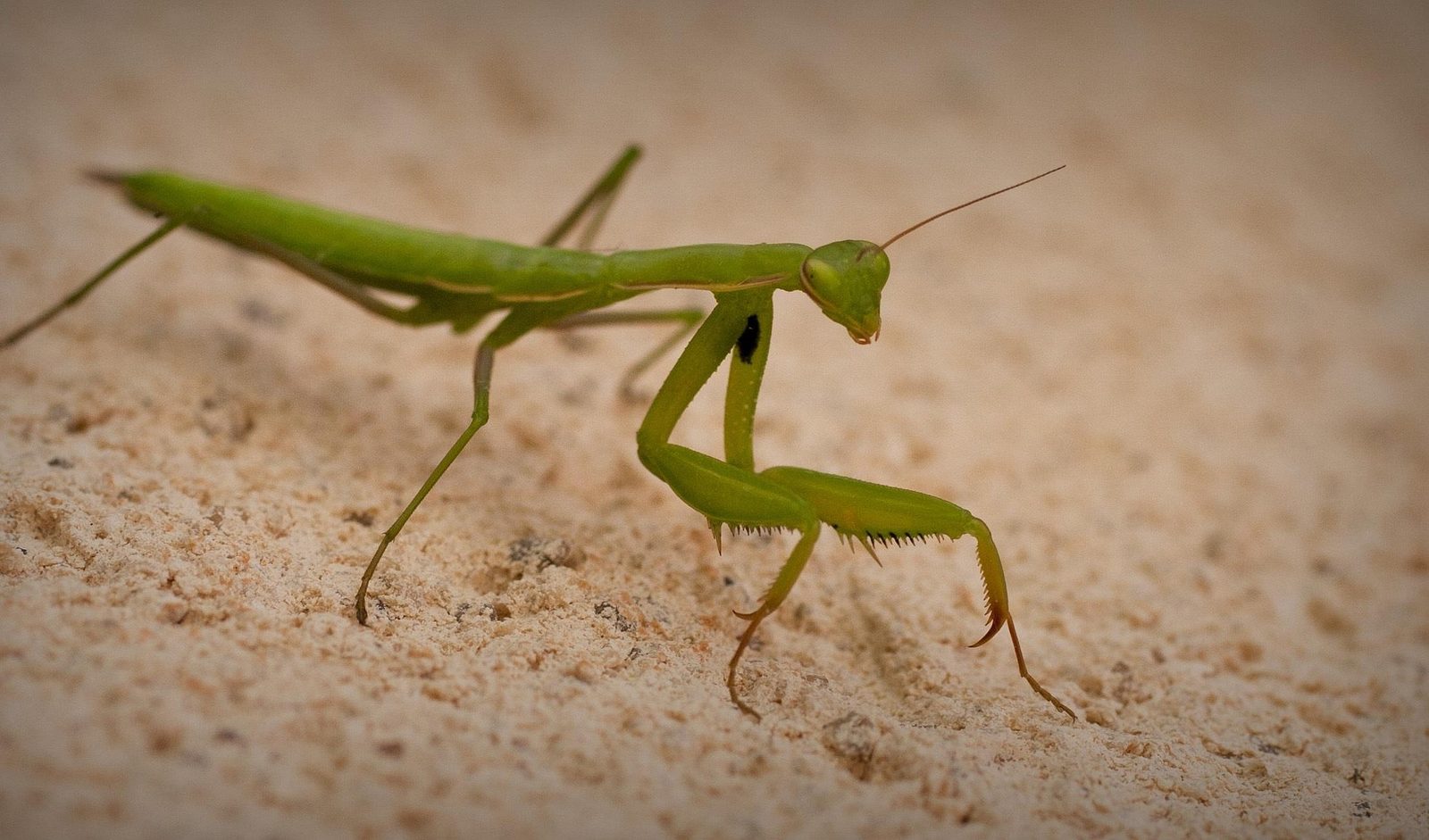
Praying mantises are captivating little hunters — they track you with alien eyes, clean their arms like a cat, and ambush insects in a flash. They're cheap and easy for a short-lived pet, but they only live about a year and are delicate, so they're for watching more than handling.
Is a praying mantis a good pet for kids?
Quick answer: Praying mantises are good pets for the right kid. Praying mantises are captivating little hunters — they track you with alien eyes, clean their arms like a cat, and ambush insects in a flash.
- 👍 Best for: fascinating, alien-like, and interactive to watch, allergy-friendly
- 👀 Keep in mind: live less than a year
- ⏳ Lifespan: under 1 year
- 💲 Ongoing cost: about $5–$15/mo (setup & vet extra)
📋 Praying Mantis at a glance
Should I get a praying mantis?
💚 Why you'll love a praying mantis
- Fascinating, alien-like, and interactive to watch
- Cheap and easy to keep
- Allergy-friendly
- Will calmly perch on your hand
⚠️ Things to know
- Live less than a year
- Delicate and must hunt live insects
- Solitary — keep just one
- Not a long-term pet
The honest answer: Yes, if you can love something for a season — a mantis gives you a few brilliant months, then dies on schedule, which is normal rather than your fault.
👍 Get one if…
- Your kid wants an insect that perches on them
- You want a summer-long classroom or family project
- You're keen to hatch the next one yourself
👎 Think again if…
- You're hoping to keep two in one tank
- You expect a pet that's still around next year
- You'd squeeze one into a short, wide tank
- You won't stock live, moving prey
✅ Am I ready for a praying mantis?
Wanting one and being ready for one are different questions. These are the ones worth answering honestly before you decide — there are no wrong answers, and a "not yet" is a perfectly good result.
A praying mantis eats LIVE moving prey — fruit flies, then crickets and flies as it grows. Can you keep live feeder insects at home?
- Feeder fly farmer? Bring it on
- Maybe with a grown-up's help
- No fly tubs in my house
If that one gave you pause: Mantis food is always alive and moving. Make sure your family is okay with a small tub of feeder insects nearby!
Here's the hard part: mantises live only about ONE YEAR — that's the full, natural life of a mantis. Could you enjoy a short, amazing friendship?
- A spectacular year — I understand and accept
- That's sad, but maybe
- Too short for me
If that one gave you pause: Talk it over with your family — a mantis is a beautiful "one school year" pet. If goodbyes hit hard, pick a longer-lived friend.
How to care for your Praying Mantis
Praying Mantis care in depth
A captivating hunter with a short life
A praying mantis is one of the most engaging insects you can keep — it turns its head to watch you, grooms like a cat, and ambushes prey in a blink. Go in knowing the trade-off: mantises live under a year (just a few months as an adult), so they're a short-term pet. That short life is normal, not a care failure. Enjoy the fascinating few months, and note that many mantis keepers raise the next generation from an egg case (ootheca).
One mantis per enclosure
Mantises are strictly solitary and cannibalistic — put two together and one usually eats the other, so keep one per enclosure, always. The home is simple: a tall enclosure at least three times the mantis's length, with twigs or mesh to climb and, crucially, to hang from while molting (they shed upside down, and too little height causes fatal bad molts). Light daily misting provides humidity and drinking droplets, and gentle warmth keeps them active.
Feeding live prey
Mantises are pure predators that eat live, moving insects — fruit flies for tiny nymphs, working up to crickets, flies, and roaches for adults, sized to the mantis (about half its size or smaller — a big cricket can hurt a mantis, or even eat one). They won't touch dead food. Feed every day or two for youngsters, less for adults, and remove uneaten prey. They can be handled very gently — let one walk onto your hand — but they're delicate, so go slow. A calm, low-cost, mesmerizing pet for a season.
Praying mantises are fascinating mini-hunters that catch food with lightning-fast front legs. They're cheap and easy, but short-lived (often under a year) and kept one to a tank.
✅ Before you bring a praying mantis home
🗓️ Your routine — easy chores to remember
- Mist lightly for drinking water
- Feed live insects every day or two
- Check it's active
- Remove uneaten prey and droppings
- Check humidity and ventilation
- Refresh climbing twigs
- Clean the enclosure
- Watch for molting (leave it alone then)
- Adjust food size as it grows
💰 Monthly cost: Low: a small enclosure and a supply of feeder insects.
🤩 Fun facts about your Praying Mantis
A praying mantis can swivel its head almost all the way around.
❓ Common questions about praying mantises
How much does a praying mantis cost per month?
Plan on roughly $5–$15 per month for food and supplies. Low: a small enclosure and a supply of feeder insects.
Are praying mantises good pets for kids?
They can be — praying mantises rate 3/5 for kid-friendliness, so they suit gentle, slightly older kids. Let one walk gently onto your hand — they're calm but fragile, so go slow.
How long do praying mantises live?
Praying mantises typically live under 1 year. Make sure your family is ready for that commitment before bringing one home.
Are praying mantises allergy-friendly?
No fur or dander, so allergy-friendly. Wash hands after handling.
Should I get a praying mantis?
Yes, if you can love something for a season — a mantis gives you a few brilliant months, then dies on schedule, which is normal rather than your fault. Get one if: Your kid wants an insect that perches on them; You want a summer-long classroom or family project; You're keen to hatch the next one yourself. Think again if: You're hoping to keep two in one tank; You expect a pet that's still around next year; You'd squeeze one into a short, wide tank; You won't stock live, moving prey.
Are praying mantises good pets?
Yes, for a short-term, low-cost, fascinating pet. Mantises are calm, engaging hunters that are cheap and easy to house, but they live under a year and must eat live insects, so they suit keepers who enjoy observing rather than long-term companionship.
How long do pet praying mantises live?
Less than a year — often only a few months as an adult. That short lifespan is normal for the insect. Many keepers hatch and raise the next generation from an egg case (ootheca).
Can you keep two praying mantises together?
No. Mantises are solitary and cannibalistic, so two together usually ends with one eating the other. Always keep one mantis per enclosure.
What do pet mantises eat?
Live, moving insects sized to the mantis — fruit flies for tiny nymphs, up to crickets, flies, and roaches for adults. They won't eat dead food, so a supply of feeder insects is essential.
🎬 Praying Mantis care videos
Watch beginner-friendly care videos for your praying mantis.
▶ Watch Praying Mantis care videos on YouTube📚 Where this comes from
We check our care advice against vets, animal charities, and government health guidance. Here is what this page is built on.
Vets, charities & official guidance
- Insects as pets — Smithsonian Institution
- Praying mantid — University of Maryland Extension
- Mantids, or praying mantises — UC Statewide IPM Program
Keeper & species-community guides
- Praying mantis care — Keeping Insects
- Orchid mantis — Keeping Insects
- Praying mantid caresheet — Amateur Entomologists' Society
Checked August 2026. These are other people’s websites, and none of it replaces your own vet — if a pet seems unwell, call one.