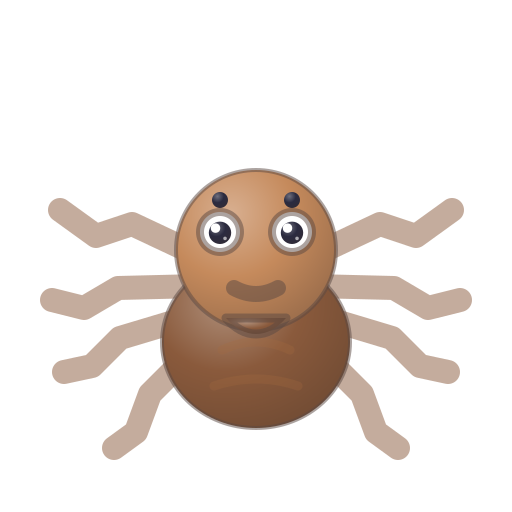
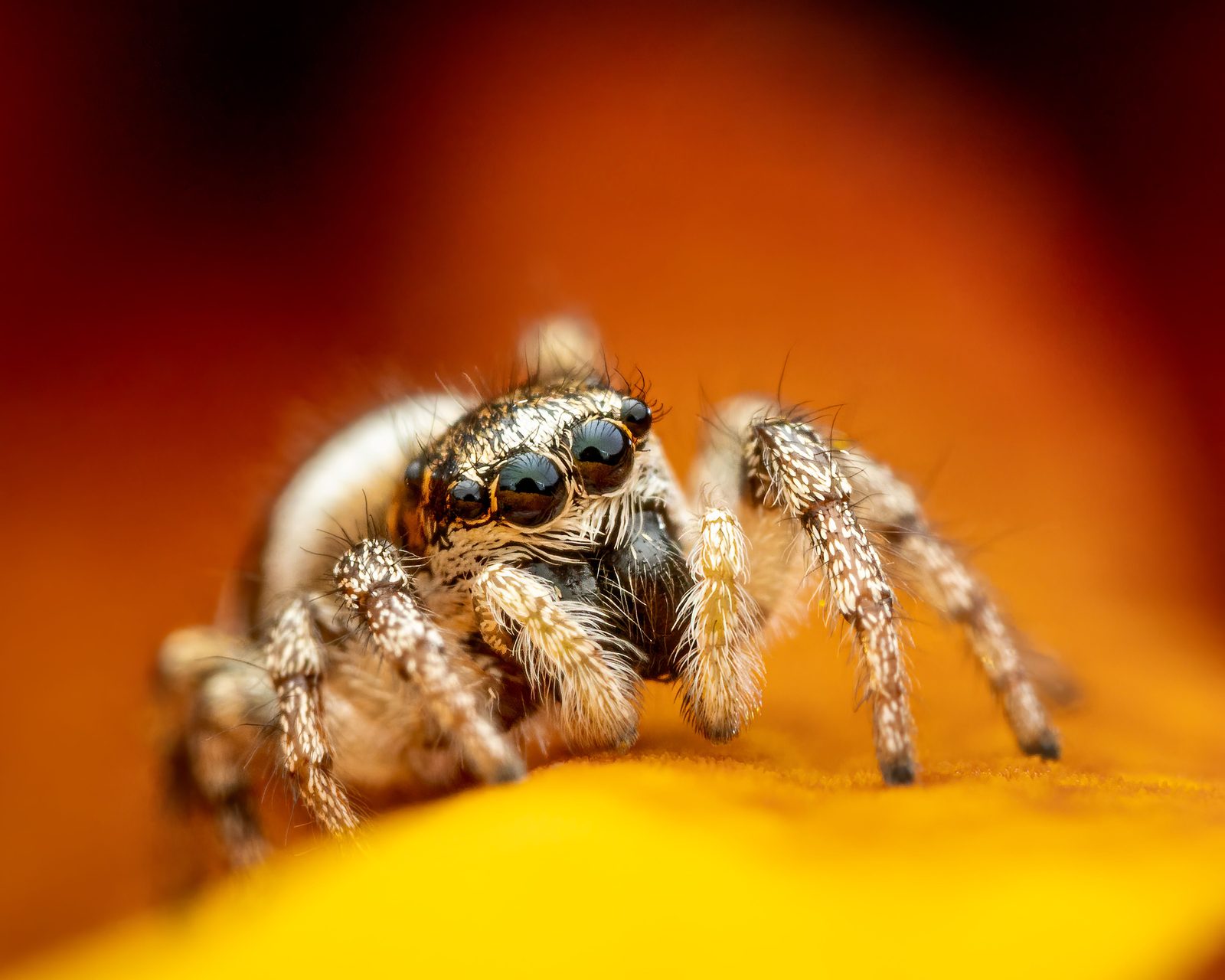
Jumping spiders are the spider for people who don't like spiders: tiny, fuzzy, big-eyed hunters that tilt their heads, track your finger, and pounce like kittens. The regal jumping spider — the pet-store favorite — is docile enough for calm, gentle handling, lives in a jar-sized home, and costs almost nothing to keep. The honest catch: their whole wonderful life lasts only a year or two.
Is a jumping spider a good pet for kids?
Quick answer: Jumping spiders are good pets for the right kid. Jumping spiders are the spider for people who don't like spiders: tiny, fuzzy, big-eyed hunters that tilt their heads, track your finger, and pounce like kittens.
- 👍 Best for: the best eyesight in the bug world — they watch you back, a tiny, cheap, jar-sized setup
- 👀 Keep in mind: a short life — one to two years
- ⏳ Lifespan: 1–2 years (females live longest)
- 💲 Ongoing cost: about $5–$15/mo (setup & vet extra)
📋 Jumping Spider at a glance
Should I get a jumping spider?
💚 Why you'll love a jumping spider
- The best eyesight in the bug world — they watch you back
- Gentle enough for calm, careful handling
- A tiny, cheap, jar-sized setup
- Awake and hunting in the daytime
⚠️ Things to know
- A short life — one to two years
- Needs live prey like flies or small crickets
- So small that escapes are easy without care
- Each spider must live alone
The honest answer: Yes — the most personable invertebrate you can keep, as long as everyone knows going in that a wonderful year or two is the whole story.
👍 Get one if…
- Your curious eight-year-old is ready for a first spider
- You want a pet that watches back
- You have room for one jar-sized enclosure
- You're willing to talk about a short life upfront
👎 Think again if…
- Your child takes a pet's death hard
- You want a pet that lasts several years
- You're set on a jar with a lid on top — the nest is up there
- You won't keep live flies on hand
✅ Am I ready for a jumping spider?
Wanting one and being ready for one are different questions. These are the ones worth answering honestly before you decide — there are no wrong answers, and a "not yet" is a perfectly good result.
The honest one first: a jumping spider lives about 1–2 years. Is your family ready for a short, sweet pet?
- Yes — we'll make it a great year
- That's harder than I expected
- I hadn't thought about that
If that one gave you pause: Talk about the short lifespan as a family before you start. Many keepers keep the enclosure ready and welcome a new jumper afterward.
Jumpers eat LIVE prey — flies, small crickets — every day or two. Can you keep feeder bugs at home?
- A cup of flies in my room? Fine
- If they're sealed up tight, okay
- No extra bugs in this house
If that one gave you pause: Flightless fruit flies are the easy starter feeder — they can't fly away. Keep the culture cup sealed and cool.
How to care for your Jumping Spider
Jumping Spider care in depth
The spider that acts like a kitten
Jumping spiders have a superpower: eyesight. Those two huge forward eyes give them some of the sharpest vision of any invertebrate, and they use it — a jumper will turn its head to watch you, track a moving finger, and stalk prey like a cat before making a spring many times its own body length (with a silk safety line trailing behind, every single time). The regal jumping spider, the common pet species, is bold, curious, and docile; many settle into calm, careful handling, walking from hand to hand. It's the closest thing to a puppy the arachnid world offers.
A jar-sized home — with one famous gotcha
A jumper needs surprisingly little: a small, tall enclosure with things to climb, cross-ventilation, and light misting most days for drinking droplets, letting it dry out in between. But here's the gotcha every new keeper learns: jumping spiders build their silk sleep-sack at the very top of their home. If the enclosure opens from the top, you wreck their bedroom every time you open it — so keepers choose front- or side-opening enclosures. Room temperature is fine, direct sun is not (small enclosures overheat fast), and that's honestly the whole setup.
A short, wonderful life — going in with open eyes
Feeding is simple — a small live insect every day or two (flies are perfect; prey should be about the size of the spider's body or smaller), with uneaten prey removed. Your spider will periodically hide away and molt; never disturb it then, even if it hides for a week or two. The one big honest thing to know before you start: jumping spiders live about a year for males and one to two years for females, with the odd female going a little longer. That short, bright life is the trade for such an easy, delightful pet — many families talk about it up front, enjoy every month, and keep the enclosure for the next spider.
A jumping spider is a tiny, big-eyed, watch-and-gently-hold pet that lives in a jar-sized home. They're easy and cheap — and honestly short-lived, at one to two years.
✅ Before you bring a jumping spider home
🗓️ Your routine — easy chores to remember
- A quick look — hunting, exploring, or cozy in its silk sack
- Feed a small insect every day or two
- Light misting for water droplets
- Remove uneaten prey
- Tidy the enclosure gently
- Check ventilation
- Leave it completely alone if it's molting
💰 Monthly cost: Tiny: a small enclosure, some decor, and pennies of feeder insects each week.
🤩 Fun facts about your Jumping Spider
A jumping spider can leap many times its own body length — with a silk safety line every time.
❓ Common questions about jumping spiders
How much does a jumping spider cost per month?
Plan on roughly $5–$15 per month for food and supplies. Tiny: a small enclosure, some decor, and pennies of feeder insects each week.
Are jumping spiders good pets for kids?
They can be — jumping spiders rate 3/5 for kid-friendliness, so they suit gentle, slightly older kids. Let it walk onto an open hand at its own pace, low over a table. No grabbing — jumpers are gentle but tiny and fragile.
How long do jumping spiders live?
Jumping spiders typically live 1–2 years (females live longest). Make sure your family is ready for that commitment before bringing one home.
Are jumping spiders allergy-friendly?
No fur, feathers, or dander (their fuzz isn't like a tarantula's itchy hairs) — a good allergy-friendly pet.
Should I get a jumping spider?
Yes — the most personable invertebrate you can keep, as long as everyone knows going in that a wonderful year or two is the whole story. Get one if: Your curious eight-year-old is ready for a first spider; You want a pet that watches back; You have room for one jar-sized enclosure; You're willing to talk about a short life upfront. Think again if: Your child takes a pet's death hard; You want a pet that lasts several years; You're set on a jar with a lid on top — the nest is up there; You won't keep live flies on hand.
Are jumping spiders good pets?
Wonderful ones — tiny, cheap, safe, and more interactive than any other pet bug. They watch you, learn your movements, and can be gently handled. The honest downsides: they eat live insects, must live alone, and only live one to two years.
Do jumping spiders bite?
Almost never — they'd much rather jump away. A truly cornered or squeezed jumper can give a tiny nip, usually compared to a mosquito bite or less, and they're not dangerous to people. Calm, no-grab handling makes bites vanishingly rare.
Can you hold a jumping spider?
Yes, gently — regal jumpers are famously docile. Let the spider walk onto your open hand by itself, keep your hand low over a table, and never grab or trap it. Some spiders love exploring hands; others prefer to stay home. Follow the spider's lead.
How long do jumping spiders live?
Males usually live under a year; females can reach two years or a bit more. They're a short-lived pet, so it helps to know that going in — every month with a jumper is part of the deal.
🎬 Jumping Spider care videos
Watch beginner-friendly care videos for your jumping spider.
▶ Watch Jumping Spider care videos on YouTube📚 Where this comes from
We check our care advice against vets, animal charities, and government health guidance. Here is what this page is built on.
Vets, charities & official guidance
- Regal jumping spider — University of Florida IFAS Extension
- Bold jumper — Missouri Department of Conservation
Keeper & species-community guides
- Regal jumping spider care sheet — The Tarantula Collective
- Regal jumping spider caresheet — The Bio Dude
Checked August 2026. These are other people’s websites, and none of it replaces your own vet — if a pet seems unwell, call one.