🪶 The Best Cat Toys, for Playing Together and Alone
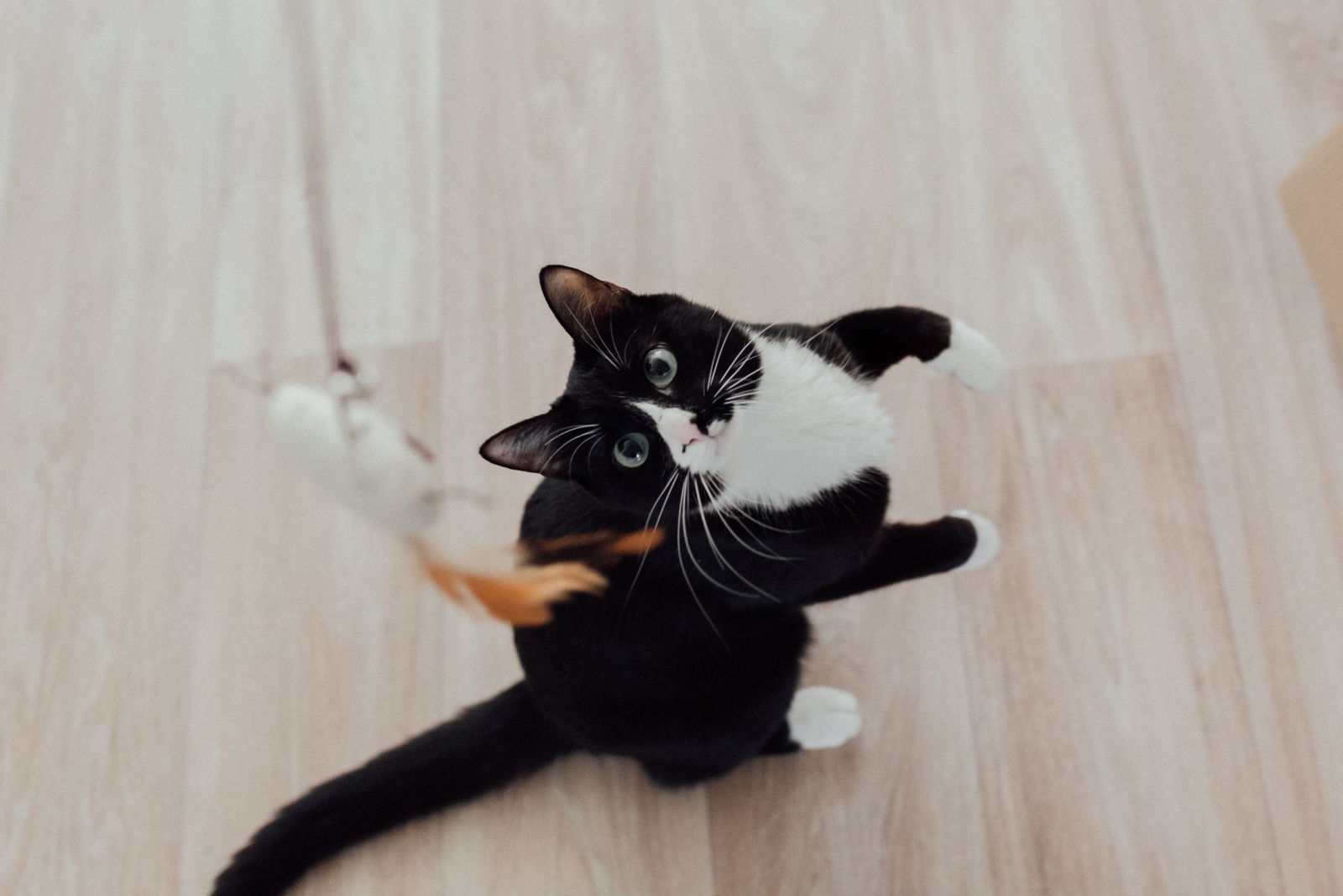
Cat toys do two completely different jobs, and a happy cat needs both. Some only work when you are holding the other end — a wand with feathers on the end is nothing without a hand making it behave like prey. Others are built for the hours when nobody is home. Buy only the first kind and your cat is bored all day; buy only the second and you skip the part of play that actually satisfies a cat. This guide splits toys the way cats experience them — together and alone — with picks at every budget.
The hunt is the point
International Cat Care sets out the stages a cat works through when it hunts, and play is supposed to cover all of them — the search, the stalk, the chase, the pounce, and then the catch and what a cat does with the thing once it has it. That last part matters far more than people expect. A toy your cat can chase but never get hold of leaves them wound up rather than satisfied, which is the honest problem with a laser pointer: it delivers everything right up to the moment of contact, and then there is nothing to put a paw on.
The good news is that satisfying a cat takes very little time. A cat is built for one explosive dash, not for stamina. International Cat Care sets the bar at about a minute of flat-out activity, and Cats Protection says games of one to two minutes are fine as long as there are several a day — three or four for an older cat, ten or more for a young one. Dawn and dusk are when most cats are naturally switched on, which is also why an unplayed-with cat tends to find you at five in the morning.
Toys you play with together
These need a human on the other end, and they are the ones that do the most good — because you control the prey. You can make it hide behind a chair leg, dart away, freeze, and finally get caught at exactly the right moment.
- $ — the Cat Dancer. A rolled cardboard tube on a springy steel wire. It looks like almost nothing, and it gets a response out of more cats than toys costing several times as much, because the wire makes the cardboard twitch in small unpredictable ways that a cat finds very hard to ignore. If you buy exactly one cat toy, buy this one.
- $$ — Da Bird. The wand most cat people end up with. The feathers are mounted to spin as you sweep the rod, so it genuinely moves and sounds like something flying. Replacement feathers are sold separately, which is just as well — a cat who likes it will destroy the first one, and that is the toy doing its job.
- $ — a wand you make yourself. A shoelace tied to a stick, a strip of fleece on a cane, a scrunched paper ball on a string. Cats Protection specifically recommends fishing-rod-style toys, because a rod keeps a moving target at arm's length and lets your cat finish the hunt by catching it. A homemade one does the same job, on the same condition as every string toy here: supervised, then back in the drawer.
- $$$ — nothing. There is no expensive wand worth buying. If you have this much to spend, put it into the cat tree in the next section instead — it will get used every day for years.
One rule for every wand: put it away between sessions. A string toy left on the floor is a tangling and swallowing hazard, and Cats Protection is clear that a cat should never be left alone with anything they could chew apart and swallow, or get wound around a leg.
Toys for when nobody is home
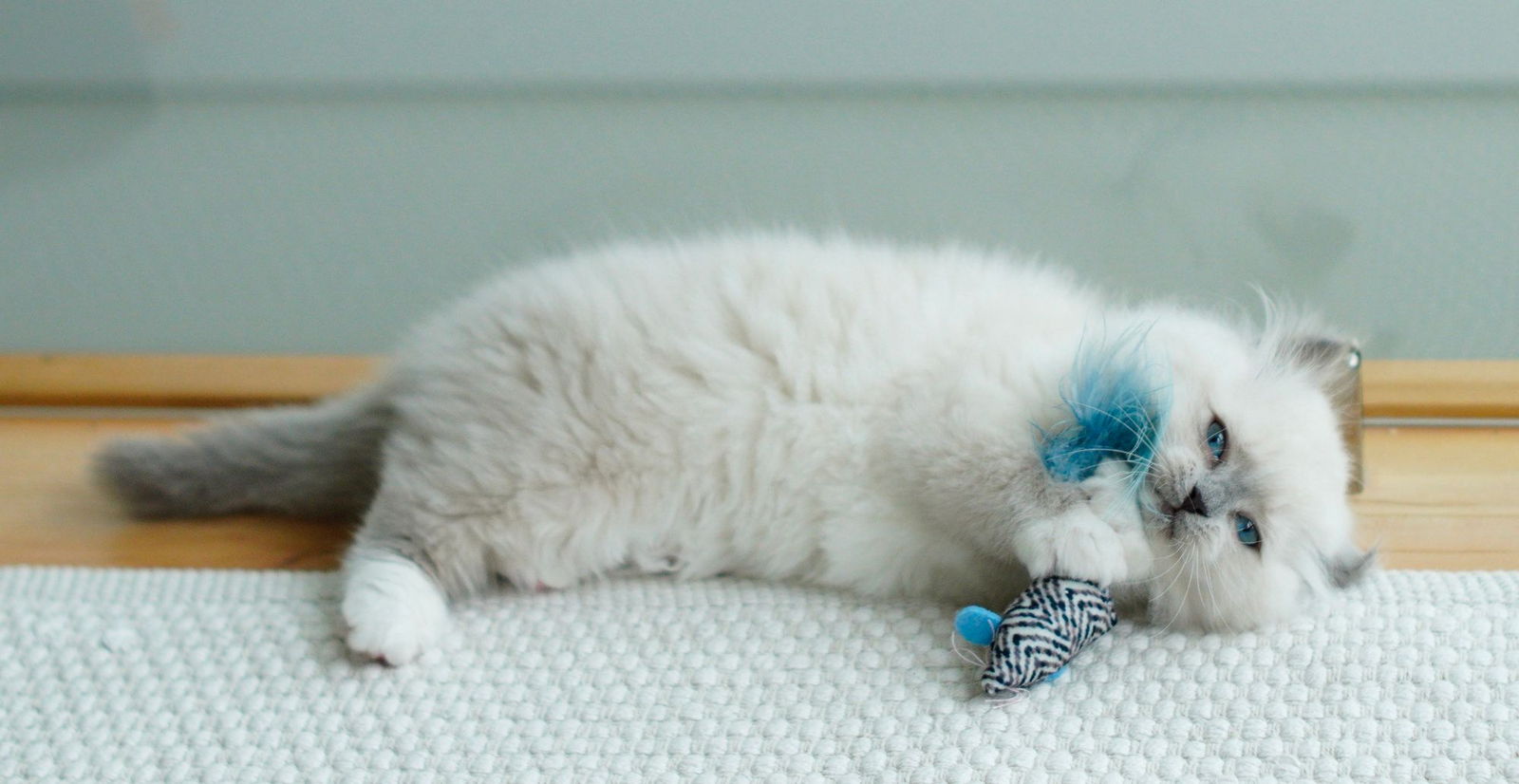
Solo toys will never replace playing together, but they cover the long stretches in between — and the good ones move, make noise, or hand out food, so there is something in it for the cat.
- $ — a catnip kicker. The Yeowww! banana is the classic: the right size and weight for a cat to grab with the front paws and bunny-kick with the back ones, which is the "manipulate" stage of the hunt. Worth knowing that the catnip response is inherited and plenty of cats simply do not have it — if yours is unmoved, try silver vine or a plain fleece kicker.
- $ — springs, crinkle balls and a cardboard box. Light, skittery things that travel a long way off a single paw swipe are the ones that get played with. A cardboard box with two holes cut in it beats most bought toys and costs nothing.
- $$ — a collapsible tunnel. Cover to ambush from, a crinkly noise, and somewhere to hide. It folds flat when you want the living room back, which is why one tends to stay in use long after the novelty toys have been thrown out.
- $$ — a cat puzzle feeder. Outward Hound's cat brand, Catstages, makes the Nina Ottosson Buggin' Out puzzle: your cat bats at the pegs and swivels the leaves to get at sixteen treat compartments, and nothing on it comes off to be lost or swallowed. Food a cat has to earn is one of the few solo toys that keeps working, because the reward is real.
- $ — a rolling treat ball. Load a portion of the daily kibble and let your cat bat pieces out of it. The cheapest way to turn one meal a day into an activity.
- $$$ — a cat tree. Not a toy, and the best money you will ever spend on an indoor cat. Height is a resource cats genuinely need, and the AAFP and ISFM environmental needs guidelines treat that kind of environmental provision on the same footing as play, not below it.
- $ — a window perch. The cheapest big win on this page. A shelf at a window is free entertainment all day — birds, weather, the street — and it costs a fraction of a cat tree.
And one to make rather than buy. The RSPCA has a free cat hunt game: glue a stack of cardboard tubes into a pyramid, hide a treat down one of them, and let your cat work out which. It costs nothing and it goes in the recycling when it is chewed up — which is also why it is a game to play while you are in the room, not one to leave down.
What to buy at each budget
Our $, $$ and $$$ badges are a rough guide to how much of a purchase something is, not a live price.
| Budget | Play together | Play alone |
|---|---|---|
| $ — pocket money | Cat Dancer, a homemade wand, a thrown ball | Catnip kicker, springs, crinkle balls, treat ball, window perch, a cardboard box |
| $$ — worth saving for | Da Bird wand plus spare feathers | Collapsible tunnel, puzzle feeder |
| $$$ — a real purchase | Nothing to buy here — put it toward the cat tree instead | Cat tree, wall shelves |
If your budget only stretches to two things, make them a wand and a cat tree. Everything else on this page is a bonus.
Rotate, do not accumulate
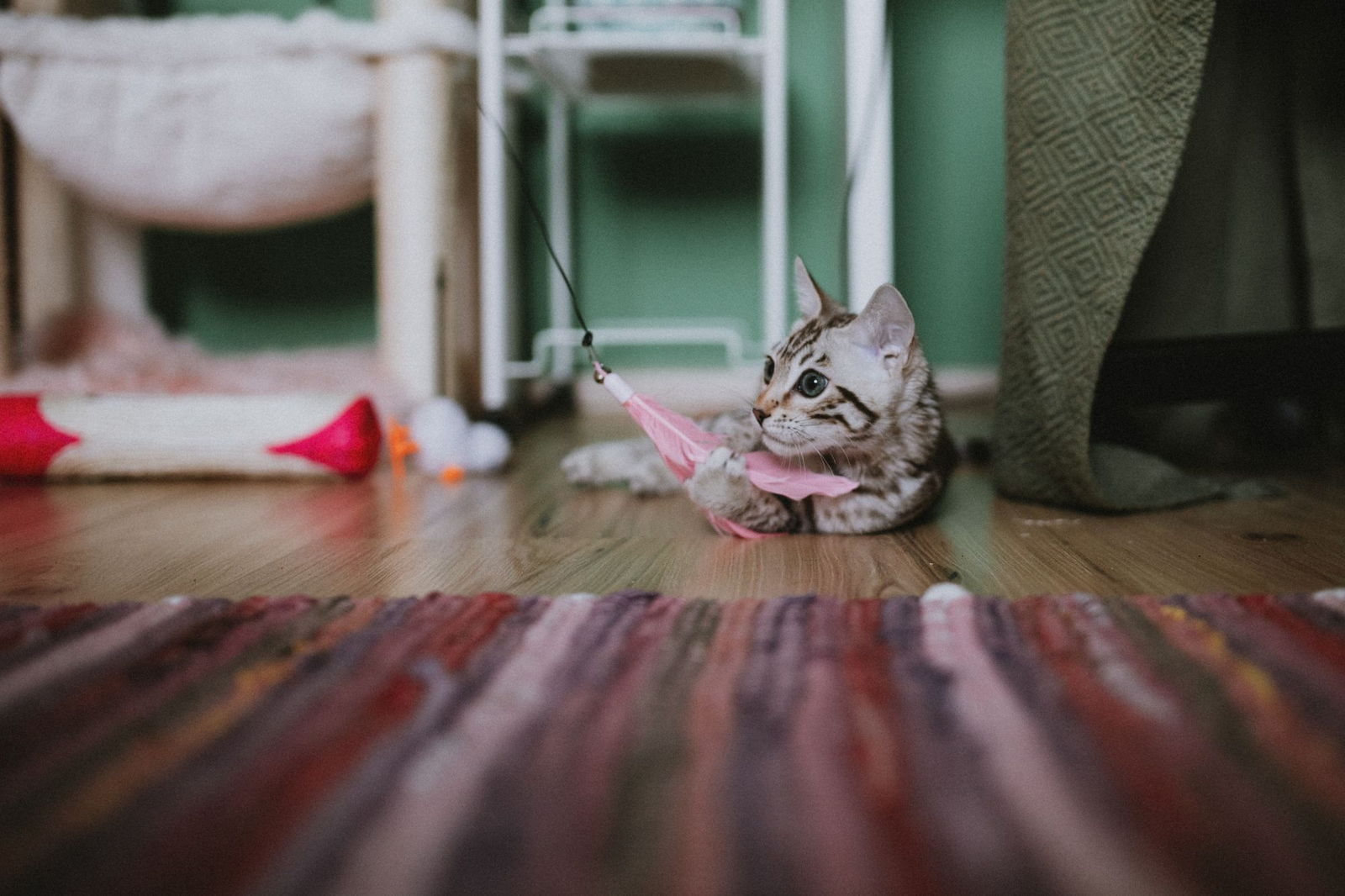
The single cheapest upgrade to any cat's toy collection is a closet shelf. Novelty is most of what makes a small toy interesting, and when everything is out on the floor at once, nothing is new. Cats Protection recommends putting toys away and bringing them back out again so they keep their novelty, and International Cat Care suggests handing out small fur mice one at a time for the same reason.
In practice: keep three or four toys out, put the rest away, and swap every few days. A toy that has been out of sight for a couple of weeks comes back as a new toy. Storing the spares in a sealed tub with a pinch of catnip makes them come back better than new.
Cat toy safety
- Nothing stringy gets left out. International Cat Care warns specifically about ribbon, string and balls of wool with kittens: thread that is swallowed can gather the gut up behind it, and the result — intussusception — is a surgical emergency rather than a wait-and-see. Tinsel and hair ties belong on the same list for the same reason. Anything on a string is a supervised toy that goes back in a drawer.
- Never leave a cat alone with a wand toy. The string is the whole problem. Wands go in a drawer between sessions.
- Check small toys for loose parts. Glued-on eyes, bells and feathers all come off eventually. Throw a toy out once it starts shedding pieces rather than waiting to see what happens.
- Never use hands or feet as the toy. Cats Protection points out that a kitten taught to attack fingers carries on into adulthood, when the same game does real damage.
- Count puzzle-feeder food as part of the daily ration. Ohio State's behavioral medicine team recommends food puzzles partly as a way to raise activity in overweight pets, which only works if the food comes out of the meal rather than on top of it.
- Feed two cats apart from each other. Ohio State's Indoor Pet Initiative notes that cats in multi-cat homes are often more comfortable eating from separate bowls placed out of sight of one another, and the AAFP and ISFM guidelines build a whole pillar around giving cats multiple, separated resources. A food puzzle is a resource like any other.
The cats that ask for the most play
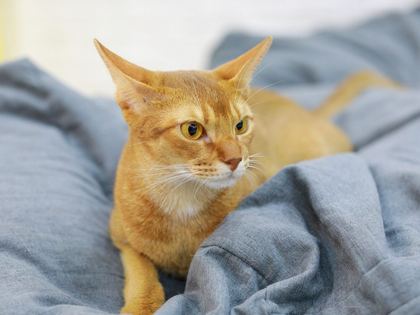
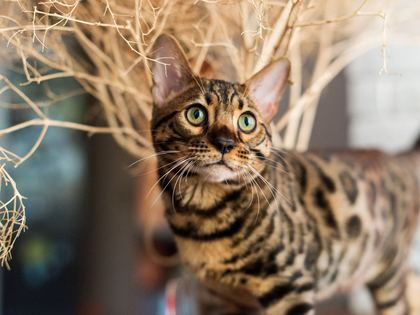
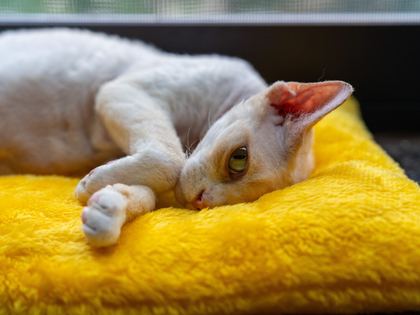
Every cat needs daily play, but some will demand it whether or not it is on your list. The eastern and oriental breeds are the obvious ones — a Siamese or an Oriental Shorthair will tell you loudly when the entertainment stops, and an Abyssinian treats the whole house as climbing frame and hunting ground. A Bengal is the extreme end of this: brilliant, relentless, and genuinely difficult to live with if it is under-stimulated, so puzzle feeders and vertical space are not optional there. A Devon Rex is just as active but will want to do it on your shoulder.
At the other end, a Ragdoll, a British Shorthair or a Persian is much less likely to come and pester you for a game — which is exactly why you should be the one to start it. A calm cat is not an uninterested one, and Ragdolls in particular will chase and fetch happily once someone else has made the first move. Low-energy breeds are the ones most likely to end up overweight and under-exercised indoors, and short, regular wand sessions are the easy fix. Most cats, of course, are a Domestic Shorthair or Domestic Longhair from a shelter, where energy varies cat by cat and the only way to find out is to try.
Getting set up for the first time? Our new cat setup guide covers the litter box, the scratching post and the base-camp room, and the dog equivalent of this page is our guide to the best dog puzzle toys.
A quick cat toy checklist
- Buy one good wand before you buy anything else
- Always let the hunt end in a catch, especially after a laser
- Several short sessions a day beat one long one
- Play at dawn and dusk, and last thing before bed
- Keep three or four toys out and rotate the rest from storage
- Solo toys must have no string and no parts that can come off
- Wands, ribbon, hair ties and wool go away in a drawer
- Feed puzzle-feeder food out of the daily ration, not on top
- Height and a window beat almost any toy you can buy
Not sure a cat is the right fit for your home? Take our free pet quiz, or compare the breeds on our cat breed pages.
🛒 Recommended supplies
Hand-picked gear for this guide. Affiliate links — we may earn a commission. The $/$$/$$$ badges are a rough budget guide, not live prices.
⚠️ Common cat-toy mistakes
Already have one and something feels off? Start here. These catch almost everybody — none of them mean you have done badly, and every one of them is fixable.
My cat ignores every toy I buy
The mistake: Buying toys the cat is meant to play with on their own and waiting.
Most solo toys are dead. They do not move, they do not hide, and they do not run away, so there is nothing for a cat to hunt. International Cat Care describes play as working through the whole hunting sequence — search, stalk, chase, pounce, catch, and then getting to work on the thing you caught — and a mouse lying still on a rug does not start any of it.
Try this: Buy one wand toy and drive it yourself. Make it hide behind a chair leg, dart away, freeze, then let your cat catch it. Two minutes of that will usually get a response from a cat who has ignored a whole basket of toys, and once your cat is switched on the solo toys start getting used too.
My cat gets over-excited and bites or scratches me during play
The mistake: Using hands and feet as the toy.
Cats Protection warns that a kitten taught to attack fingers keeps doing it as an adult, when the same game hurts a great deal more. The other common cause is ending a fast chase with nothing to catch — a laser session that just stops leaves a cat wound up with all that predatory energy and nowhere to put it.
Try this: Put distance between your hands and the toy: a wand, a rod, a thrown ball. If you use a laser, always finish by landing the dot on a real toy your cat can grab, or swap to a wand for the last thirty seconds so the hunt ends in a catch.
My cat played with the new toy once and never touched it again
The mistake: Having every toy out on the floor at once.
Novelty is most of what makes a small toy interesting. When everything is permanently available nothing is new, and International Cat Care suggests handing small fur mice out one at a time so each one stays fresh. A basket of twenty toys is usually less use than three toys and a rota.
Try this: Keep most of the toys put away and have three or four out at a time. Swap them every few days — Cats Protection recommends exactly this. A toy that has been out of sight for a couple of weeks comes back as a new toy, and toys stored with a pinch of catnip come back better than new.
My cat wakes me up at five in the morning wanting to play
The mistake: Playing only in the evening, or not at all.
Cats are naturally most active around dawn and dusk. If nothing happens during their dawn window, a cat with energy to burn will make something happen — usually to you. Feeding straight after the wake-up call teaches them the routine works.
Try this: Add a short, energetic wand session as late in the evening as you can manage, and finish it with a meal or a food puzzle. A hunt followed by a meal followed by a wash is the sequence that ends in a long sleep. Leave a puzzle feeder loaded overnight so there is something to do at dawn that is not you.

❓ Common questions
How long should I play with my cat each day?
Less time than most people expect, more often. Both International Cat Care and Cats Protection put a satisfying game at somewhere around one to two minutes of all-out activity — the length of a real hunt, not a walk. What changes with age is how many: a few a day suits an older cat, and a young one will take as many as you can face. Dawn and dusk are when most cats are naturally switched on.
Are laser pointers bad for cats?
They are not dangerous if you keep the beam away from eyes, but they are frustrating on their own. A laser gives your cat the whole hunt right up to the moment of contact and then nothing to put a paw on, and getting hold of the prey is the part that satisfies them. If you use one, always end the game by landing the dot on a real toy your cat can grab, or switch to a wand for the last stretch.
Which cat toys are safe to leave out when I am not home?
Solid toys with no string and no small parts that can come off — catnip kickers, springs, balls, a tunnel, a puzzle feeder, a cardboard box. Wand toys, ribbon, hair ties and anything stringy go away in a drawer. Cats Protection is clear that a cat should never be left alone with anything they could chew apart and swallow, or get wound around a leg.
My cat ignores catnip. Is something wrong?
No. The response to catnip is inherited and a sizeable minority of cats do not have it, and kittens generally do not respond until they are several months old. Try silver vine or a plain fleece kicker instead — plenty of cats who are indifferent to catnip love both.
How many cat toys does a cat actually need?
Fewer than you would think, kept in rotation. One good wand, two or three small solo toys out at a time, something to hide in, and somewhere high to sit will cover almost every cat. The rest stays put away and comes out in swaps.
Do indoor cats need more toys than cats that go outside?
They need more opportunities, which is not quite the same as more toys. An outdoor cat gets its hunting, climbing and territory patrol for free. An indoor cat needs you to supply the equivalent — daily wand play, food it has to work for, height to climb, and a window worth watching.
What is the best cat toy for a kitten?
A wand or fishing-rod toy, and never your hands. Cats Protection is clear that a kitten taught to play with fingers keeps doing it as a much larger adult. Skip loose string, ribbon and wool with kittens too — swallowed thread can bunch the intestines, which is a surgical emergency.
📚 Where this comes from
We check our care advice against vets, animal charities, and government health guidance. Here is what this page is built on.
Vets, charities & official guidance
- Playing with your cat — International Cat Care
- Cats and play — Cats Protection
- AAFP/ISFM feline environmental needs guidelines — FelineVMA
- Indoor cat care — Ohio State University Indoor Pet Initiative
- Toys and puzzles for your pet — Ohio State University Veterinary Medical Center
- DIY pet games — RSPCA
Checked August 2026. These are other people’s websites, and none of it replaces your own vet — if a pet seems unwell, call one.