Siamese: Is It the Right Cat for Your Family?
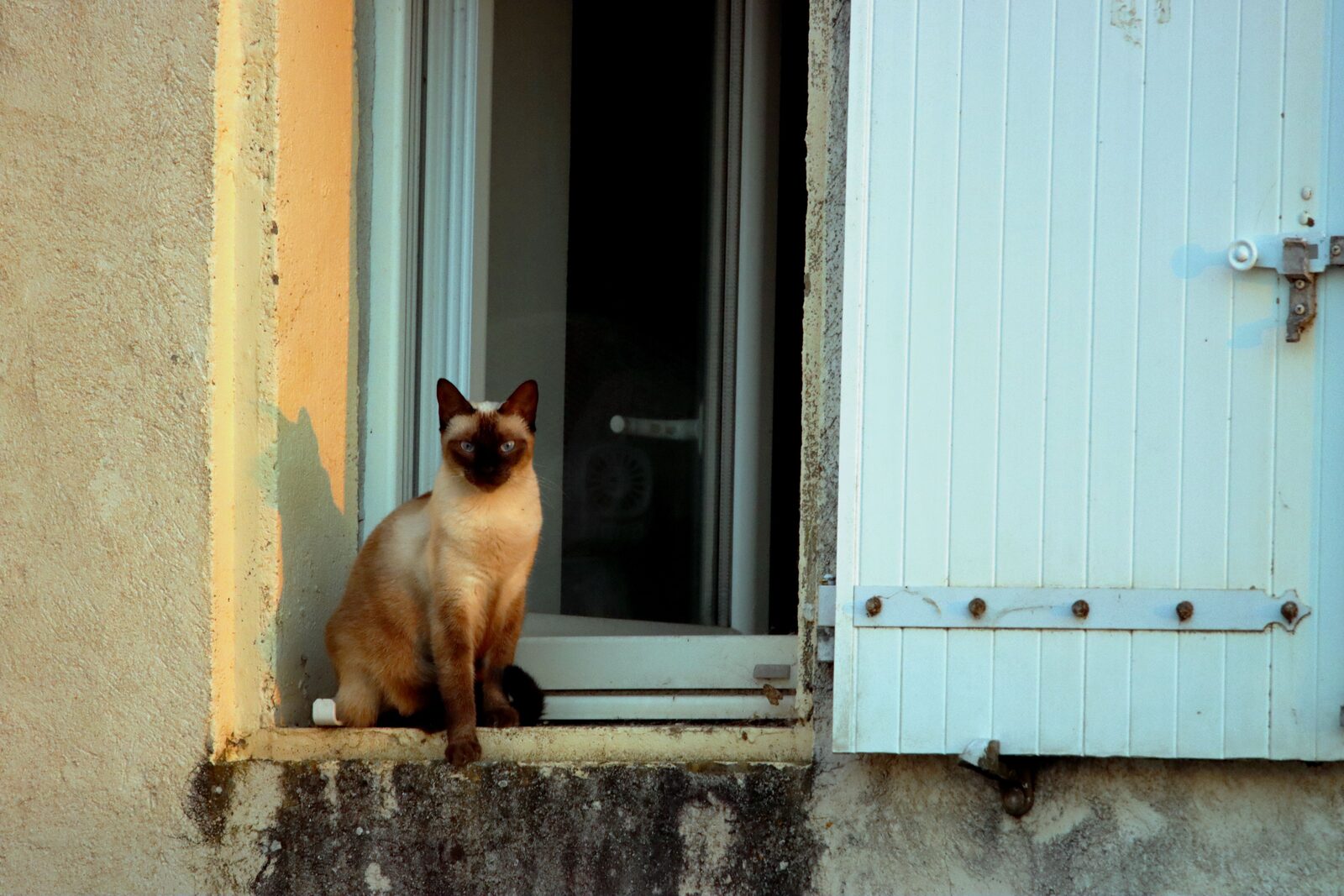
Siamese can do well with children who already know how to be calm and gentle. Expect an average-sized cat that is high-energy, barely sheds and needs very little grooming. It is a committed lap animal, so expect company whether or not you asked for it.
The numbers
| Typical lifespan | 12–15 years |
|---|---|
| Average adult weight | 5.2 kg (about 11.5 lb) |
How long is that, really? Cats live longer than most people expect — about 11.7 years on average across every breed, and a well-looked-after Siamese can reach 15 years. A kitten you bring home this year will still be curled up somewhere warm long after you have finished school.
Sources: VCA Animal Hospitals · PDSA breed guide · Teng et al., Journal of Feline Medicine and Surgery (2024).
What Siamese are actually like
Day to day. High-energy — this is a cat that needs height to climb, things to hunt and someone to play with. A bored one of these gets into everything, and that is not naughtiness, it is boredom. Ten minutes with a wand toy in the evening covers most of what it is asking for.
The coat, honestly. This breed barely sheds and needs very little grooming. Next to nothing to do either way — the odd brush is a treat rather than a chore, and this is about as easy as a coat gets.
Company and noise. This one is a committed lap animal and very talkative. Expect it on your lap, your keyboard and your chest at six in the morning — a cat bred for closeness does not negotiate. And it will talk to you constantly, expecting an answer. Give it a warm, high place to land in whatever room you are in; where you put things matters more with this one than what you buy.
Get one if…
- Someone will actually play with it every day, and it can climb high
- You would rather brush and pay a groomer than vacuum every day
- You want a cat whose coat looks after itself
- You want an animal that actually sits on you, not just near you
- You would enjoy a pet that genuinely talks back
Think again if…
- Nobody has ten minutes twice a day to play with it properly
- Anyone in the house needs quiet to sleep, work or study
- You want a pet that entertains itself while you get on with things
What it costs to keep one
Rough running cost: $$ (middle of the pack) — because there is no single expensive thing about it — just the normal food, vet and insurance costs every cat brings.
Those are relative bands, not live prices. For real numbers across every pet we cover, see the pet cost study and the cost calculator.
Looking for one? Start at a shelter
Rescues do have Siamese and Siamese crosses, usually adults whose size, coat and temperament you can see rather than guess at.
Often compared with

❓ Common questions about Siamese
Is a Siamese good with kids?
They can be, with children who are already calm and gentle around animals. Siamese suit families with school-age kids better than families with toddlers.
Do Siamese shed a lot?
Very little. The trade is grooming: this coat needs regular brushing and professional trims, or it mats.
Can a Siamese be left alone during the day?
Less happily than most cats. This breed was bred for close human company and tends to be vocal and unsettled when the house is empty all day — two cats together suits it far better than one alone.
Is a Siamese a good first cat?
It can be, for a household with older children and realistic expectations about how much this breed wants to be handled.
Should I get a Siamese?
Siamese suit a home that moves a lot, is happy to be climbed on, and is not fussy about coat care. Meet the cat itself before deciding. Get one if: Someone will actually play with it every day, and it can climb high; You would rather brush and pay a groomer than vacuum every day; You want a cat whose coat looks after itself; You want an animal that actually sits on you, not just near you; You would enjoy a pet that genuinely talks back. Think again if: Nobody has ten minutes twice a day to play with it properly; Anyone in the house needs quiet to sleep, work or study; You want a pet that entertains itself while you get on with things.
📚 Where this comes from
We check our care advice against vets, animal charities, and government health guidance. Here is what this page is built on.
Vets, charities & official guidance
- Cat breed profiles — VCA Animal Hospitals
- Cat breed guides — PDSA (People's Dispensary for Sick Animals)
- Life tables of annual life expectancy and risk factors for mortality in cats in the UK (Teng et al., Journal of Feline Medicine and Surgery, 2024)
- Lovely lilies and curious cats — FDA
- Indoor and house cats — Blue Cross
- Cats — CDC Healthy Pets, Healthy People
- Feeding growing kittens — VCA Animal Hospitals
- Declawing position statement — Feline Veterinary Medical Association
Keeper & species-community guides
Checked August 2026. These are other people’s websites, and none of it replaces your own vet — if a pet seems unwell, call one.