🧩 The Best Dog Puzzle Toys, Level by Level
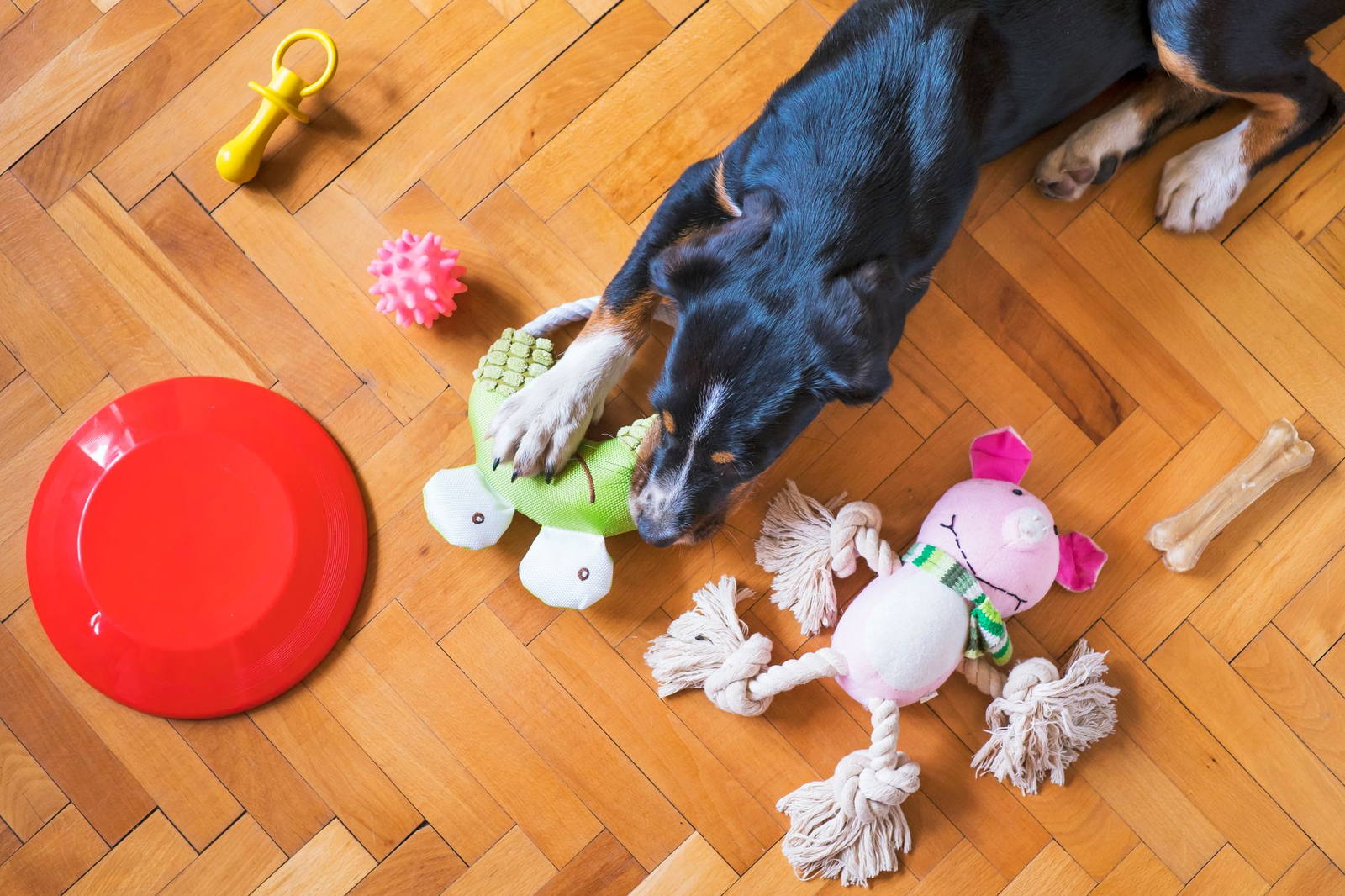
A puzzle toy turns your dog's dinner into a job. Instead of a bowl that empties in ninety seconds, your dog has to nudge, slide, flip and sniff for every piece — and that thinking is surprisingly tiring. If your dog paces in the afternoon, chews things they should not, or inhales their food and then stares at you, a puzzle toy is one of the cheapest and fastest things to try. This guide covers how the difficulty levels work, which one to start with, which Outward Hound puzzles we actually reach for, and where puzzles stop being safe.
Why a puzzle toy tires a dog out
Dogs are built to work for food. Nothing in a dog's evolutionary history arrived in a bowl — it had to be found, dug out, and worked loose. A puzzle toy puts a little of that back. Your dog uses their nose, their paws and their problem-solving all at once, and ten minutes of that leaves a lot of dogs happily flopped out on the floor.
The American Animal Hospital Association makes the case for indoor enrichment on welfare grounds as much as convenience: a dog with something to think about is sharper, calmer, and much less likely to go looking for trouble. That last part is why most people buy their first puzzle. The chewing, digging, barking and pacing you see in a bored dog is usually just energy with nowhere else to go, and giving it somewhere to go is easier than telling a dog to stop.
One honest caveat, and it is ours rather than any manufacturer's: a puzzle toy is not a replacement for a walk. It is the other half of the job. You will see puzzle toys marketed as being worth a given number of minutes of walking; treat that as marketing. A dog's head needs exercising as much as its legs do, and neither one covers for the other. A dog that has run and sniffed outdoors and then had to think for their dinner is a settled dog — a dog that only ever gets one of the two usually is not.
Start one level below what you think
Outward Hound grades its dog puzzles from Level 1 (Easy) to Level 4 (Expert), and the levels are genuinely different — Level 1 is a sniff-and-lift, Level 4 is a multi-step sequence that plenty of dogs never crack. It is very tempting to buy the hardest one for a dog you think is clever. Do not.
Ohio State University's Veterinary Medical Center makes the same point in its puzzle-toy handout: there is a narrow band between a task that is hard enough to frustrate and one that is easy enough to bore, and the band is different for every animal. The trap is that frustration is much stickier than boredom. A dog who fails at their first puzzle often decides puzzles are not fun, and it is a lot harder to sell them on the idea a second time. Start a level below where you think your dog sits, let them win, then move up.
| Level | What it asks your dog to do | Good for | Examples in the range |
|---|---|---|---|
| 1 — Easy | Sniff, then lift a lid | A first puzzle, puppies, nervous dogs, senior dogs | Dog Smart, Treat Tumble |
| 2 — Intermediate | Learn a new play pattern: slide, flip or spin | Most dogs, most of the time | Dog Brick, Dog Tornado, Dog Hide N' Slide |
| 3 — Advanced | Two-step solutions | Dogs who beat a Level 2 in a couple of minutes | Challenge Slider, Dog Casino, Dog Twister |
| 4 — Expert | Several steps, in the right order | Dogs who genuinely enjoy problem-solving | MultiPuzzle |
Buying for a puppy? Outward Hound makes puppy editions for exactly this: Puppy Smart sits at Level 1, and Puppy Tornado and Puppy Hide N' Slide at Level 2.
Our favorite Outward Hound puzzles, level by level
We keep coming back to the Outward Hound puzzles designed by Nina Ottosson for one boring, practical reason: the difficulty is printed on the box. That means you can buy the next step up when your dog outgrows one, instead of guessing. Most puzzle toys just say "interactive" and leave you to find out.
Level 1 — Dog Smart. Nine wells hidden under nine bone-shaped lids. Your dog lifts a bone, finds a treat, repeats. It is almost too easy on purpose, which is exactly right for a first puzzle or a cautious dog. It is also the one to hand a child to load, because there is nothing to get wrong.
Level 2 — Dog Brick. If you only ever buy one puzzle, buy this one. Flip-up lids, sliding blocks and removable bone covers in a single board, so it grows with your dog — leave the bones off at first, then put them back on once the sliding is easy. It is the board we recommend most often, because it is the only one in the range whose difficulty you can change without buying a second toy.
Level 2 — Dog Tornado. Three stacked spinning layers with twelve compartments. Dogs who paw at things rather than nose at them tend to prefer this shape, and it takes up less floor space than a flat board.
Level 2 — Dog Hide N' Slide. Worth knowing about for one specific reason: it is a wood-and-plastic composite with no removable pieces at all. If your dog is the sort who carries bone-shaped lids off to their bed, this is the safer Level 2.
Level 3 — Challenge Slider. Two dozen treat slots hidden under a raft of sliding tiles. This is where puzzles start taking real time, and where a fast dog stops finishing before you have sat down.
Level 4 — MultiPuzzle. The hardest thing they make: sliding outer tiles plus a center section that has to be lined up with a spinner. Be honest with yourself before you buy it. It is a brilliant toy for a dog that truly enjoys thinking, and an expensive way to give a chewer something to destroy. If your dog has not comfortably beaten a Level 3, skip it for now.
Enrichment that is not a puzzle board
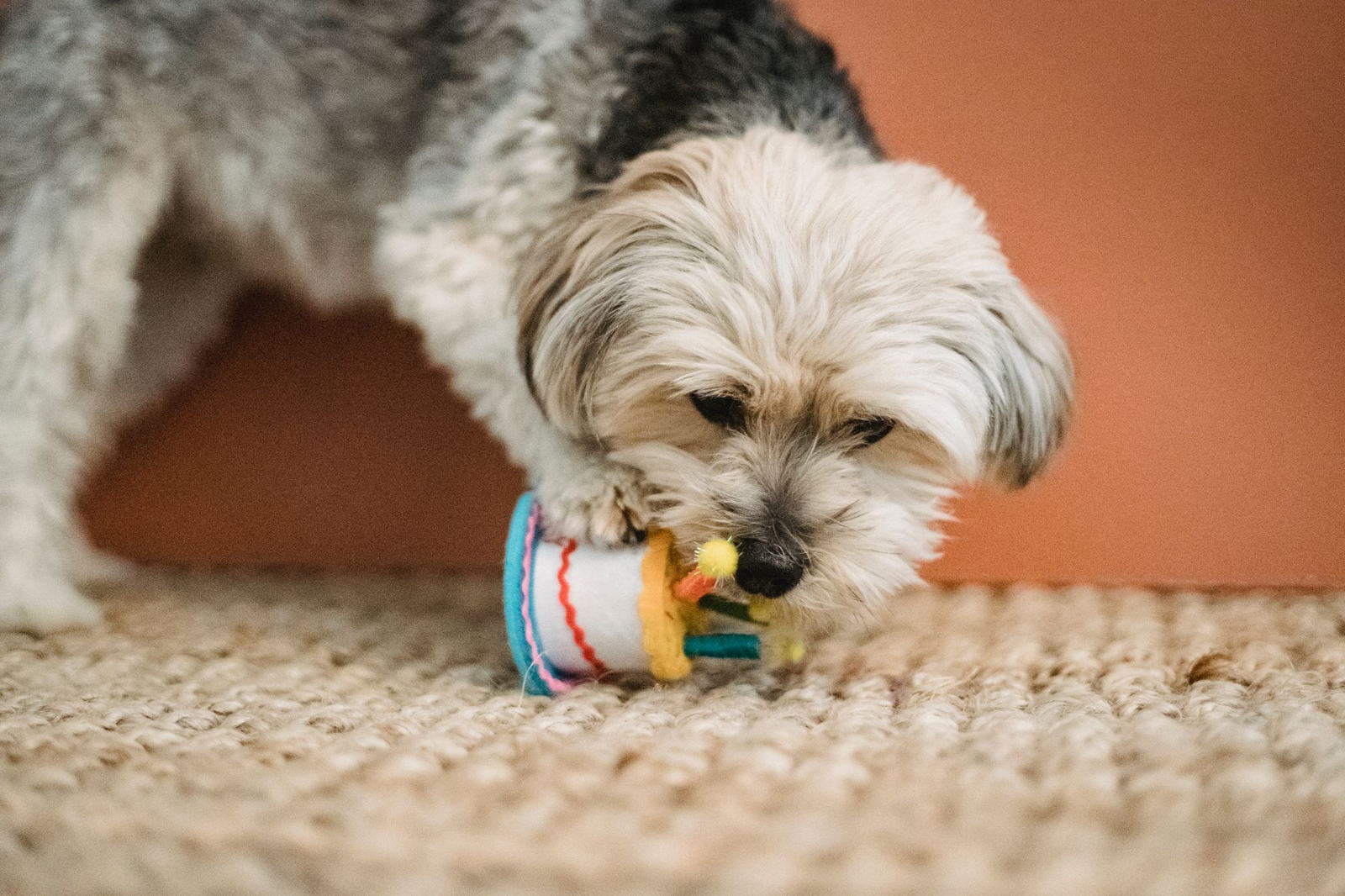
A hard plastic board is only one shape of the same idea, and for some dogs it is the wrong shape. These are the things we would put in a first enrichment kit alongside it. The first two are Outward Hound as well; the rest are simply the best version of the thing.
- Hide-A-Squirrel — a plush tree trunk with squeaky squirrels pushed into the holes. The gentlest possible introduction to the idea, soft on hard floors, and easy enough that a young child can reload it over and over. The squirrels do come out, though, so the same rule applies as for the bone-shaped lids on the puzzle boards: with a dog who chews rather than plays, this is a supervised toy.
- Fun Feeder Slo Bowl — not a toy at all, and possibly the most useful thing on this page. Ridges molded into the bowl stretch a bolted meal out into several minutes of picking and nudging, at every single meal, with no extra calories and nothing to take apart.
- A snuffle mat — a fabric mat full of fleece strips that you scatter dry food into. Pure nose work, usually machine washable, and nothing hard to break. You can also make one for nothing: AAHA points out that a towel with treats scattered on it and folded up a few times does the same job.
- A stuffable rubber toy — the KONG Classic is the original and still the benchmark. It is the only thing on this page built to be chewed rather than solved, which is what eventually makes it a toy you can leave down — once you have watched how your own dog treats it, and once you have checked the size, since AAHA's rule for any stuffed food toy is that it must be too big to end up at the back of the throat. Stuff it and freeze it and a session lasts a lot longer.
- A lick mat — spread something soft across the grooves and let your dog work at it. Ohio State suggests pureed vegetables or baby food as a low-calorie filling, which is handy if your dog is already watching their weight.
- Something out of the recycling. The RSPCA has two free dog games worth copying: a treat cracker, where snacks are sealed inside a cardboard tube with the ends scrunched shut and your dog has to tear it open, and a scent game, where a box is packed with cardboard tubes and a single treat is hidden at the bottom of one of them. One is shredding, one is sniffing, both cost nothing, and both go in the recycling afterwards — which is its own kind of safe.
How to introduce a new puzzle
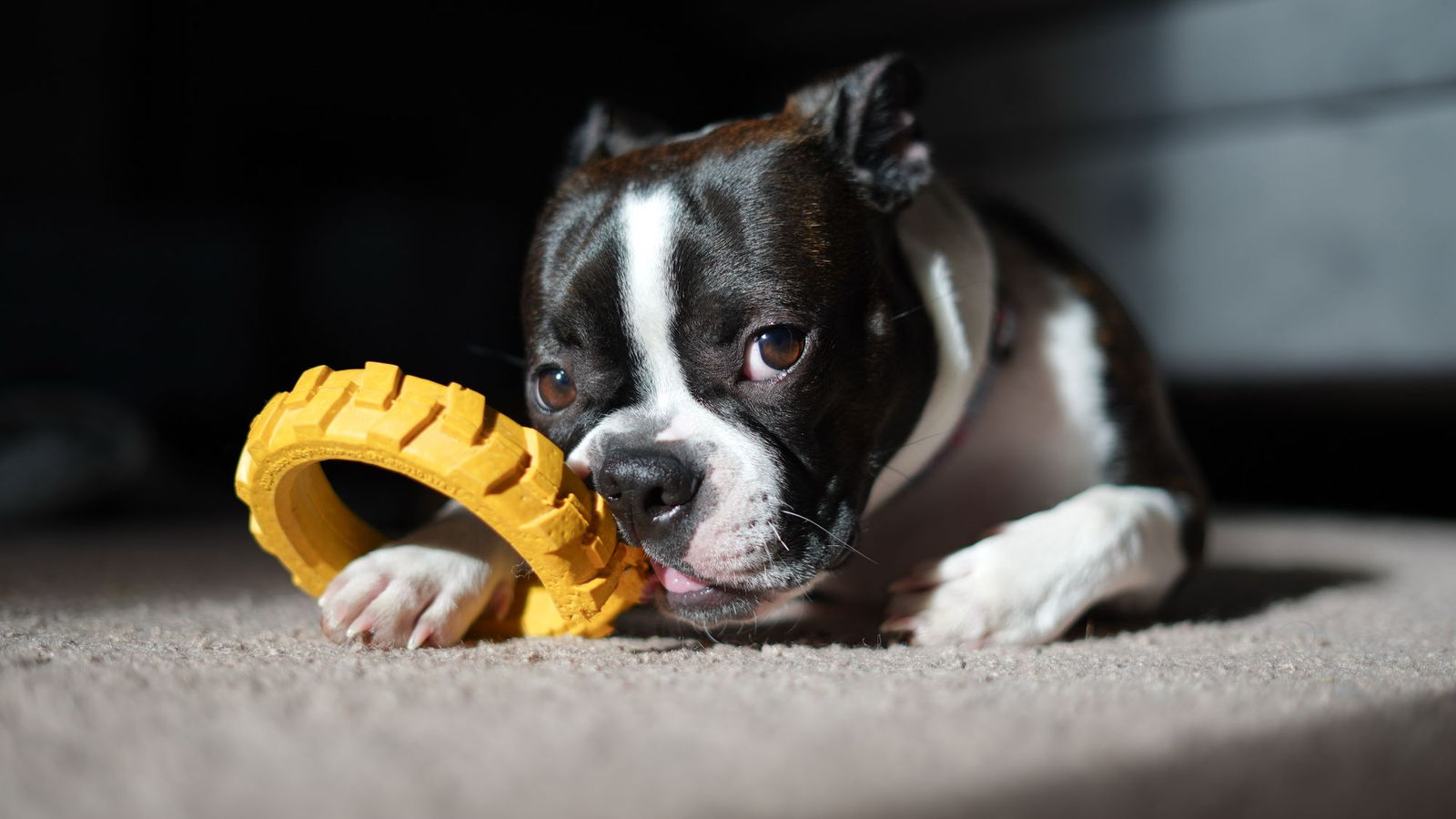
The first session decides whether your dog thinks of this thing as a game or as a wall. Five minutes of setup is worth it.
- Load it where they can see you. Let your dog watch the food go in. Half the interest at the start is knowing there is something in there.
- Make the first go too easy. Leave the lids off, leave a couple of treats sitting on top, and let them succeed within seconds.
- Keep it short. AAHA caps training sessions at ten minutes on frustration grounds, and the same logic applies here. Stop while your dog is still winning.
- Help, but do not solve it. Nudging a slider halfway is coaching; opening every compartment yourself teaches your dog to wait for you.
- Feed two dogs in separate rooms. Ohio State tells multi-dog households to watch food puzzles closely for guarding; we would go one step further and keep the two dogs apart for the session. A high-value item plus a rival is a fight waiting to happen, even between dogs who usually get on.
- Put it away afterwards. This is what keeps it interesting next time.
Safety: the part the box does not tell you
- Hard puzzles are supervised toys. Ohio State is blunt about this: a swallowed piece is not a wait-and-see problem. It belongs in the same bracket as any other foreign body, up to and including surgery to get it back out. Stay in the room.
- Know which kind of dog you have. Solvers work the puzzle; chewers eat it. If yours is a chewer, no amount of difficulty will change that, and the fix is a different category of toy rather than a tougher board.
- Removable lids are the part to watch. The bone-shaped covers on several models are the piece most likely to be carried off and gnawed. A composite board with no loose pieces avoids the problem entirely.
- Take the food out of the daily ration, not on top of it. AAHA is explicit that enrichment food should come out of what the dog was going to eat anyway, which is what stops a good habit turning into weight gain.
- Check it over regularly. Anything cracked or chipped gets thrown out rather than put back on the shelf. AAHA gives the same advice for every toy in the house.
- Wash it. Most of the plastic puzzles are hand-wash only, and wet food left in the compartments goes off faster than you would think.
The dogs that get the most out of a puzzle toy
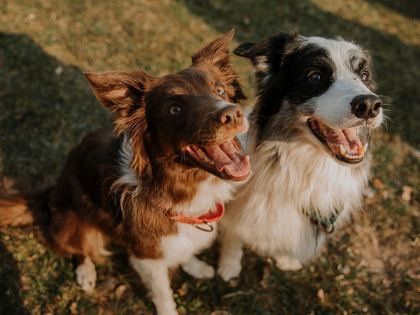
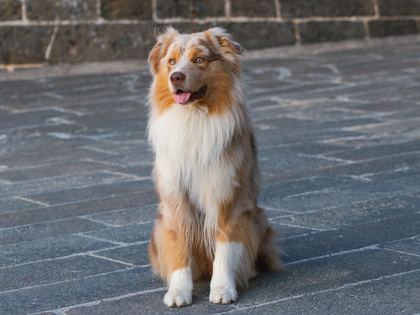
Every dog benefits, but the difference is most visible in the fast learners with energy to spare — the breeds bred to work all day and then asked to live in a house. A Border Collie or an Australian Shepherd that is under-employed will invent a job, and you will not enjoy the job they pick. A Beagle will work a food puzzle for as long as you let them, because a Beagle was bred to follow a scent and not give up on it. A Labrador Retriever will do it for the food alone. Even a Siberian Husky, famously indifferent to being told what to do, will happily take a puzzle apart when there is food in it.
Puzzle toys also earn their keep in the situations where a walk simply is not available: a dog on crate rest after surgery, a puppy who is not fully vaccinated yet, a senior dog whose legs have slowed down but whose nose has not, and any dog stuck indoors by weather. If you are still getting set up, our dog crate guide covers the other half of a calm indoor dog.
A quick puzzle-toy checklist
- Start one difficulty level below where you think your dog sits
- Look for a printed difficulty level so you can buy the next step up later
- Composite boards with no removable pieces are safer for carriers and chewers
- Supervise every session with a hard plastic puzzle
- Fill it from the daily food ration, not from the treat bag
- Keep sessions to five or ten minutes and stop while they are winning
- Put it away between sessions and rotate two or three toys
- Feed multiple dogs in separate rooms
- Check for cracks and chips, and hand-wash after wet food
Still deciding whether a dog is the right pet for your family? Take our free pet quiz, or read our guide to the best family dog breeds.
🛒 Recommended supplies
Hand-picked gear for this guide. Affiliate links — we may earn a commission. The $/$$/$$$ badges are a rough budget guide, not live prices.
⚠️ Common puzzle-toy mistakes
Already have one and something feels off? Start here. These catch almost everybody — none of them mean you have done badly, and every one of them is fixable.
My dog gave up on the puzzle in the first minute
The mistake: Buying the hardest puzzle for a clever dog.
Ohio State University's behavioral medicine team describes a narrow band between a puzzle that is hard enough to frustrate and one that is easy enough to bore, and warns that where that band sits differs from animal to animal. Cleverness is not the same as experience: a smart dog with no puzzle history still has to learn the play pattern before the difficulty means anything, and a dog who fails at their first puzzle often decides the whole category is not for them.
Try this: Drop a level and stack the deck. Load the puzzle with the lids left off or the sliders already halfway open, let your dog win two or three times in a row, then put one piece of difficulty back. Most dogs are back on the original toy within a week, and this time they know what it is for.
My dog picks the puzzle up and chews it instead of solving it
The mistake: Treating a hard plastic puzzle as a toy the dog can have.
A puzzle board is a food-delivery tool, not a chew toy, and the two need completely different supervision. A determined chewer can crack a compartment or carry a bone-shaped lid off to the sofa, and Ohio State is blunt about where that leads — a swallowed fragment can block a gut, and getting it out is a surgical job rather than a wait-and-see.
Try this: Stay in the room for every session and pick the toy up as soon as the food is gone. If your dog reaches for the plastic rather than the food, switch to enrichment with nothing to swallow — a snuffle mat, a lick mat, or a stuffable rubber toy — and keep the hard boards for supervised meals only.
My dog loved the puzzle for a week and now ignores it
The mistake: Leaving the puzzle out on the floor all the time.
Novelty is doing a lot of the work in a puzzle toy. Something permanently available stops being an event, and once your dog has fully solved the pattern there is no thinking left in it either — they are just eating slowly out of an awkward bowl.
Try this: Put it away after every session and rotate two or three different puzzles rather than using one forever. When your dog finishes a puzzle in under a couple of minutes, that is your cue to move up a level rather than buy another toy at the same one.
My dog has put on weight since we started using puzzle toys
The mistake: Filling the puzzle with treats on top of normal meals.
A puzzle board holds a surprising amount of food, and it is easy to think of it as play rather than dinner. The American Animal Hospital Association is explicit that enrichment should be fed out of what the dog was going to eat anyway, for exactly this reason.
Try this: Measure the day's food out in the morning and fill the puzzle from that bowl rather than from the treat bag. If you want a higher-value filling for a hard puzzle, take the equivalent amount back out of the meal.

❓ Common questions
Do dog puzzle toys actually tire a dog out?
Yes, though not in the way a walk does. Sniffing and problem-solving are real work for a dog, and ten minutes of it settles a lot of dogs completely. Think of it as the other half of exercise rather than a replacement — the calmest dogs get both.
What level puzzle toy should I start with?
One level below where you think your dog sits. Outward Hound grades its puzzles from Level 1 (Easy) to Level 4 (Expert), and a dog who fails at their first puzzle often decides puzzles are not fun. It is much easier to move a confident dog up a level than to talk a discouraged one back into trying.
How often should my dog use a puzzle toy?
Once a day is plenty for most dogs, and it works best at whatever time of day your dog gets restless. Put the puzzle away in between — a toy that lives on the floor stops being interesting within a week.
Can I leave my dog alone with a puzzle toy?
Not with a hard plastic one. Puzzle boards are supervised toys: a dog who chews rather than solves can break pieces off and swallow them, which can mean emergency surgery. If you need something to leave down, use a stuffable rubber toy or a snuffle mat instead.
My dog just chews the puzzle instead of solving it. What now?
That is a common first reaction and it usually means the puzzle is too hard. Go back to a level where your dog wins quickly, sit with them, and reward the nose rather than the teeth. If your dog chews everything regardless of difficulty, skip hard boards altogether and use a snuffle mat, a lick mat or a stuffable rubber toy.
Are puzzle toys safe for puppies?
Yes, with supervision, and start at Level 1. Outward Hound makes puppy editions too: Puppy Smart at Level 1, Puppy Tornado and Puppy Hide N' Slide at Level 2. Use part of the puppy's normal daily food rather than extra treats, and stop the session while they are still enjoying it.
Do puzzle toys help with separation anxiety?
They can help a bored dog settle, but true separation anxiety is a different problem and a puzzle toy is not a treatment for it. If your dog panics rather than pines when you leave, talk to your vet or a qualified behaviorist.
📚 Where this comes from
We check our care advice against vets, animal charities, and government health guidance. Here is what this page is built on.
Vets, charities & official guidance
- Boredom busters: indoor enrichment for dogs — American Animal Hospital Association
- Toys and puzzles for your pet — Ohio State University Veterinary Medical Center
- Enrichment: supporting your pet's mental and emotional wellbeing at home — AAHA
- DIY pet games — RSPCA
Keeper & species-community guides
- Our dog game difficulty levels explained — Outward Hound
- The ultimate guide to Nina Ottosson dog puzzles — Outward Hound
Checked August 2026. These are other people’s websites, and none of it replaces your own vet — if a pet seems unwell, call one.