🐶 How to Pick the Best Dog Crate for a Puppy (Size Guide)
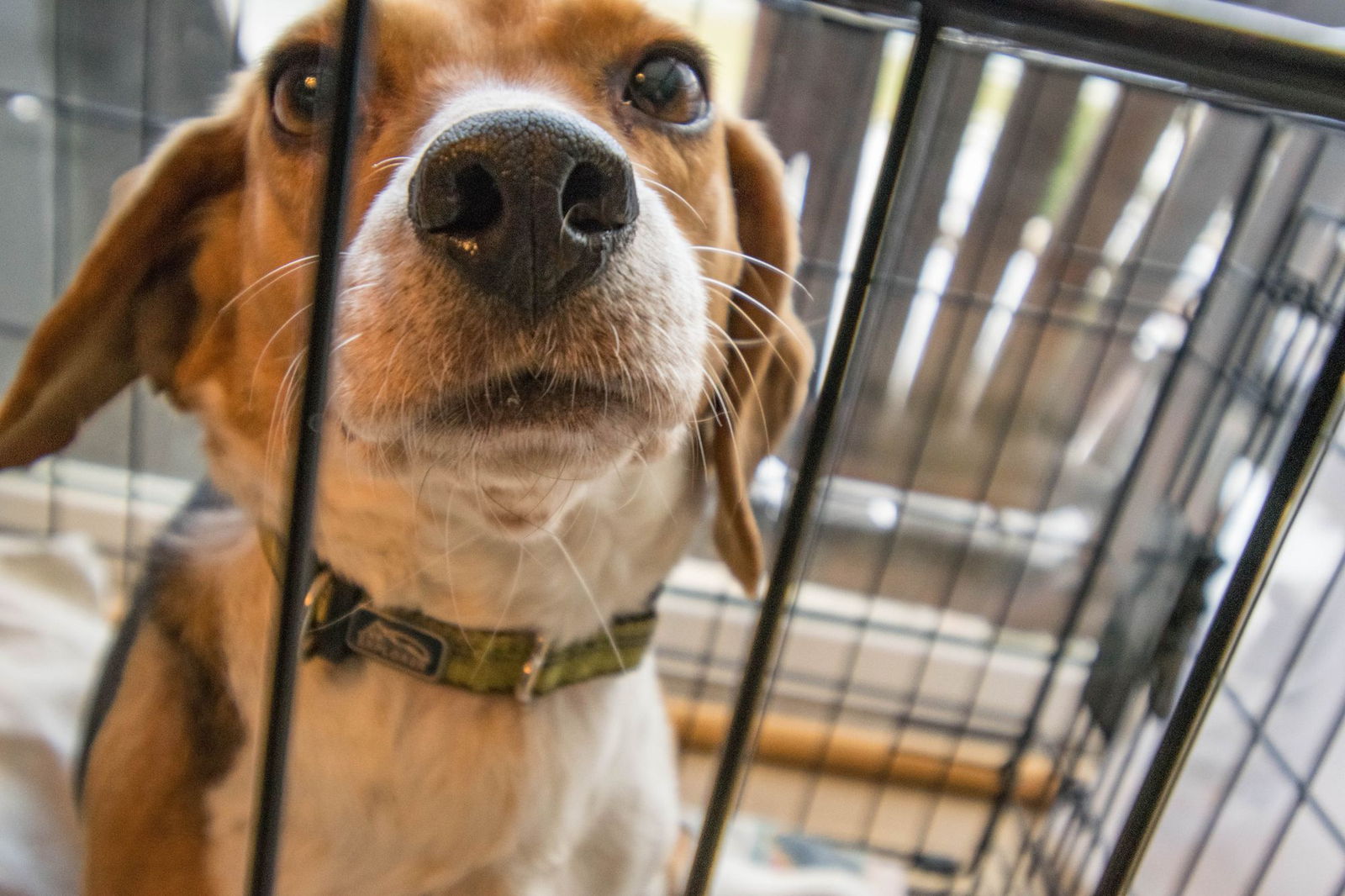
A crate is one of the most useful tools for raising a puppy, and picking the right size is what makes it work. For a dog, a properly sized crate is a powerful house-training aid — because dogs naturally avoid soiling the place where they sleep.
Why the right size matters for house-training
The house-training magic of a crate comes down to size. A crate that is just big enough for your puppy to stand up, turn around, and lie down encourages them to hold it, which speeds up potty training. If the crate is too big, a puppy will simply use one corner as a bedroom and another corner as a bathroom — exactly what you are trying to avoid. Snug, but never cramped, is the goal.
Size for the adult, use a divider
Puppies grow fast, so the smart move is to size the crate for your dog's expected adult size and use a divider to shrink the usable space while they are small. Measure your puppy's expected adult length and height and add a few inches so they will fit comfortably as a grown dog. Then slide the divider in to keep the space just right for now, and move it back as your puppy grows. One crate can last from puppyhood all the way to adulthood.
Wire or plastic?
Two common styles suit most families. Foldable wire crates offer good airflow, usually come with a divider, and fold flat for storage or travel — a great all-rounder for home use. Plastic "kennel" crates feel cozier and more den-like, and are required for most air travel, so they are worth considering if you expect to fly with your dog. Either way, add a washable, chew-resistant mat for comfort, and consider draping a cover over a wire crate to create a calm, den-like space.
Make the crate a positive place
A crate should always feel like a safe den, never a punishment. Build good associations by feeding meals and giving treats inside, and never use the crate to scold your dog. To crate-train, introduce it slowly: let your puppy explore it, toss treats inside, feed meals there, and gradually build up the time they spend with the door closed. Paired with daily exercise and patience, this approach helps most puppies come to love their crate.
Giving your dog a job to do in there helps too. A stuffable rubber toy or a food puzzle turns crate time from waiting into something worth going in for — our guide to the best dog puzzle toys covers which ones are safe to leave a dog alone with, and which ones are strictly supervised.
Don't over-crate your puppy
A crate is a helpful den, not a place to leave a dog all day. Puppies can only hold it for a limited time — a rough guide is their age in months plus one, in hours (so a three-month-old puppy can manage about four hours). Whatever the sum says, cap it at three or four hours at a time for a puppy, and four or five for a grown dog. Crating longer than that leads to accidents and stress, which sets back your training. Balance crate time with plenty of play, potty breaks, exercise, and company throughout the day.
Quick setup checklist
- A crate just big enough to stand up, turn around, and lie down
- Sized for the adult dog, with a divider to shrink the space while small
- Adult length and height measured, plus a few inches to grow into
- Wire for airflow and everyday use, or plastic for a cozy den and air travel
- A washable, chew-resistant mat, and a cover for a calmer den if wanted
- Meals and treats served inside — never used as punishment
- Slow, treat-based crate training with gradually longer sessions
- Crate time kept within the age-in-months-plus-one guide, capped at three or four hours at a time, and balanced with exercise
Choosing the right breed makes all of this easier, so browse our family dog breeds guide, and if you have not found your puppy yet, our adopt, don't shop guide can help. Then take our free pet quiz to find your perfect match.
🛒 Recommended supplies
Hand-picked gear for this guide. Affiliate links — we may earn a commission. The $/$$/$$$ badges are a rough budget guide, not live prices.
🧽 Cleaning & maintenance
Keep the crate fresh. Shake out and wash the crate mat or bedding weekly — more often for a puppy still potty-training — and wipe down the tray and bars. Clean any accident right away with an enzymatic pet cleaner, which breaks down the odor so your dog is not drawn back to the same spot. A quick deep clean every few weeks (mat through the laundry, tray scrubbed with mild soap) keeps the crate a place your dog actually wants to be.
Cleaning supplies for this habitat. Affiliate links — we may earn a commission. The $/$$/$$$ badges are a rough budget guide, not live prices.
⚠️ Common dog setup mistakes
Already have one and something feels off? Start here. These catch almost everybody — none of them mean you have done badly, and every one of them is fixable.
Is my dog's crate too small?
The mistake: Going by the crate size chart alone.
Those charts go by weight, and two dogs of the same weight can be completely different shapes. Welfare groups describe the right size as room to stand, turn around and lie fully stretched out on one side — stand-up-and-turn-around is the house-training minimum, not a comfortable size for a grown dog.
Try this: Try it on the crate you already own: your dog should be able to flop onto their side with their legs stretched out, not just curl up. If they can't, it's time to size up — a bigger crate with the divider set snug does both jobs at once.
Is it bad to put my dog in the crate as a punishment?
The mistake: Sending the dog to the crate for time-out.
Dogs learn from whatever happens next, so a crate used right after a chewed shoe becomes the place bad things happen. Within a few weeks you get a dog who plants their feet at the door and panics once it shuts — and then the crate is no help when you really need it.
Try this: Give the crate its good name back: leave the door open for a week so nothing ever shuts behind them, and let going in be their idea. Deal with the chewing where it happened instead — put the tempting thing out of reach and swap in a chew of their own.
Should my kids be allowed in the dog's crate?
The mistake: Letting children climb into the dog's crate.
A dog in a crate can't walk away, and a dog that can't walk away is the one most likely to growl and then snap. About half of dog bite victims are children, which is why vets say never to leave a young child alone with a dog.
Try this: Make it a house rule that nobody touches, feeds or reaches for the dog while it's in the crate — call the dog out instead. Put the crate where the dog can still see the family but out of the busy walkway, and keep it off the list of places kids can play.
Should my dog wear a collar in the crate?
The mistake: Leaving the collar and tags on inside.
Tags, buckles and rings can hook on the bars of a wire crate. A dog that twists to pull free can end up with the collar caught tight around its neck, and it happens fast and quietly.
Try this: Slip the collar off for crate time and overnight — a microchip still identifies them at home. If you'd rather they wore something, use a breakaway collar that pops open under pressure.
How long can a puppy be left in a crate at night?
The mistake: Expecting a young puppy to last all night.
An eight-week-old puppy can't hold it for seven or eight hours. They wake, cry, and end up soiling the crate, which teaches them that going where they sleep is fine — the exact habit the crate is there to prevent.
Try this: Keep the crate in your bedroom for the first few weeks and set an alarm for one quiet potty break in the night: outside, no play, straight back to bed. Crying that settles in a few minutes is normal, but a puppy that drools, scrabbles until its paws bleed, or bends the bars is panicking, and that needs a vet or a trainer rather than more crate time.
❓ Common questions
How much does a dog cost to keep?
Setting up a dog habitat means buying the basics like wire crate with divider, washable crate mat, crate cover. Day to day, a dog runs about $50–$120 a month for food, bedding, and supplies — the one-time habitat setup and any vet care are extra.
Is a dog a good pet for an apartment?
Dogs do best with a house and some outdoor space. You can keep one in an apartment, but it takes extra room and daily activity.
How much time does a dog need each day?
Quite a lot. Dogs need daily feeding, exercise or enrichment, cleaning, and plenty of hands-on attention, so they're a bigger daily commitment.
📚 Where this comes from
We check our care advice against vets, animal charities, and government health guidance. Here is what this page is built on.
Vets, charities & official guidance
- How to crate train your dog or puppy — Humane World for Animals
- How to crate train a puppy — RSPCA
- Crate training your dog — PDSA
- Preventing dog bites — AVMA
Keeper & species-community guides
Checked August 2026. These are other people’s websites, and none of it replaces your own vet — if a pet seems unwell, call one.