Domestic Longhair: Is It the Right Cat for Your Family?
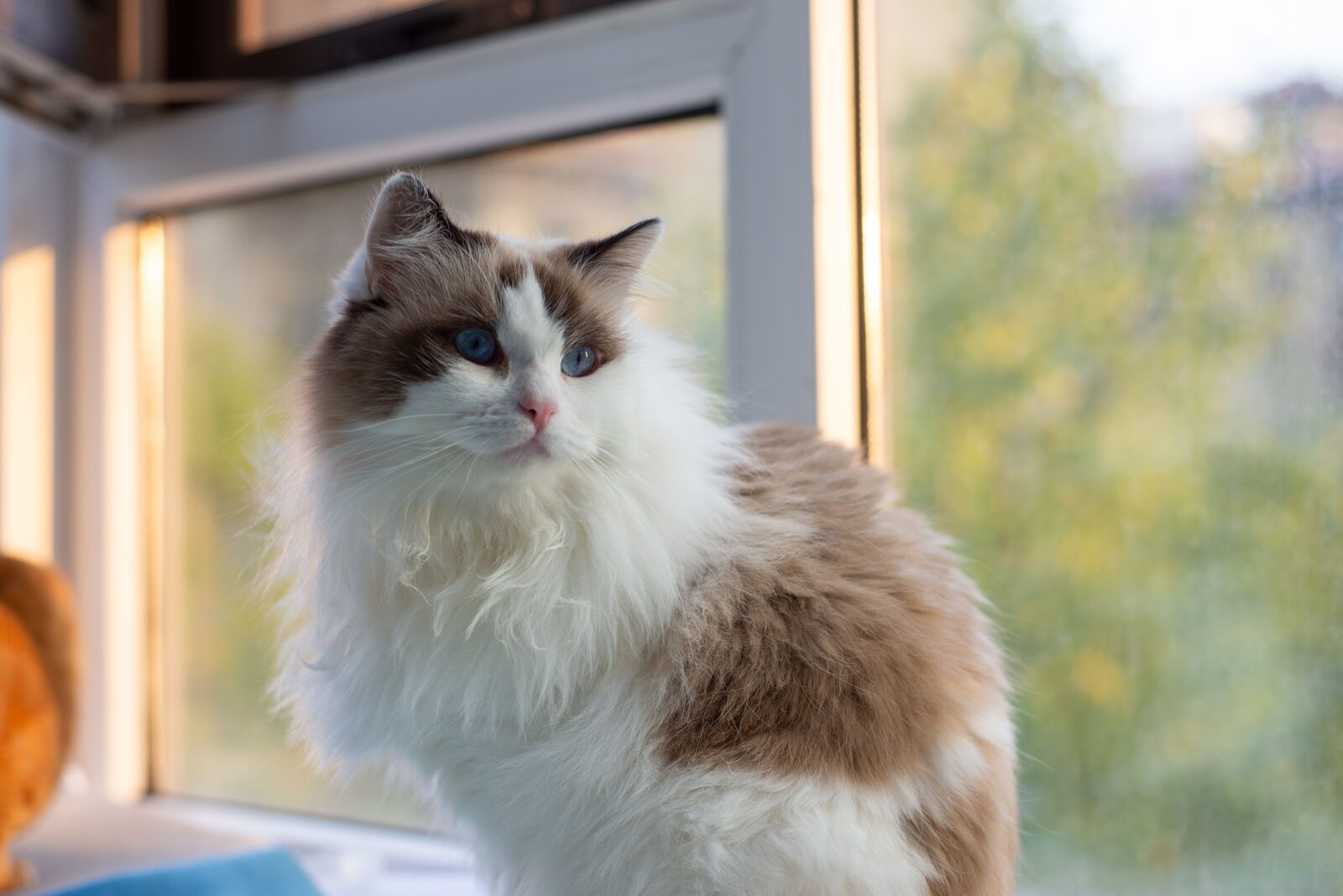
"Domestic Longhair" is not a breed — it is every long-coated cat of mixed ancestry, which is most cats alive. The coat is the one thing the label does tell you: long, so expect a brush a few times a week and hair on the furniture. Energy, chattiness, whether it wants a lap and how it copes with children are individual, so judge the cat rather than the label.
The numbers
| Typical lifespan | 11–15 years (moggies are not a breed, so this is the general range for a healthy mixed-breed cat) |
|---|
How long is that, really? Cats live longer than most people expect — about 11.7 years on average across every breed, and a well-looked-after Domestic Longhair can reach 15 years. A kitten you bring home this year will still be curled up somewhere warm long after you have finished school.
Sources: Teng et al., Journal of Feline Medicine and Surgery (2024).
How to judge one in person
Run your hands through the coat. Mats form where the coat rubs: behind the ears, in the armpits, on the trousers at the back legs. A cat that arrives matted has usually not been brushed, and mats have to be cut out rather than combed out.
Ask whether it tolerates being brushed. A long coat needs a comb a few times a week for the rest of the cat's life. A cat that hates it turns that into a twice-weekly argument, and the shelter will know which kind you are looking at.
Ask about hairballs and the litter tray. More coat swallowed means more hairballs. Staff will tell you if this one brings them up often, which is worth knowing before the living-room rug finds out.
Ask how it is with children, handling and other animals. Whether it tolerates being picked up, and whether it can share a house with a dog or another cat, is individual. Shelter staff see this daily and will say so honestly.
Get one if…
- You want the long coat without the pedigree price tag, and you will actually do the brushing
- You want to skip the inherited problems that concentrate in pedigree lines
- You want a cat for a fraction of the price of a pedigree, usually already neutered and vaccinated
- You are happy to be chosen by the animal as much as you choose it
Think again if…
- You have very young children and cannot get a clear history of how this cat has been around them
- You want a specific look and are not willing to wait for the right one to come in
- You need a cat that will definitely tolerate being carried around
- Nobody in the house will commit to combing the coat a few times a week, every week
What it costs to keep one
Rough running cost: $ (one of the cheaper ones) — because there is no single expensive thing about it — just the normal food, vet and insurance costs every cat brings.
Those are relative bands, not live prices. For real numbers across every pet we cover, see the pet cost study and the cost calculator.
Where to start
Shelters and breed-specific rescues are full of these, and the staff have usually lived with each animal for weeks. Tell them honestly about your home — the ages of your children, how long the house is empty, how much walking or play you can really do — and let them point you at the right individual. Being turned down for one animal is not a rejection; it is them doing the job properly.
Breeds families look at most
❓ Common questions about Domestic Longhairs
Is a Domestic Longhair good with kids?
It depends entirely on the individual animal, and anyone who tells you otherwise is guessing. Domestic Longhairs are not a breed, so there is no breed-wide temperament to rely on. Ask the shelter what this particular cat has actually lived with — what ages of children, for how long, and what staff saw. "No known history with children" means unknown, not safe. Meet it with your children present, more than once.
Do Domestic Longhairs shed a lot?
Yes — heavily, and all year. If hair on the sofa and in the car would bother you, this is not the breed.
Can a Domestic Longhair be left alone during the day?
Usually, yes. Most cats cope with a working day given a clean tray, water and a window to watch — just not days on end.
Is a Domestic Longhair a good first cat?
Yes, and usually the easiest first cat there is. You can meet it, the staff can tell you how it behaves, and it costs a fraction of a pedigree — often already neutered, vaccinated and microchipped.
Should I get a Domestic Longhair?
There is no typical Domestic Longhair. The coat is predictable; everything else is the individual cat, which you can meet before you decide. Get one if: You want the long coat without the pedigree price tag, and you will actually do the brushing; You want to skip the inherited problems that concentrate in pedigree lines; You want a cat for a fraction of the price of a pedigree, usually already neutered and vaccinated; You are happy to be chosen by the animal as much as you choose it. Think again if: You have very young children and cannot get a clear history of how this cat has been around them; You want a specific look and are not willing to wait for the right one to come in; You need a cat that will definitely tolerate being carried around; Nobody in the house will commit to combing the coat a few times a week, every week.
📚 Where this comes from
We check our care advice against vets, animal charities, and government health guidance. Here is what this page is built on.
Vets, charities & official guidance
- Life tables of annual life expectancy and risk factors for mortality in cats in the UK (Teng et al., Journal of Feline Medicine and Surgery, 2024)
- Lovely lilies and curious cats — FDA
- Indoor and house cats — Blue Cross
- Cats — CDC Healthy Pets, Healthy People
- Feeding growing kittens — VCA Animal Hospitals
- Declawing position statement — Feline Veterinary Medical Association
Keeper & species-community guides
Checked August 2026. These are other people’s websites, and none of it replaces your own vet — if a pet seems unwell, call one.