🪮 How Much Grooming Does a Dog or Cat Really Need?
💬 For grown-ups: this page links to products on Amazon. As an Amazon Associate I earn from qualifying purchases. How we pick gear →
Coat care is the part of owning a dog or a cat that families underestimate most, because it is invisible when you are choosing. Two animals of the same size and the same energy can ask completely different things of you: one wants ten minutes with a rake twice a year, the other wants a standing appointment with a groomer for the next fifteen years. This guide is about telling those two apart before you commit, and doing the job properly once you have.
There are only two kinds of coat that matter
Forget long and short for a moment. The question that decides your workload is whether the coat sheds or grows.
Coats that shed reach a certain length and then stop. Old hair falls out and new hair replaces it, which is why a Labrador is on your clothes and never at the groomer. These coats do not need cutting, ever. What they need is brushing — more of it during the spring and fall molt — and a vacuum cleaner you do not resent.
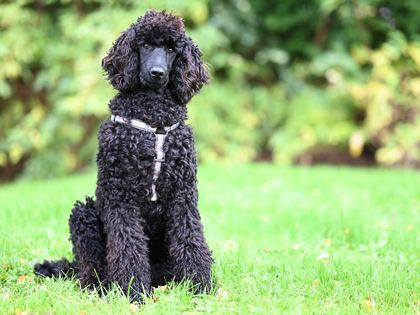
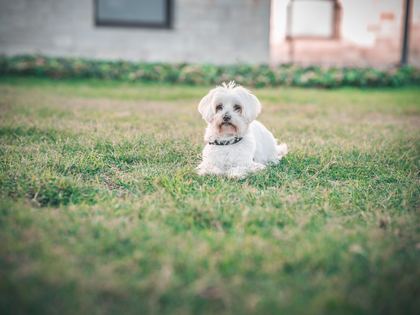
Coats that grow never stop. Poodles and every poodle cross, Bichon Frises, Shih Tzus, Maltese, Yorkshire Terriers: their hair behaves more like yours, so it has to be cut, on a cycle, for life. Blue Cross puts that cycle at anything from every four to 12 weeks depending on the coat and the style, with brushing at home in between. Nothing about this is optional. A growing coat that is left alone does not stay scruffy — it felts.
This is why "low-shedding" and "low-maintenance" are close to opposites. The dogs marketed hardest to families who do not want hair are, almost without exception, the dogs with the biggest grooming bills.
How often to brush, by coat
Different organizations word this differently, but they land in much the same place. The PDSA sets out a schedule by coat length and it is the clearest one to work from:
- Short-coated dogs — Labradors, Staffies, Bull Terriers: about once a week.
- Medium-coated dogs — German Shepherds, spaniels, spitz breeds: a few times a week, to get the dead hair out.
- Long-coated dogs — collies, Lhasa Apsos, long-coated Yorkies: daily, plus trimming or stripping several times a year.
- Poodle crosses — Cockapoos, Labradoodles and the rest: a few times a week at an absolute minimum, because that curl holds shed hair rather than dropping it.
- Short-haired cats: International Cat Care suggests at least once a week.
- Long-haired cats: daily, according to both iCatCare and Cats Protection — and only for as long as the cat is happy about it.
The American Kennel Club’s general rule for dogs is several sessions a week to keep an average dog tidy, with daily being better. Two things move you up the list: molting season, and a cat or dog who has stopped doing the job themselves.
Brushing is also the cheapest health check there is. International Cat Care makes the point that a grooming session is a chance to look at ears, eyes and mouth while you have the animal in front of you, and it is how most owners find the lump, the tick or the sore ear in the first place.
Mats are a welfare problem, not a tidiness problem
A tangle is loose hair caught in the coat. A mat is a solid pad of felted hair attached to the skin, and it pulls every time the animal moves. Left long enough, mats trap moisture against the skin, hide sores, and stop a coat doing its job at all.
Small tangles you can tease apart at home with a slicker brush and a steel comb. Mats are a different matter, and the advice from the veterinary and welfare side is consistent: the PDSA tells owners plainly not to try to tackle mats at home, and VCA recommends that severe or extensive tangles go to a groomer or a vet. If matted hair has to be cut out, VCA is specific that it must be done with clippers rather than scissors, because a mat lifts the skin up into itself and scissors go through both. A badly matted cat often has to be sedated at the vet to be shaved out safely.
Prevention is not complicated. Line brushing — lifting a section of coat and brushing the hair underneath from the skin out — gets to where mats actually form, which VCA lists as around the ears, in the armpits and along the backs of the legs. Then run a comb through. If the comb stops, the brush did not finish.
Do not shave a double coat
A double-coated dog — a husky, a malamute, a German Shepherd, a golden retriever — wears a dense insulating undercoat with a coarser outer coat over the top. It is tempting to take the lot off in July, and it is one of the few grooming decisions that can actually hurt the dog. The American Kennel Club says a shave does not stop the shedding, damages the outer coat, and increases the risk of skin problems and sunburn. VCA describes post-clipping alopecia, where the coat comes back slowly or patchily in plush-coated breeds like huskies and Pomeranians, sometimes taking up to two years.
The right tool for a hot summer is an undercoat rake, not a clipper. Get the dead undercoat out, leave the guard hairs in place to keep the sun off, and move the walks to the cool ends of the day. The one exception both sources allow is a coat matted so badly that the skin underneath cannot dry, and that is a decision for a groomer or a vet rather than for you and a pair of clippers.
Cats groom themselves — right up until they cannot
A healthy short-haired cat handles most of its own coat, and a weekly brush is mostly about taking loose hair off the cat before the cat swallows it. VCA notes that daily brushing is the simplest way to cut down hairballs, since every hair you catch is one that does not go down.
Two changes are worth watching for, and both are medical rather than cosmetic:
- A cat that has stopped grooming. VCA points out that arthritis and extra weight both stop a cat reaching parts of its own body. A greasy, scurfy or clumped coat on an older cat is a symptom — and it means you have quietly inherited the job.
- A cat that is grooming too much. International Cat Care describes over-grooming as hair loss that tends to appear symmetrically on the belly, the insides of the back legs and the flanks. Most cases begin with a skin or pain problem, and most also have a stress component. Fleas, allergies and urinary pain all present this way.
Cats Protection asks owners to treat any sudden change in grooming habits, in either direction, as a reason to call a vet. That is a better first move than a new brush.
One more thing about cats: read the animal while you work. International Cat Care lists the signals that mean stop — skin rippling or twitching, a swishing tail, flicking ears, a growl. A cat groomed past that point remembers it, and the next session is harder.
The rest of the routine
Nails. The AKC’s test is whether you can hear them clicking on a hard floor; the ASPCA’s is whether they are just touching the ground when the animal stands. Blue Cross points out that a dog walked on pavement wears their claws down naturally, so plenty of dogs need very little cutting — and dew claws, which touch nothing, are the ones people forget. Cut only the tip, well clear of the quick.
Ears. Check them regularly and clean them when they look dirty; the AKC suggests roughly monthly, and more often for a dog with a history of ear trouble. Drop ears and hairy ear canals — spaniels, poodle crosses — hold moisture and need looking at more often than that. Nothing goes down into the canal, ever.
Teeth. The one families skip and the one that costs the most later. The PDSA says ideally daily, for cats as well as dogs; the ASPCA offers two to three times a week as a realistic target. Start it in the first week you have the animal, not the first week you notice a problem.
Baths. Brush first, always — Blue Cross notes that washing a matted coat only tightens the mats. The ASPCA suggests a dog gets a bath at least every three months, VCA puts clipped, non-shedding coats at about every six to eight weeks, and Blue Cross warns that overwashing strips the coat of its natural oils. Healthy cats rarely need bathing at all. A hairless cat is the exception — the PDSA notes a Sphynx may need it as often as weekly, since there is no coat to soak up the skin oils.
Choosing a groomer, and one safety point worth knowing
Groomers vary enormously, and you are handing over an animal that cannot tell you afterwards how it went, so ask questions first. How is a dog held? What happens if mine is frightened? Can I collect a nervous dog straight after the cut rather than leaving them to wait?
The RSPCA raises one specific issue that most families would never think to ask about: drying equipment. A dog in a heated dryer or drying cabinet cannot move away from the heat, which means they cannot regulate their own temperature, and there have been cases in the UK of dogs being seriously injured and even killed this way. Ask how your dog will be dried, and whether they are left unattended while it happens. A good groomer will have a clear answer.
The RSPCA also recommends getting a puppy into the groomer as soon as they are fully vaccinated, so the first visit is a friendly nothing-happens visit rather than a full groom on a frightened animal.
What it costs
Brushes and combs are a one-time cost of a few pieces of kit. The recurring bill is the groomer, and it is the one families forget when they budget for a puppy — a clipped coat every four to 12 weeks, for the life of the dog, dwarfs everything else on this page put together. It is also the reason two dogs of identical size can sit in completely different cost brackets on our pet cost study. Work it out for your shortlist with the pet cost calculator before you decide, not after.
A grooming checklist
- Work out whether the coat sheds or grows before you choose the animal
- Brush to the skin, not across the top — then check with a comb
- Brush before a bath — washing a matted coat only tightens it
- Tangles at home; mats to a groomer or a vet
- Never scissors on a mat
- Rake a double coat in molting season, do not shave it
- Short sessions and treats beat one long fight
- Check ears, eyes, skin and feet while you are in there
- Any sudden change in a cat’s grooming habits is a vet question
- Book the groomer for a nervous animal early in the day, and ask how they dry
Still choosing? Our dog breed pages and cat breed pages list grooming and shedding for every breed we cover, and the lower-shedding breeds guide covers the allergy question that usually sits behind it. Not sure a dog or cat is the right fit at all? Take our free pet quiz.
The kit that actually earns its place
You do not need most of what a pet shop will sell you. Two tools do ninety percent of the work on nearly every coat: the right brush for the coat type, and a plain steel comb to check it. Everything below is for one specific job.
🛒 Recommended supplies
Hand-picked gear for this guide. Affiliate links — we may earn a commission. The $/$$/$$$ badges are a rough budget guide, not live prices.
⚠️ Common grooming mistakes
Four things that turn coat care from a five-minute job into an expensive one.
My dog hates the brush and it is a fight every time
The mistake: Starting coat care on a grown animal who has never been handled that way.
Nobody enjoys having a stranger hold their foot. The RSPCA advises getting a dog to the groomer as soon as they are fully vaccinated, precisely so the place becomes somewhere fun rather than somewhere that happens to them, and it recommends reward-based training to get a dog comfortable with the equipment itself. Cats Protection gives kitten owners the same advice in gentler words: bring the comb out early and build up slowly instead of trying to do the whole cat at once.
Try this: Split it up. One session is one paw, or one side, or thirty seconds of comb and then a treat. Leave the brush lying out so it stops being an event. If your animal is already frightened of it, stop and rebuild from the beginning rather than pushing through — pushing through is what teaches them they were right to worry.
I brush every day and it still matted
The mistake: Brushing the top of the coat instead of down to the skin.
Mats do not form on the surface. They form where the coat rubs and where the brush never reaches — VCA Animal Hospitals names the spots on both dogs and cats: around the ears, in the armpits, and along the backs of the legs. A curly or wavy coat is the worst offender, because it holds the shed hair instead of dropping it, and a slicker skated over the outside leaves a felted layer underneath that looks fine until the groomer parts it.
Try this: Line brushing: lift a section of coat, brush the hair underneath from the skin outward, then drop the next section on top and work up the body. Follow with a steel comb, which is the honest test — if the comb will not run from skin to tip, the brush did not do the job, whatever the top of the coat looks like.
We shaved the husky down for summer
The mistake: Shaving a double coat to keep a dog cool.
A double coat is two coats doing two jobs, and the American Kennel Club is blunt about what a shave does to them: it does not stop the shedding, it damages the outer coat, and it raises the risk of skin problems and sunburn. VCA also describes post-clipping alopecia, where the coat grows back slowly or patchily in plush-coated breeds such as huskies and Pomeranians — in some cases taking as long as two years.
Try this: Get the dead undercoat out instead. An undercoat rake or deshedding tool during the spring and fall molt does what a shave was supposed to do, and it leaves the outer coat in place to keep sun off the skin. Shade, water and walking early or late do the rest. The exception is a coat so badly matted that the skin underneath cannot dry, and that is a job for a groomer or a vet.
The cat has bald patches, or has stopped looking after itself
The mistake: Treating a change in the coat as a cosmetic problem.
A coat is one of the clearest health readouts an animal has. International Cat Care describes over-grooming as hair loss that usually turns up symmetrically on the belly, the inside of the back legs and the flanks, and says that while most cases start with a skin or pain problem, most also have a stress component. The opposite matters just as much: VCA points out that arthritis and extra weight both stop a cat reaching parts of its own body, so a scruffy or greasy coat on an older cat is a symptom, not laziness. Cats Protection asks owners to treat any sudden change in grooming habits — more or less — as a reason to call a vet.
Try this: Book the vet before you buy anything. Fleas, allergies, pain and urinary problems all show up this way and none of them are fixed with a better brush. In the meantime, take over the grooming yourself for the parts your cat can no longer reach.









❓ Common questions
How often should I brush my dog?
It depends on what the coat does, not on how long it looks. The PDSA puts short-coated dogs like Labradors and Staffies at about once a week, medium coats at a few times a week, and long coats at daily. Poodle crosses get their own line — a few times a week at minimum — because a curly coat holds shed hair instead of dropping it. The American Kennel Club says several sessions a week keeps the average dog tidy and that daily is better still. If you only remember one thing: brush more often than you think during a molt, and always brush before a bath.
How often does a dog need a professional groomer?
Only some dogs ever need one, and it is decided by the coat. A coat that sheds does not need cutting at all. A coat that keeps growing — poodles and poodle crosses, Bichons, Shih Tzus, Maltese, Yorkshire Terriers — has to be cut for the rest of the dog’s life. Blue Cross puts that clipping cycle at anything from every four to 12 weeks depending on the coat and the cut, with brushing at home in between. The PDSA describes long-coated breeds as needing trimming or stripping something like four to six times a year. Ask a groomer what they would recommend for your specific dog, and treat it as a standing bill rather than a one-off.
Do cats need grooming, or do they do it themselves?
Most short-haired cats do most of it themselves, and International Cat Care still suggests a brush at least once a week — it takes loose hair off the cat before the cat swallows it, which is the simplest thing you can do about hairballs. Long-haired cats are a different animal entirely: iCatCare and Cats Protection both say daily, and Cats Protection notes long-haired cats who go outside need it most. Older, arthritic and overweight cats need help too, because they can no longer reach.
How do I get a mat out?
Small tangles you can tease apart with a slicker and a comb. Actual mats — the felted kind that pull the skin when you lift them — are not a home job. The PDSA is direct about it: do not try to tackle mats at home. VCA says severe or extensive tangles should go to a groomer or a vet, and that if anything is cut out it must be done with clippers rather than scissors, because a mat pulls the skin up into itself and scissors go through both. Badly matted cats often need to be sedated at the vet to be shaved out safely, which is an unpleasant day for the cat and an expensive one for you.
How often should I bathe my dog or cat?
Less often than most people think, and always after brushing rather than before. The ASPCA suggests a bath at least once every three months for a dog, and more if they get filthy or have a skin condition; VCA puts non-shedding, clipped coats at roughly every six to eight weeks, since those coats get their bath as part of the groom anyway. Blue Cross warns that washing a dog too often strips the natural oils out of the coat. Healthy cats almost never need a bath. The exception is a hairless cat — the PDSA says a Sphynx may need bathing as often as weekly, because there is no coat to absorb the skin oils.
What about nails, ears and teeth?
They are part of the same routine and they are the parts families skip. The American Kennel Club’s rule of thumb for nails is that if you can hear them clicking on the floor, they are too long; the ASPCA says trim when they just about touch the ground. Blue Cross adds that a dog walked on pavement will wear their claws down naturally, so plenty of dogs need very little cutting. Ears want checking regularly and cleaning when they are dirty — the AKC suggests about monthly, more for a dog prone to ear trouble — and nothing goes down inside the canal. Teeth are the big one: the PDSA says ideally daily for both dogs and cats, and the ASPCA suggests two to three times a week as a workable target.
Is a low-shedding dog less work than a shedding one?
No — it is different work, and usually more of it. A shedding coat costs you a vacuum cleaner and ten minutes with a rake in molting season. A low-shedding coat costs you a standing groomer appointment plus brushing at home to keep it from matting between visits, for the whole of the dog’s life. That is the trade, and it is worth knowing which one you are signing up for before you choose a breed. Our lower-shedding breeds guide covers the allergy side of the same question.
Which breeds need the most coat work?
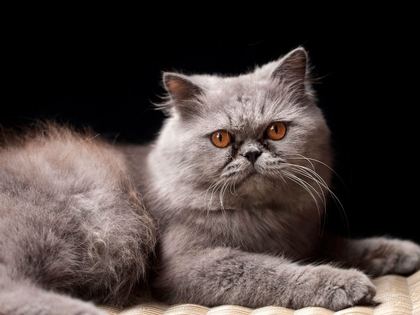
The ones with coats that grow rather than shed, plus the very long-haired ones that do both. On the dog side that is the poodles and every poodle cross, and the small coated breeds — Shih Tzu, Maltese, Yorkshire Terrier, Bichon Frise, Havanese. On the cat side it is really just the Persian, with the semi-longhairs like the Maine Coon and the Ragdoll needing regular combing but not a groomer. The strip further down this page is picked straight from our own breed data, so it stays in step with the breed pages themselves.
📚 Where this comes from
We check our care advice against vets, animal charities, and government health guidance. Here is what this page is built on.
Vets, charities & official guidance
- How often should you groom your pet? — PDSA
- How to groom your dog — Blue Cross
- Grooming and coat care for your dog — VCA Animal Hospitals
- Grooming and coat care for your cat — VCA Animal Hospitals
- Dog grooming tips — ASPCA
- Grooming your cat — International Cat Care
- Over-grooming in cats — International Cat Care
- Grooming your cat — Cats Protection
- Dog grooming — RSPCA
Keeper & species-community guides
- How to groom a double-coated dog — American Kennel Club
- How to groom a dog at home — American Kennel Club
Checked August 2026. These are other people’s websites, and none of it replaces your own vet — if a pet seems unwell, call one.