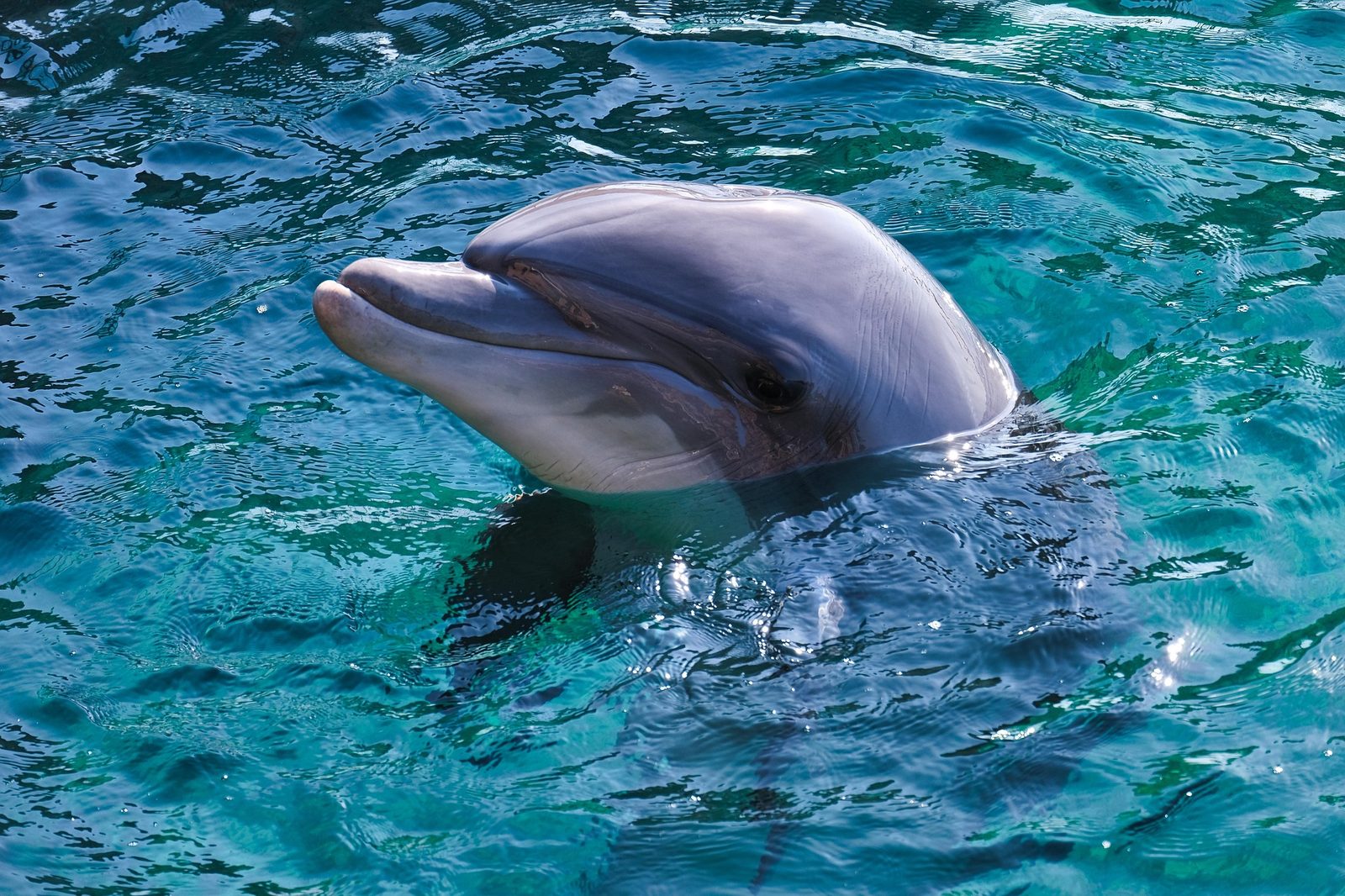
Bottlenose dolphins are some of the smartest animals on the planet. They "see" with sound, bouncing clicks off fish to find them in murky water, play games, use tools, and call each other by unique signature whistles.
📋 Dolphin at a glance
⚡ Superpower
Each dolphin invents its own "signature whistle" — basically its own name — and friends call it by that whistle.
Where dolphins live and how they're built
Bottlenose dolphins live in oceans and along coasts all over the world, from warm bays to cool open seas. Although they look like fish, they are mammals: they breathe air through a blowhole on top of the head, are warm-blooded and feed their babies milk. A dolphin's smooth grey body and powerful tail push it through the water at 20 mph or more, and its curved mouth gives it a permanent smile. A dolphin sleeps with one half of its brain at a time, keeping one eye open, so it never stops breathing or watching for danger.
How dolphins hunt with sound
Dolphins eat fish and squid, and they find them with echolocation: a dolphin sends out fast clicks and listens to the echoes bouncing back, building a sound-picture that works even in murky water or at night. Pods hunt together, herding a school of fish into a tight ball or driving it toward a shore. Some dolphins in Australia wear sea sponges on their snouts to protect them while rooting for fish on the rough seabed — a tool, invented by a dolphin and taught to its daughters.
Family life in the pod
Dolphins live in groups called pods that can be a few animals or many dozens. Each dolphin has its own signature whistle, which works like a name; friends call to each other with it and can recognise the whistle of a dolphin they have not seen for years. A calf is born tail first and pushed to the surface for its first breath, and it stays with its mother for years while it learns to hunt. Dolphins help injured pod members stay at the surface. Bottlenose dolphins are listed as least concern, though pollution and fishing nets are real dangers.
🤩 7 amazing Dolphin facts
Every dolphin has a signature whistle that works like a name.
Here is every dolphin fact from this page and the dolphin quiz in one list — handy for a school project or a car-ride quiz.
- Every dolphin has a signature whistle that works like a name.
- Dolphins find food with echolocation — sonar made of clicks.
- Dolphins sleep with one half of their brain at a time, one eye open.
- Some dolphins wear sea sponges on their snouts as tools to protect them while hunting.
- Dolphins live in groups called pods and help each other when one is hurt.
- Pod members work together to find food and stay safe.
- Mother dolphins teach this trick to their babies.
❓ Common questions about dolphins
How big is a dolphin?
Up to 1,400 lb (640 kg). Every dolphin has a signature whistle that works like a name.
Where do dolphins live?
Dolphins live in the wild: oceans & coasts worldwide. They are wild animals and are never kept as pets.
What do dolphins eat?
Dolphins are carnivores: fish, squid.
How fast can a dolphin move?
Swims up to 20+ mph. Each dolphin invents its own "signature whistle" — basically its own name — and friends call it by that whistle.
How long do dolphins live?
Dolphins typically live 40–60 years.
Can you keep a dolphin as a pet?
No — dolphins are wild animals that belong in the wild (oceans & coasts worldwide), and keeping one would be unsafe and usually illegal. The closest pet you can actually keep is a fish — see our care guide.
Could you keep a dolphin as a pet?
No — dolphins are wild animals that belong in the wild, and keeping one would be unsafe and almost always illegal. But if dolphins are your favorite, here's the closest pet you actually can welcome home:
 Meet the FishBecause no pet is a dolphin, but a lively aquarium gives you graceful, fascinating swimmers to watch every day.
See care guide →
🎬 See dolphins in action
Watch kid-friendly videos about dolphins on YouTube.
▶ Watch Dolphin videos on YouTube