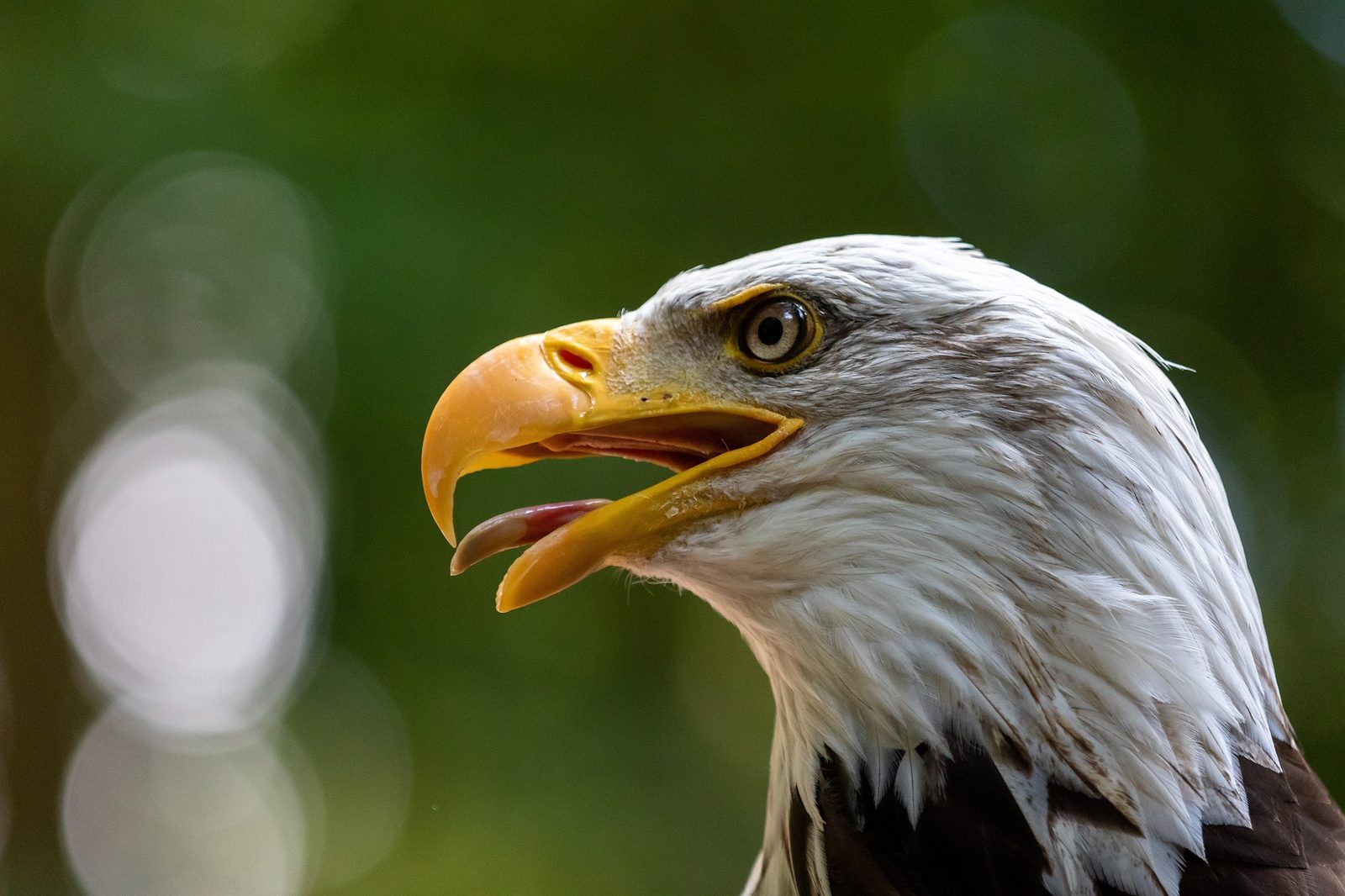
Bald eagles aren't bald — their heads are covered in bright white feathers ("balde" is an old word for white). These huge fish-hunters build the biggest nests of any North American bird and almost disappeared forever before a great comeback.
📋 Bald Eagle at a glance
⚡ Superpower
A bald eagle can spot a fish in the water — or a rabbit in a field — from up to 2 miles away.
Where bald eagles live and how they're built
Bald eagles live near lakes, rivers and coasts across North America, wherever there is open water and tall trees to nest in. They are not bald: the name comes from an old word meaning white, for the bright white feathers on the head and tail that adults grow after several years. A bald eagle has a wingspan of up to 7.5 feet, a huge hooked yellow beak and talons with a grip many times stronger than a human hand. Its eyesight is several times sharper than ours, so it can spot a fish or a rabbit from up to 2 miles away.
What bald eagles eat and how they hunt
Bald eagles eat mostly fish, swooping low over the water and snatching one from the surface with their talons, though they will also take ducks, rabbits and carrion, and they are not above stealing a catch from an osprey. From a high perch an eagle watches for a long time, then drops in a dive that can reach 100 mph. In winter, when rivers freeze, eagles gather in large numbers at any stretch of open water where fish can still be caught.
Family life and a famous comeback
Bald eagle pairs often stay together for life, and they return to the same nest year after year, adding sticks each season until it can be more than 9 feet wide and weigh as much as a small car. Both parents keep the eggs warm and feed the chicks, which are brown all over and take about five years to earn the white head. In the 1960s bald eagles nearly vanished from most of the United States because a pesticide was making their eggshells too thin; the chemical was banned, the birds were protected, and today they are listed as least concern — one of conservation's great success stories.
🤩 6 amazing Bald Eagle facts
Eagle eyesight is 4–8 times sharper than a human's — they can spot prey 2 miles away.
Here is every bald eagle fact from this page and the bald eagle quiz in one list — handy for a school project or a car-ride quiz.
- Eagle eyesight is 4–8 times sharper than a human's — they can spot prey 2 miles away.
- Bald eagle nests can grow over 9 feet wide and weigh up to a ton.
- They almost went extinct in the 1960s, but laws protecting them helped them recover.
- Bald eagles can dive at speeds up to 100 mph.
- An eagle's grip is about 10 times stronger than a human handshake.
- Young bald eagles have brown heads until they grow up.
❓ Common questions about bald eagles
How big is a bald eagle?
Wingspan up to 7.5 ft (2.3 m). Eagle eyesight is 4–8 times sharper than a human's — they can spot prey 2 miles away.
Where do bald eagles live?
Bald eagles live in the wild: lakes, rivers & coasts of north america. They are wild animals and are never kept as pets.
What do bald eagles eat?
Bald eagles are carnivores: mostly fish.
How fast can a bald eagle move?
Dives at up to 100 mph. A bald eagle can spot a fish in the water — or a rabbit in a field — from up to 2 miles away.
How long do bald eagles live?
Bald eagles typically live 20–30 years in the wild.
Can you keep a bald eagle as a pet?
No — bald eagles are wild animals that belong in the wild (lakes, rivers & coasts of north america), and keeping one would be unsafe and usually illegal. The closest pet you can actually keep is a parakeet — see our care guide.
Could you keep a bald eagle as a pet?
No — bald eagles are wild animals that belong in the wild, and keeping one would be unsafe and almost always illegal. But if bald eagles are your favorite, here's the closest pet you actually can welcome home:
 Meet the ParakeetBecause no pet is a wild eagle, but a parakeet or other small bird brings feathered personality you can keep at home.
See care guide →
🎬 See bald eagles in action
Watch kid-friendly videos about bald eagles on YouTube.
▶ Watch Bald Eagle videos on YouTube