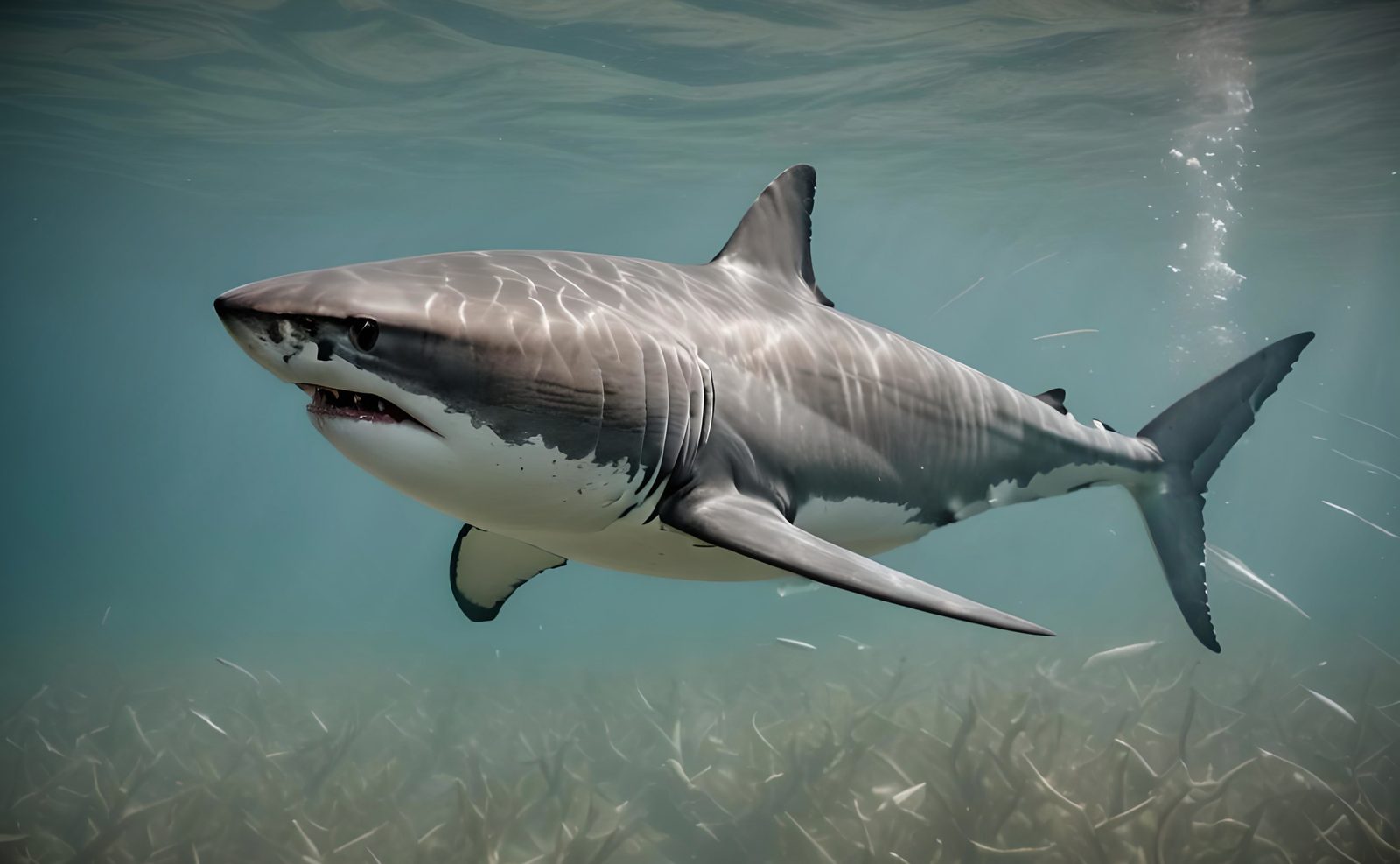
Great white sharks are the ocean's most famous hunters, torpedo-shaped and packed with super-senses: they smell tiny traces of blood from far away and detect the faint electricity of animals hiding under sand. Sharks as a group are older than trees!
📋 Great White Shark at a glance
⚡ Superpower
Great whites can sense the tiny electric fields of hidden prey — like having a built-in metal detector for heartbeats.
Where great whites live and how they're built
Great white sharks live in cool coastal waters around the world, from California and South Africa to Australia and the Mediterranean. A great white is a torpedo with fins: a pointed snout, a crescent-shaped tail and a body that can be 20 feet long. It has no bones at all — its skeleton is made of cartilage, the bendy stuff in your nose and ears. Its skin is covered in tiny tooth-like scales that make it feel like sandpaper, and its jaws hold rows of triangular teeth that are replaced throughout its life.
How a great white hunts
Great whites eat fish when they are young and move on to seals and sea lions as they grow. They hunt from below, rising fast out of the gloom toward a shape at the surface, and sometimes launch their whole body out of the water in a breach. Their senses are extraordinary: they can smell a tiny trace of blood from far away, and special pores on the snout pick up the faint electric field that every living animal gives off, so a shark can find a fish hidden under sand. People are not on the menu; most bites on people are a shark investigating and then leaving.
Family life and why sharks matter
Great white pups are born alive, already several feet long and ready to hunt small fish, and they get no care from their mother. Sharks grow slowly and take many years to become adults, which is one reason they are easily overfished. Sharks as a group have been around for over 400 million years, longer than trees. Great whites are listed as vulnerable: they are caught in fishing nets and hunted for their fins and jaws, and as top predators they help keep the whole ocean food web healthy.
🤩 7 amazing Great White Shark facts
Sharks have been around over 400 million years — longer than trees have existed.
Here is every great white shark fact from this page and the great white shark quiz in one list — handy for a school project or a car-ride quiz.
- Sharks have been around over 400 million years — longer than trees have existed.
- A great white can grow and replace thousands of teeth in its lifetime.
- They can detect the tiny electric fields living animals give off.
- Great whites can breach — launching their whole body out of the water.
- They can smell one drop of blood in about 25 gallons of water.
- Cartilage is the same flexible stuff that's inside your ears and nose.
- New teeth move up to replace any that fall out.
❓ Common questions about great white sharks
How big is a great white shark?
Up to 20 ft (6 m) long. Sharks have been around over 400 million years — longer than trees have existed.
Where do great white sharks live?
Great white sharks live in the wild: cool coastal oceans worldwide. They are wild animals and are never kept as pets.
What do great white sharks eat?
Great white sharks are carnivores: fish, seals, sea lions.
How fast can a great white shark move?
Bursts up to 35 mph. Great whites can sense the tiny electric fields of hidden prey — like having a built-in metal detector for heartbeats.
How long do great white sharks live?
Great white sharks typically live ~70 years.
Can you keep a great white shark as a pet?
No — great white sharks are wild animals that belong in the wild (cool coastal oceans worldwide), and keeping one would be unsafe and usually illegal. The closest pet you can actually keep is a fish — see our care guide.
Could you keep a great white shark as a pet?
No — great white sharks are wild animals that belong in the wild, and keeping one would be unsafe and almost always illegal. But if great white sharks are your favorite, here's the closest pet you actually can welcome home:
 Meet the FishBecause you can't keep a shark, but a home aquarium brings a slice of the underwater world home.
See care guide →
🎬 See great white sharks in action
Watch kid-friendly videos about great white sharks on YouTube.
▶ Watch Great White Shark videos on YouTube