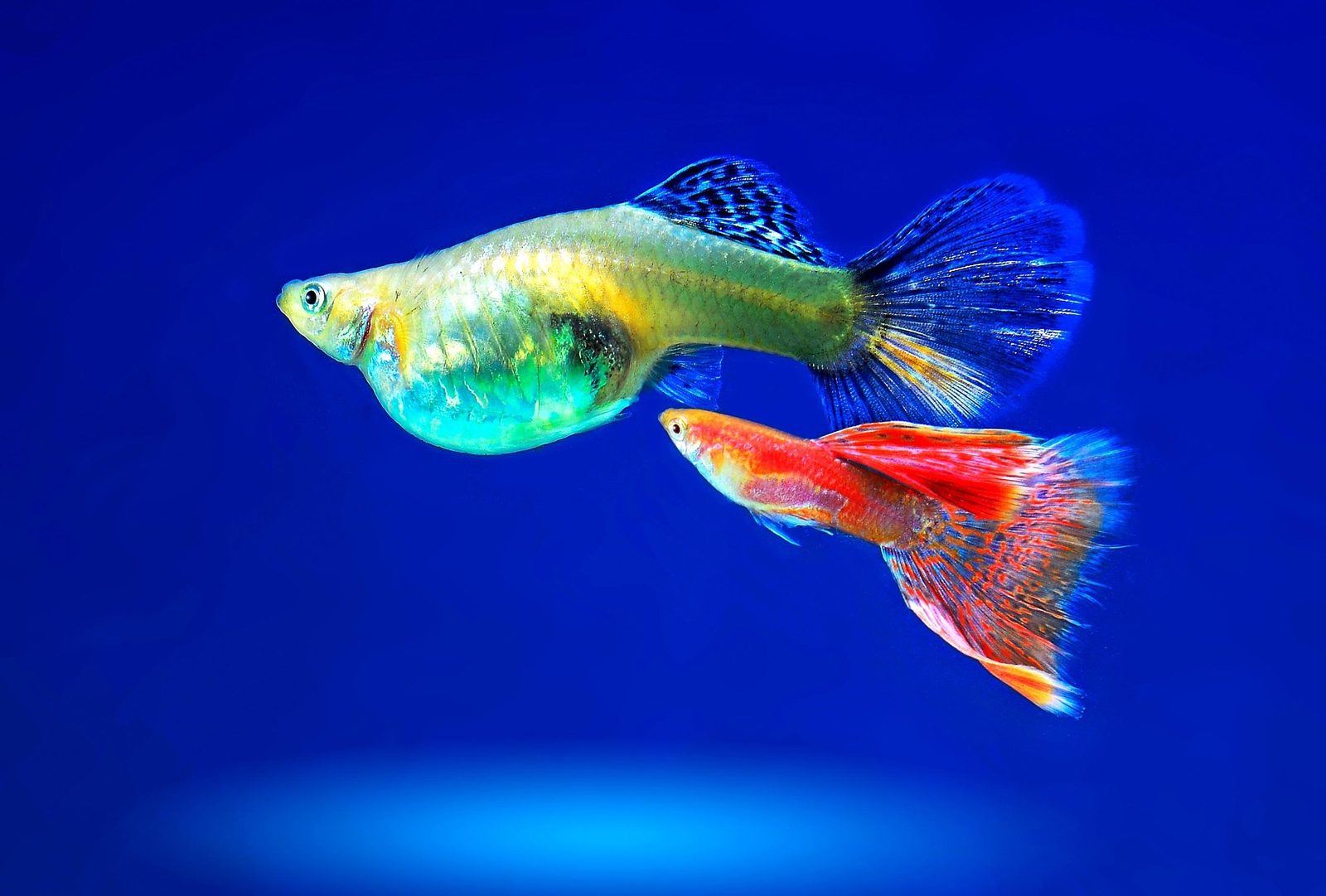
Fish are peaceful, beautiful, and a great pet if you love to watch more than cuddle. They're calm and allergy-friendly, but a healthy tank takes more setup and know-how than people expect. Two fish are asked about so often that they have their own full guides here — the betta and the goldfish — and this page is the place to start if you are still deciding between a tank of little schooling fish, one showy betta, or a pair of goldfish.
Is a fish a good pet for kids?
Quick answer: Fish are great pets for most kids. Fish are peaceful, beautiful, and a great pet if you love to watch more than cuddle.
- 👍 Best for: calm and relaxing to watch, quiet and don't need walks
- 👀 Keep in mind: you watch them — no cuddles
- ⏳ Lifespan: 2–5 years (varies)
- 💲 Ongoing cost: about $10–$35/mo (setup & vet extra)
📋 Fish at a glance
Should I get a fish?
💚 Why you'll love a fish
- Calm and relaxing to watch
- No fur — great for allergies
- Quiet and don't need walks
- Can fit in small spaces
⚠️ Things to know
- You watch them — no cuddles
- Tanks need the right setup and cleaning
- Water chemistry matters and can be tricky
- Easy to overfeed
The honest answer: The most beginner-friendly aquatic pet here, but the tank comes first: cycle it for weeks before a single fish goes in, and expect no cuddles.
👍 Get one if…
- Your kid loves the tank as much as the fish
- You're willing to run the tank empty for weeks first
- You're starting at twenty gallons, not one
👎 Think again if…
- You thought the tank would be ready in a day
- Your kid would be devastated by a two-year lifespan
- You're planning six tetras in a one-gallon bowl
- Nobody at home will test the water each week
✅ Am I ready for a fish?
Wanting one and being ready for one are different questions. These are the ones worth answering honestly before you decide — there are no wrong answers, and a "not yet" is a perfectly good result.
Surprise: a fish tank needs to run EMPTY for 2–4 weeks before fish move in (it's called cycling). Can you wait?
- Yes — I'll cycle the tank like a scientist
- Waiting is hard, but I could
- I want fish the same day I get the tank
If that one gave you pause: Learn about the "nitrogen cycle" with a grown-up — cycling the tank first is the #1 secret to fish that don't get sick.
Fish need a weekly water change (scooping out and replacing part of the water). Every. Single. Week.
- Weekly water changes? I'm in
- I'd manage most weeks
- I'd probably skip some
If that one gave you pause: Put "fish water change" on the family calendar for the same day each week — it takes about 20 minutes.
How to care for your Fish
Fish care in depth
Start here: betta, goldfish, or a community tank?
"Fish" covers hundreds of animals with very different needs, but almost every family choosing a first tank is really choosing between three things. A betta is one brilliant, personable fish in a heated 5-gallon tank — the smallest, cheapest, and lowest-effort real option, and the only one that is genuinely happy alone. A goldfish is the opposite of what its reputation suggests: a cold-water animal that reaches the length of a school ruler, needs 20 gallons or more, and can live 10 to 20 years. A community tank of guppies, platies, danios, or tetras sits in between — more fish to watch, more water chemistry to learn, and most of those species need a school of six or more.
If you want the fastest honest answer: pick a betta if space and budget are tight, a goldfish if you have room for a real tank and want a pet that will still be there when your child leaves for college, and a community tank if the tank itself — the plants, the little ecosystem — is the part that excites you. Our betta vs goldfish comparison puts the two side by side.
The tank keeps the fish — cycle it first
The single most important fish-keeping skill has nothing to do with fish: it's the nitrogen cycle. Fish waste becomes ammonia, which is toxic, and a tank needs to grow beneficial bacteria to convert it into safer compounds. Setting up the tank and running it for a few weeks before adding any fish (a "fishless cycle") prevents the number-one killer of beginner fish, so-called new-tank syndrome. A liquid water-test kit is essential gear, not optional.
Bigger tanks are easier, not harder
Beginners often buy a tiny bowl thinking it's simpler — it's the opposite. More water is more stable: temperature and chemistry drift slowly in a bigger tank and swing dangerously fast in a small one, so a 10–20 gallon tank is far more forgiving than a 1-gallon bowl. Even a betta, often sold in cups, does best in a heated, filtered 5-gallon-or-larger tank. Match the fish to the tank size and never overstock.
Feeding, water changes, and stocking
Two simple habits keep fish healthy. Feed small amounts once or twice a day — uneaten food fouls the water, and overfeeding is a top beginner mistake. And do a regular partial water change, siphoning about 20–25% of the water weekly and replacing it with dechlorinated water. Research any fish before you buy so its adult size, temperature, and temperament fit your tank and tankmates; a little planning prevents most problems.
Fish are calm and beautiful, but the real pet is the tank — keep the water clean and steady and your fish will thrive. Plan the tank before you buy any fish.
✅ Before you bring a fish home
🗓️ Your routine — easy chores to remember
- Feed a small pinch (don't overfeed!)
- Check that all fish look healthy and active
- Glance at the temperature
- Test the water and change part of it
- Wipe algae off the glass
- Check the filter is flowing well
- Deeper water change and gravel clean
- Rinse or replace filter media
- Restock conditioner and test kit
💰 Monthly cost: Low–medium: the tank and equipment cost more than the fish.
🤩 Fun facts about your Fish
A fish's lateral line runs down its side and lets it feel movement in the water, like an extra sense of touch.
❓ Common questions about fish
How much does a fish cost per month?
Plan on roughly $10–$35 per month for food and supplies. Low–medium: the tank and equipment cost more than the fish.
Are fish good pets for kids?
Yes! Fish rate 4/5 for kid-friendliness. Hands-off: enjoy watching and feeding. Keep the glass and water clean, and wash hands before and after tank care — tank water carries germs. Empty old tank water into the bath or outside, not the kitchen sink.
How long do fish live?
Fish typically live 2–5 years (varies). Make sure your family is ready for that commitment before bringing one home.
Are fish allergy-friendly?
Fish don't cause fur or dander allergies, making them a top choice for allergy-sensitive homes.
Should I get a fish?
The most beginner-friendly aquatic pet here, but the tank comes first: cycle it for weeks before a single fish goes in, and expect no cuddles. Get one if: Your kid loves the tank as much as the fish; You're willing to run the tank empty for weeks first; You're starting at twenty gallons, not one. Think again if: You thought the tank would be ready in a day; Your kid would be devastated by a two-year lifespan; You're planning six tetras in a one-gallon bowl; Nobody at home will test the water each week.
Should I get a betta or a goldfish?
A betta if space or budget is tight: one betta lives well in a heated 5-gallon tank and is happy alone. A goldfish if you have room for a 20-gallon-plus tank and want a long-lived pet — goldfish reach 10-12 inches and commonly live 10 to 20 years, and they should not be kept singly.
Are fish a good first pet?
Yes, if you enjoy watching rather than handling. Fish are calm, quiet, and allergy-friendly, but a healthy tank needs proper setup — cycling, a filter, and regular water changes — so they teach responsibility rather than being truly hands-off.
What is the easiest fish for beginners?
Hardy species like bettas (in a heated, filtered 5-gallon-plus tank), guppies, platies, and white cloud minnows are popular beginner fish. Always match the fish to a properly cycled tank of the right size.
Do I need to cycle a fish tank?
Yes. Running the tank to build beneficial bacteria before adding fish (a fishless cycle) prevents toxic ammonia spikes, the leading cause of beginner fish deaths. Use a liquid test kit to confirm the tank is ready.
Can a betta live in a bowl?
It should not. Bettas need warm, filtered water and do best in a heated 5-gallon-or-larger tank. Small unheated bowls cause stress and illness, despite bettas often being sold in cups.
🎬 Fish care video
A beginner care guide from YouTube. (Community video — always double-check with a vet.)
📚 Where this comes from
We check our care advice against vets, animal charities, and government health guidance. Here is what this page is built on.
Vets, charities & official guidance
- Fish — CDC Healthy Pets, Healthy People
- Keeping pet fish together — RSPCA
- Pet fish health and signs of illness — RSPCA
- Routine health care of fish — Merck Veterinary Manual
- How should I care for my tropical fish? — RSPCA Australia
Checked August 2026. These are other people’s websites, and none of it replaces your own vet — if a pet seems unwell, call one.