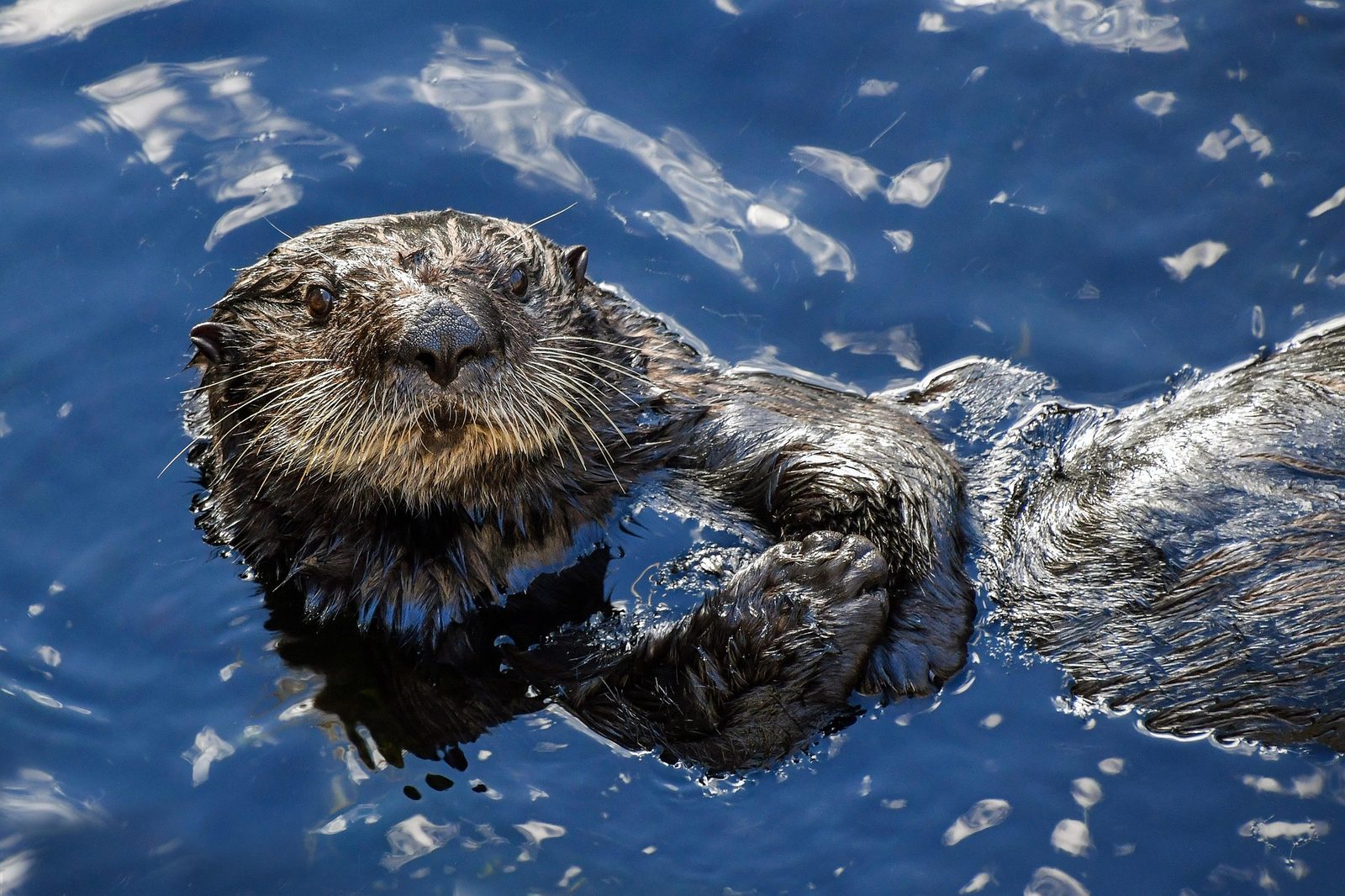
Sea otters float on their backs in kelp forests, cracking open shellfish with rocks — one of the few animals that use tools. Their fur is the densest of any animal, with up to a million hairs per square inch, because they have no blubber to keep warm.
📋 Sea Otter at a glance
⚡ Superpower
Sea otters keep a favorite rock in a loose pocket of skin under their arm — their own built-in toolbox.
Where sea otters live and how they're built
Sea otters live in the kelp forests along the North Pacific coast, from California up to Alaska and across to Russia and Japan. They are the smallest marine mammals and the only ones without a layer of blubber. Instead they rely on the densest fur of any animal — up to a million hairs per square inch — which traps air against the skin and keeps them warm in cold water. That is why a sea otter spends so much time grooming: dirty or matted fur lets the cold in. They float on their backs, eat on their backs and even sleep on their backs.
How sea otters use tools to eat
Sea otters eat sea urchins, clams, crabs and other shellfish, diving to the seabed to collect them. Many have a favorite rock that they keep in a loose pocket of skin under a front leg. Back at the surface, the otter floats on its back, lays the rock on its chest and bangs a clam against it until the shell cracks. A sea otter has to eat about a quarter of its body weight every day to stay warm, so it is almost always hunting or eating.
Family life and why otters matter
A mother sea otter gives birth at sea to a single pup so fluffy that it cannot sink, and she floats it on her chest, grooming and feeding it, for months. When she dives for food she may wrap the pup in kelp so it does not drift away. Groups of otters rest together in rafts, sometimes holding paws while they sleep. By eating sea urchins, which would otherwise chew through the kelp, otters keep whole kelp forests alive, so scientists call them a keystone species. Sea otters are listed as endangered; they were hunted almost to extinction for their fur and are still recovering.
🤩 6 amazing Sea Otter facts
Sea otter fur is the densest on Earth — up to 1 million hairs per square inch.
Here is every sea otter fact from this page and the sea otter quiz in one list — handy for a school project or a car-ride quiz.
- Sea otter fur is the densest on Earth — up to 1 million hairs per square inch.
- They hold paws while sleeping so they don't drift apart. It's called rafting.
- Sea otters use rocks as tools and keep a favorite one in an underarm skin pocket.
- By eating sea urchins, otters protect entire kelp forests — scientists call them a keystone species.
- Sea otters can spend their whole lives at sea, even giving birth in the water.
- Healthy kelp forests are home to many other ocean animals.
❓ Common questions about sea otters
How big is a sea otter?
Up to 100 lb (45 kg). Sea otter fur is the densest on Earth — up to 1 million hairs per square inch.
Where do sea otters live?
Sea otters live in the wild: kelp forests of the north pacific coast. They are wild animals and are never kept as pets.
What do sea otters eat?
Sea otters are carnivores: sea urchins, clams, crabs.
How fast can a sea otter move?
~1 million hairs per square inch. Sea otters keep a favorite rock in a loose pocket of skin under their arm — their own built-in toolbox.
How long do sea otters live?
Sea otters typically live 15–20 years.
Can you keep a sea otter as a pet?
No — sea otters are wild animals that belong in the wild (kelp forests of the north pacific coast), and keeping one would be unsafe and usually illegal. The closest pet you can actually keep is a ferret — see our care guide.
Could you keep a sea otter as a pet?
No — sea otters are wild animals that belong in the wild, and keeping one would be unsafe and almost always illegal. But if sea otters are your favorite, here's the closest pet you actually can welcome home:
 Meet the FerretBecause no pet is a sea otter, but a ferret shares that same playful, curious, wrestle-all-day personality.
See care guide →
🎬 See sea otters in action
Watch kid-friendly videos about sea otters on YouTube.
▶ Watch Sea Otter videos on YouTube