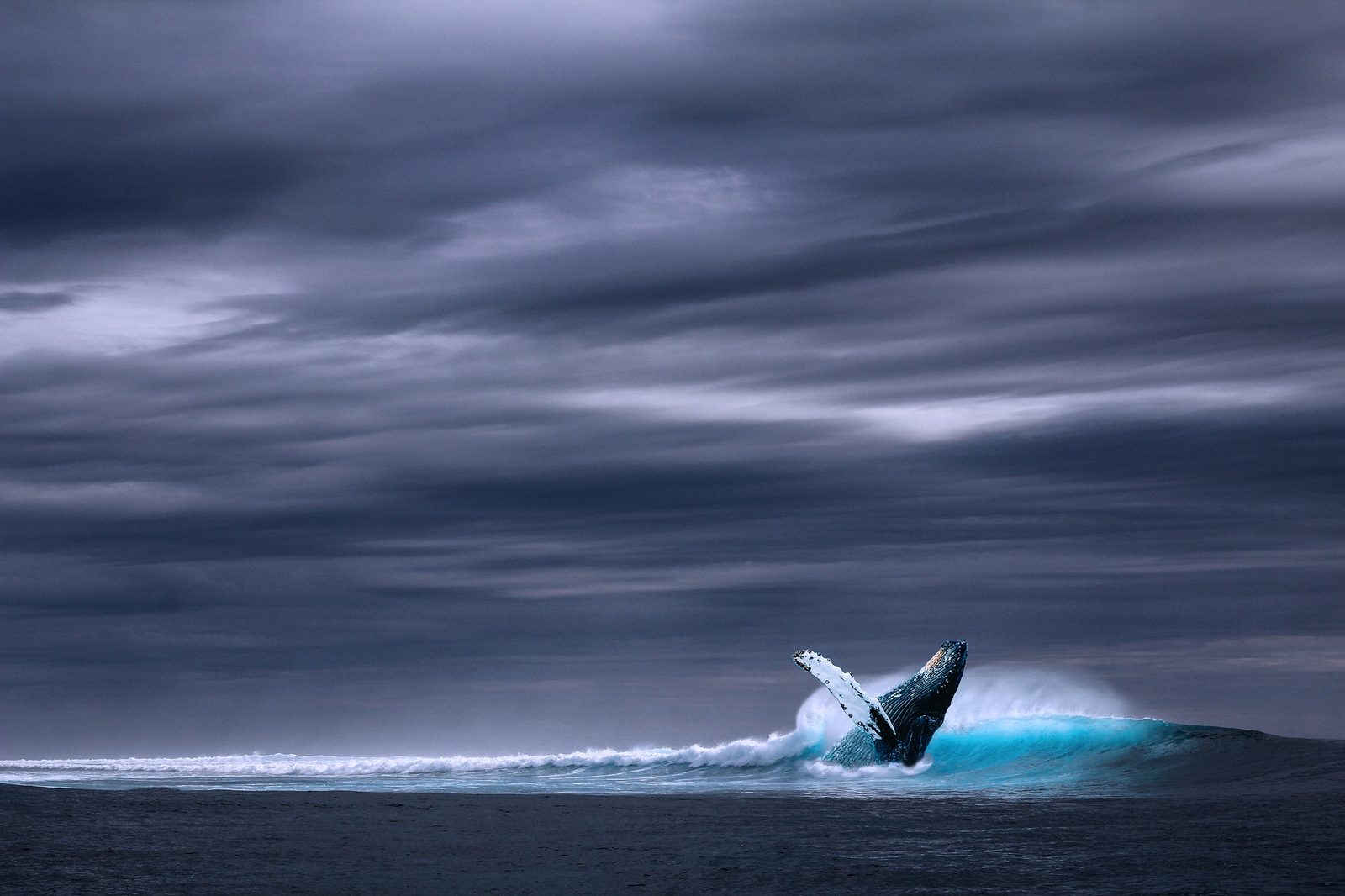
Blue whales are the largest animals ever — bigger than the biggest dinosaurs. Yet these giants eat some of the ocean's tiniest creatures, gulping up to 4 tons of shrimp-like krill every day through bristly plates in their mouths.
📋 Blue Whale at a glance
⚡ Superpower
A blue whale's call is louder than a jet engine and can travel hundreds of miles through the ocean.
Where blue whales live and how big they really are
Blue whales live in every ocean on Earth, from the icy poles to the tropics, travelling huge distances between cold feeding grounds and warm breeding waters. They are the largest animals that have ever lived — bigger than any dinosaur — growing up to around 100 feet long and weighing as much as 200 tons. A blue whale's heart is about the size of a small car and its tongue alone can weigh as much as an elephant. Yet a blue whale is streamlined and graceful, a long blue-grey shape that slips through the water with slow beats of its tail.
What blue whales eat: the biggest animal, the tiniest food
The largest animal ever eats some of the smallest: krill, shrimp-like creatures the size of your little finger. A blue whale lunges into a cloud of krill with its mouth open, takes in an enormous gulp of water, then pushes the water out through the fringed plates hanging from its upper jaw, called baleen, which trap the krill inside. In a good feeding season a blue whale can eat around 4 tons of krill a day, which is tens of millions of tiny animals.
Family life and a slow recovery
A blue whale calf is born already enormous and drinks such rich milk that it gains around 200 lb a day for its first months. Mother and calf travel together, and the mother's deep calls — louder than a jet engine and able to cross hundreds of miles of ocean — may help whales find each other across the vast, empty sea. Blue whales were hunted almost to extinction in the last century. Hunting them is now banned and their numbers are slowly rising, but they are still listed as endangered.
🤩 5 amazing Blue Whale facts
A blue whale's heart is about the size of a small car and weighs ~400 lb.
Here is every blue whale fact from this page and the blue whale quiz in one list — handy for a school project or a car-ride quiz.
- A blue whale's heart is about the size of a small car and weighs ~400 lb.
- Its tongue alone can weigh as much as an elephant.
- Blue whale calls are among the loudest animal sounds on Earth and travel hundreds of miles underwater.
- A baby blue whale gains about 200 lb a DAY drinking milk.
- Blue whales eat up to 4 tons of krill a day — about 40 million of the little critters.
❓ Common questions about blue whales
How big is a blue whale?
Up to 100 ft & ~200 tons. A blue whale's heart is about the size of a small car and weighs ~400 lb.
Where do blue whales live?
Blue whales live in the wild: oceans all over the world. They are wild animals and are never kept as pets.
What do blue whales eat?
Blue whales are tiny krills: about 4 tons a day.
How fast can a blue whale move?
Heart the size of a go-kart. A blue whale's call is louder than a jet engine and can travel hundreds of miles through the ocean.
How long do blue whales live?
Blue whales typically live 80–90 years.
Can you keep a blue whale as a pet?
No — blue whales are wild animals that belong in the wild (oceans all over the world), and keeping one would be unsafe and usually illegal. The closest pet you can actually keep is a fish — see our care guide.
Could you keep a blue whale as a pet?
No — blue whales are wild animals that belong in the wild, and keeping one would be unsafe and almost always illegal. But if blue whales are your favorite, here's the closest pet you actually can welcome home:
 Meet the FishBecause nothing compares to the biggest animal on Earth, but a home aquarium brings the wonder of underwater life into your room.
See care guide →
🎬 See blue whales in action
Watch kid-friendly videos about blue whales on YouTube.
▶ Watch Blue Whale videos on YouTube