
💬 For grown-ups: this page links to products on Amazon. As an Amazon Associate I earn from qualifying purchases. How we pick gear →
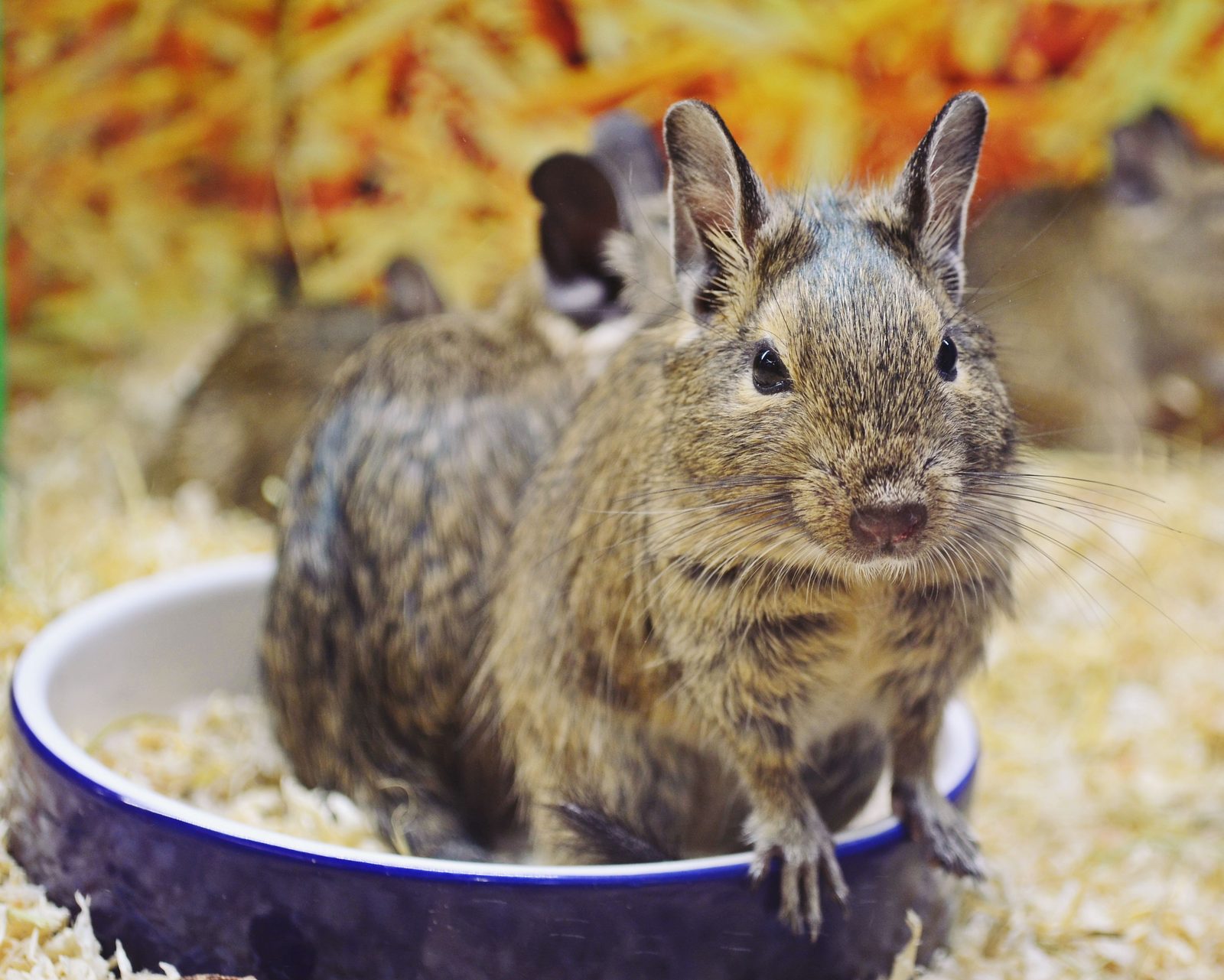
A degu is the daytime answer to the hamster problem: a smart, chatty little rodent from Chile that's wide awake during the day, loves company, and genuinely learns to know its people. Degus need a friend of their own kind, a big chew-proof cage, dust baths like a chinchilla — and one famous rule: no sugary food, ever. In return you get 5–9 years of squeaky, curious, pocket-sized personality.
Is a degu a good pet for kids?
Quick answer: Degus are great pets for most kids. They're awake in the daytime, social and chatty, but they must live in pairs or groups, need a big metal cage, overheat easily, and need a diet with no sugar.
- 👍 Best for: awake in the daytime — active when kids are, chatty, curious, and fun to watch together
- 👀 Keep in mind: must be kept in pairs or groups
- ⏳ Lifespan: 5–9 years
- 💲 Ongoing cost: about $15–$35/mo (setup & vet extra)
📋 Degu at a glance
Should I get a degu?
💚 Why you'll love a degu
- Awake in the daytime — active when kids are
- Genuinely social and quick to learn trust
- Chatty, curious, and fun to watch together
- Longer-lived than a hamster or gerbil
⚠️ Things to know
- Must be kept in pairs or groups
- Champion chewers — need a metal cage and no plastic
- Can never eat fruit or sugary treats
- Banned in a handful of US states
The honest answer: Yes, if your family can hold a strict no-sugar rule, buy a metal cage, and check your state's laws - degus are the daytime rodent most families are really after.
👍 Get one if…
- Your kids want a pet awake every afternoon
- You can say no to fruit forever
- You have room for two chattering degus
- You're charmed by squeaks, chirps, and warbles
👎 Think again if…
- You'd slip a degu a sugary treat
- You're in one of the states where degus are banned
- You have grabby hands at home — a degu's tail skin tears off
- You're hoping a plastic cage will hold up
✅ Am I ready for a degu?
Degus are the small rodent most likely to suit a family that has been disappointed by hamsters: they are awake during the day, highly social, vocal, and they live six to eight years rather than two. They are also more demanding than the cage-sized pets they sit beside, and they have one dietary rule that is stricter than almost any other pet here.
The part people underestimate
Sugar. Degus are prone to diabetes and cannot process sugary food — which rules out most commercial rodent treats, fruit, and many muesli-style mixes sold for them. It is an easy rule to follow once you know it and an easy one to break by buying what the pet shop puts in front of you. Read the ingredients rather than the packaging.
Who a degu suits, and all 5 questions to answer honestly
Right for you if you want a daytime-active, genuinely social rodent that lives long enough to bond with, you can keep at least two, and you can provide a large multi-level cage with plenty to chew.
Probably not if you can only keep one — degus are colony animals and a lone degu suffers badly — or if a strict diet feels like a constraint too far. Their tails can also shed if grabbed, so they need careful handling.
There are no wrong answers, and a "not yet" is a perfectly good result: it usually means one fixable thing stands between you and a pet you would do well by.
Degus must live in same-sex pairs or groups — you're signing up for at least TWO. Is your family okay with that?
- Two degus, double the fun
- I was picturing just one
- We only want a single pet
If that one gave you pause: A lone degu becomes stressed and unhappy — two are honestly easier. If one pet is the rule, look at a Syrian hamster instead.
The golden degu rule: NO sugar, ever — not even fruit. Could your whole family stick to that?
- No fruit, no sweet treats — understood
- Mostly, but grandma sneaks treats…
- Wait, not even a bit of apple?
If that one gave you pause: Degus get diabetes shockingly easily. Put a "NO FRUIT, NO SUGAR" note on the cage and brief every treat-giver in the house.
Degus chew EVERYTHING — plastic shelves, wires, baseboards. Can you offer a metal cage and degu-proofed playtime?
- Metal cage, wood shelves, chew toys — ready
- I'd need to upgrade our old hamster cage
- I hadn't planned for the chewing
If that one gave you pause: Budget for a chinchilla-style metal cage with wooden shelves. Plastic cages are a snack, not a home, for degu teeth.
Degus are daytime animals that want interaction while you're awake. Is someone around during the day most days?
- Yes — that's exactly why we want one
- Afternoons and weekends, mostly
- The house is empty most days
If that one gave you pause: A degu pair keeps each other company, but they're happiest with daily human time too. If the house is empty all day, rethink the fit.
One more: degus live 5–9 years, and never grab one by the tail — the skin can tear off. Can everyone learn safe scooping?
- Two-hand scoop under the body — got it
- The kids would need practice
- Little siblings grab things…
If that one gave you pause: Practice the two-hand scoop with a stuffed animal first, and make "never the tail" the family rule before the degus arrive.
How to care for your Degu
📏 The numbers that matter
| Adult size | About 13–17 inches long including the tail, and 170–300 g |
|---|---|
| Cage for a pair | At least about 39 x 20 x 39 inches (100 x 50 x 100 cm), Austria's legal minimum, with 20% more floor for each extra degu. All metal, with a solid roof, no plastic and no glass tank |
| Room temperature | Keep them cool: the RSPCA says no higher than about 68°F (20°C). Heat stress sets in above about 86°F (30°C) |
| Sand bath | 2–3 times a week for about 20 minutes in 1.5 inches (4 cm) of chinchilla sand, then take it out |
| Hay | Unlimited: it should be most of what they eat |
| Pellets | About 1–2 tablespoons (10 g) per degu a day, molasses-free |
| Fresh greens | A small portion of leafy greens, from a couple of times a week to a little daily |
| Teeth | Healthy front teeth are yellow-orange. Check weekly; white teeth can mean illness |
| Weigh them | Once a week. Vets suggest no more than about 250 g for females and 275 g for males |
| Vet | A checkup at least once a year, with dental checks every 3–6 months |
Degu care in depth
The rodent that keeps your schedule
The most common complaint about small pets is "it sleeps all day." Degus fix exactly that: they're diurnal — awake in the daytime, asleep at night, just like your family. They're also seriously social: in the wild they live in chattering groups, and at home they must have at least one same-sex friend, or they become stressed and withdrawn. Expect a running commentary of squeaks, chirps, and warbles — degus have more than a dozen calls — and a pet that learns your voice, comes to the bars to greet you, and genuinely enjoys company.
Build for a champion chewer
Degus are related to chinchillas, and they treat plastic the way kids treat bubble wrap. Their home needs to be a large, multi-level metal cage with wooden (not plastic) shelves, a solid-surface wheel (wire rungs hurt feet and tails), and plenty of chew toys and branches, because their teeth never stop growing. Like chinchillas, degus keep their coats clean with a sand bath — offer a bowl of special bathing sand a few times a week and enjoy the flippy, rolling show. One handling rule matters above all: never grab a degu by the tail. The skin can tear off as an escape trick — it protects them from hawks, but it doesn't grow back.
The no-sugar rule (and why teeth should be orange)
Degus have a famous quirk: sugary diets and obesity put them at real risk of diabetes and cataracts. That means no fruit, no honey sticks, no sugary treats — ever. Their menu is degu pellets, unlimited hay, and safe veggies, with a pinch of dried herbs as the "candy" of the degu world. Here's a fun health check kids love: a healthy degu's front teeth are orange — white teeth in a degu are actually a warning sign. Their most common health problem, though, is teeth: in a study of 300 pet degus, 60% had dental disease, so weekly tooth checks matter. Feed them right and these little chatterboxes stick around 5–9 years, two or three times a hamster's run.
🥗 What to feed a degu
Degus are built for tough, dry grasses, so hay is the main event, with a small scoop of pellets and a little fresh greenery. Sugar is the big danger: sugary diets and obesity put degus at risk of diabetes and cataracts, which is why fruit and sweet treats are off the menu.
- Unlimited timothy or meadow hay
- About 1–2 tablespoons of degu, guinea pig or chinchilla pellets with no molasses
- Fresh water in a bottle
- Dried herbs as a treat
- Small portions of leafy greens like dandelion, parsley or lettuce
- Tiny pieces of root veg like carrot (sugary, so very occasional)
- Fruit and dried fruit
- Honey, molasses and sugary treats
- Muesli-style mixes
- Corn and peas
- Potatoes
- Seeds and nuts as regular food
- Rabbit, hamster or gerbil food
🩺 Health: what's normal, and when to call the vet
In a study of 300 pet degus, dental disease was the most common problem by far, affecting 60%. Weekly tooth and weight checks catch most trouble early, and degus overheat easily, so a cool room matters all year round.
- Busy and curious in the daytime
- Bright, clear eyes and clean ears
- Glossy fur and a clean tail
- Yellow-orange front teeth that meet neatly
- Eating hay steadily
- Normal droppings and a clean bottom
- Weepy eyes or a runny nose
- Drooling or a wet mouth
- Picking at food without eating it
- Teeth turning pale, or growing at an angle
- A swollen jaw
- Fewer or smaller droppings
- Drinking and peeing much more than usual
- Cloudy eyes
- Bald patches or chewed fur
- Lying flat on the stomach and very still on a warm day (heatstroke)
- A tail that has lost its skin (tail slip)
- A swollen, tight belly with breathing trouble
- Not eating, especially in an overweight degu
- Struggling to breathe
Common health problems (tap to open)
Dental disease
What to watch for: Drooling, dropping food, weight loss, a swollen jaw, or teeth that turn pale or crooked. In older degus the tooth roots can grow into the nose and eye sockets.
How to prevent it: Lots of hay to chew, safe chew toys, weekly tooth checks and regular vet dental checks.
Diabetes and cataracts
What to watch for: Drinking and peeing much more, weight changes, and cloudy eyes. Cataracts can also be inherited.
How to prevent it: No fruit, honey or sugary treats, molasses-free pellets, and keeping your degus at a healthy weight.
Tail slip
What to watch for: The skin of the tail comes off if a degu is grabbed by the tail. It does not grow back, and the bare tail usually has to be removed by a vet.
How to prevent it: Never pick up or hold a degu by the tail, and see a vet urgently if it happens.
Heatstroke
What to watch for: Lying flat and still, breathing fast, weak, on a warm day.
How to prevent it: Keep the cage in a cool room out of direct sun. Move a hot degu somewhere cool and call a vet immediately.
Bloat
What to watch for: A swollen, tight belly, often in a degu that is struggling to breathe through a blocked nose.
How to prevent it: Treat runny noses early and see a vet right away for a swollen belly.
Fur chewing
What to watch for: Bald or chewed patches, often on the back or tail. It affected about 1 in 8 degus in the large study.
How to prevent it: Company, space, a sand bath, things to dig and chew, and a vet check.
Sore feet and ringworm
What to watch for: Red, scabby feet, or round patches of hair loss. Ringworm can spread to people.
How to prevent it: Solid floors with deep, clean bedding, and a vet visit for skin problems.
💬 What your degu is telling you
Degus are among the chattiest rodents. Scientists have identified about 15 different degu calls.
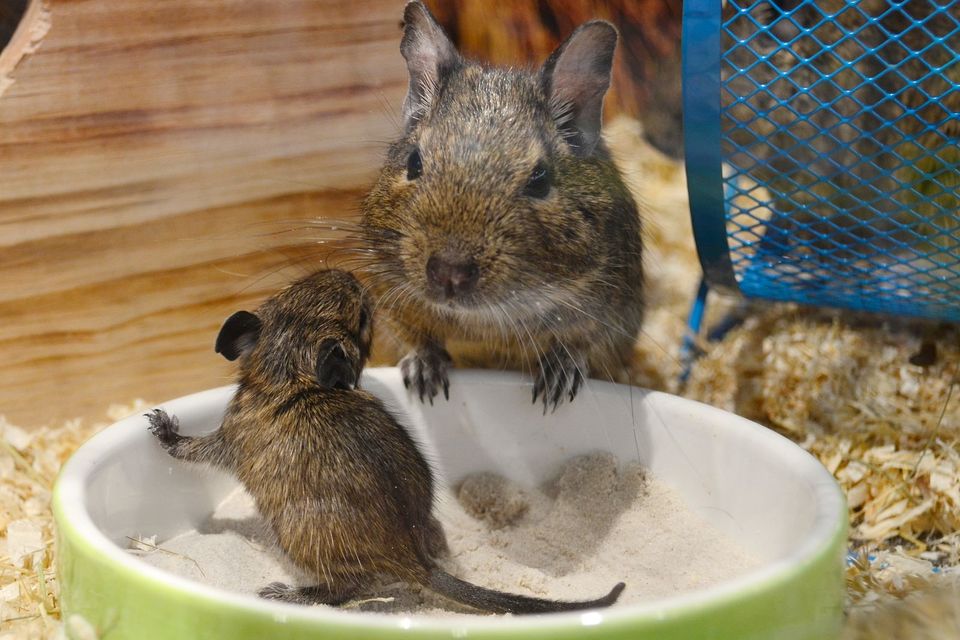
Degus are chatty, social daytime rodents that must live in same-sex pairs or groups. They live 5–9 years, love company, and have one golden rule: no sugar, ever.
✅ Before you bring a degu home
🔎 Choosing a healthy degu
Look for a healthy degu with bright eyes, clean ears, glossy fur and level, orange teeth, and ask how it has been fed. Degus need company: same-sex pairs or groups of up to four or five work well, or one neutered male with a few females. Introduce new degus slowly, in side-by-side cages, over one to two weeks.
- Bright, clear eyes and clean ears
- Glossy fur and a clean tail
- Yellow-orange front teeth that meet neatly
- A clean bottom
- Alert and active in the daytime
- A same-sex companion, or a plan for one
🗓️ Your routine — easy chores to remember
- Fresh hay, pellets, and water
- Daytime hangout and playtime
- A quick health glance — bright eyes, orange teeth
- Spot-check the bedding and clean as needed
- Sand bath 2–3 times a week for about 20 minutes
- Weigh them and check their teeth
- Clean the cage floor and swap bedding
- Rotate chew toys
- Deep-clean the cage
- Vet dental check every 3–6 months
- Check tail and fur health
💰 Monthly cost: Medium: the big cage is the main cost; hay, pellets, and sand are cheap. Remember you're buying for two!
🤩 Fun facts about your Degu
Degus 'talk' all day with more than a dozen different squeaks, chirps, and warbles.
❓ Common questions about degus
How much does a degu cost per month?
Plan on roughly $15–$35 per month for food, bedding and supplies, with a little set aside for routine care; setup and unexpected vet bills are extra. Medium: the big cage is the main cost; hay, pellets, and sand are cheap. Remember you're buying for two!
Are degus good pets for kids?
For families ready for a pair, yes — they're friendly, smart, chatty, and (unlike hamsters) awake in the daytime. They suit kids who want to interact and watch rather than carry a pet around, and an adult should oversee cage care and the strict no-sugar diet.
How long do degus live?
Degus typically live 5–9 years. Make sure your family is ready for that commitment before bringing one home.
Are degus allergy-friendly?
Degus have fur and use dust baths, so they're not a good pick for allergy-sensitive families.
Should I get a degu?
Yes, if your family can hold a strict no-sugar rule, buy a metal cage, and check your state's laws - degus are the daytime rodent most families are really after. Get one if: Your kids want a pet awake every afternoon; You can say no to fruit forever; You have room for two chattering degus; You're charmed by squeaks, chirps, and warbles. Think again if: You'd slip a degu a sugary treat; You're in one of the states where degus are banned; You have grabby hands at home — a degu's tail skin tears off; You're hoping a plastic cage will hold up.
Why can't degus eat fruit?
Sugary diets and obesity put degus at risk of diabetes and cataracts. Even fruit is too sugary, so their treats are things like herbs or little bits of veggie. It's the single most important degu rule.
Can I keep just one degu?
No — degus are intensely social and a lone degu becomes stressed and unhappy. Keep a same-sex pair or small group from the start. Two degus are honestly easier to care for than one lonely one.
What temperature do degus need?
Cool. The RSPCA says to keep degus at no more than about 68°F (20°C), and heat stress sets in above about 86°F (30°C). Keep the cage out of direct sun and away from heaters, and treat a degu lying flat and still on a warm day as an emergency.
Are degus legal in my state?
Most US states allow them, but California, Utah, Georgia, and Alaska ban or restrict degus. Rules change, so check your state wildlife or agriculture department before getting a pair.
Can degus be kept alone?
No — they are highly social and a solitary degu does poorly. Keep a same-sex pair or a small group.
🎬 Degu care videos
Watch beginner-friendly care videos for your degu.
▶ Watch Degu care videos on YouTube📚 Where this comes from
We check our care advice against vets, animal charities, and government health guidance. Here is what this page is built on.
Vets, charities & official guidance
- Degus as pets — PDSA
- Degu care and wellbeing — Blue Cross
- What to feed a pet degu — RSPCA
- Degu health and welfare tips — RSPCA
- Basic information for degus — LafeberVet
- Degu environment — RSPCA
- A VN's guide to degus, part two: common health issues — Vet Times
- Disorders in 300 pet degus (Jekl et al., 2011) — Journal of Small Animal Practice
- Vocalisations of the degu (Long, 2007) — Bioacoustics
- Octodon degus — Animal Diversity Web, University of Michigan
Keeper & species-community guides
Checked August 2026. These are other people’s websites, and none of it replaces your own vet — if a pet seems unwell, call one.


