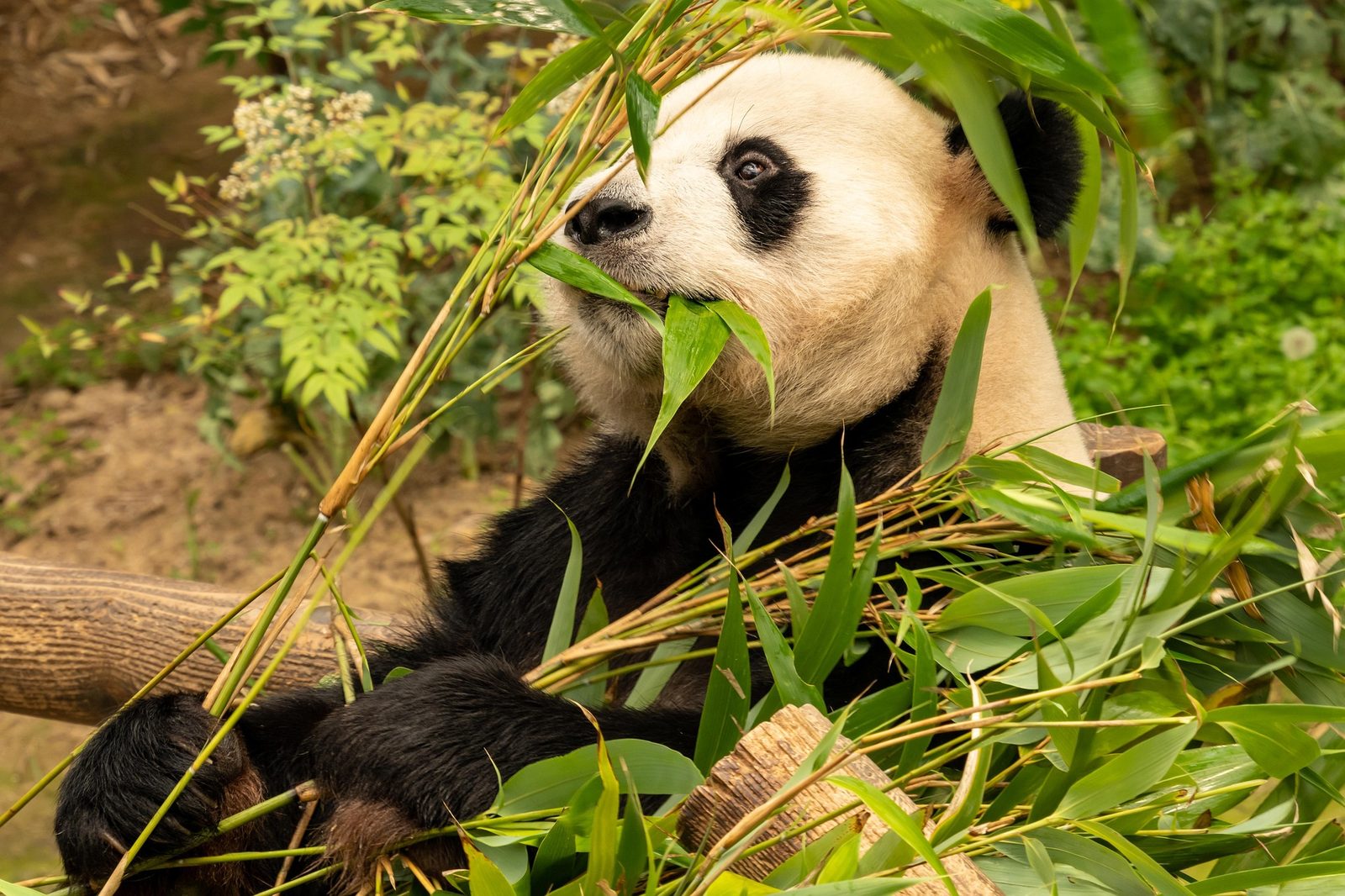
Giant pandas spend up to 12 hours a day eating bamboo — and almost nothing else. They live only in the cool, misty mountain forests of China. Even though they look cuddly, pandas are real bears that can climb trees and swim.
📋 Giant Panda at a glance
⚡ Superpower
Pandas have a special "extra thumb" — a wrist bone that helps them grip bamboo like a handle.
Where pandas live and how they're built
Giant pandas live in only one place in the wild: the cool, misty bamboo forests high in the mountains of central China. They are real bears, with the same big bodies and strong jaws, but their black-and-white coats and round faces make them look like living toys. A panda's most surprising feature is on its wrist — an enlarged bone that works like an extra thumb, letting it hold a bamboo stalk the way you hold a snack. Pandas can climb trees well and are decent swimmers, though they would rather sit and eat.
What pandas eat and why it takes all day
Almost everything a panda eats is bamboo — 20 to 40 lb of it every day. Bamboo is tough and not very nourishing, and a panda's insides are still built like a meat-eater's, so it has to eat for up to 12 hours a day just to get enough energy. That is why pandas seem so lazy: they are saving every scrap of strength. They pick the tenderest shoots and leaves, sit upright to strip them, and move on to a new patch when one is used up.
Family life and the panda comeback
A newborn panda is astonishingly small — about the size of a stick of butter, pink and blind and covered in fine white hair. Its mother holds it constantly for the first weeks and the cub does not get its black-and-white markings for some time. Cubs stay with their mother for a year and a half or more before heading off to live alone, which is how adult pandas prefer it. Giant pandas were once close to disappearing; China's protected reserves and bamboo corridors have helped their numbers grow, and they are now listed as vulnerable rather than endangered.
🤩 6 amazing Giant Panda facts
A panda eats 20–40 lb of bamboo every single day.
Here is every giant panda fact from this page and the giant panda quiz in one list — handy for a school project or a car-ride quiz.
- A panda eats 20–40 lb of bamboo every single day.
- Pandas have a "fake thumb" — an extra wrist bone for gripping bamboo stalks.
- A newborn panda is about the size of a stick of butter — around 1/900 the size of its mom.
- Pandas are excellent tree climbers and good swimmers.
- Wild pandas live only in China, high in mountain bamboo forests.
- Pandas can climb trees and are good swimmers, just like other bears.
❓ Common questions about giant pandas
How big is a giant panda?
Up to 250 lb (115 kg). A panda eats 20–40 lb of bamboo every single day.
Where do giant pandas live?
Giant pandas live in the wild: bamboo forests in the mountains of china. They are wild animals and are never kept as pets.
What do giant pandas eat?
Giant pandas are almost all bamboos: 20–40 lb a day.
How fast can a giant panda move?
Eats 12 hours a day. Pandas have a special "extra thumb" — a wrist bone that helps them grip bamboo like a handle.
How long do giant pandas live?
Giant pandas typically live ~20 years in the wild.
Can you keep a giant panda as a pet?
No — giant pandas are wild animals that belong in the wild (bamboo forests in the mountains of china), and keeping one would be unsafe and usually illegal. The closest pet you can actually keep is a guinea pig — see our care guide.
Could you keep a giant panda as a pet?
No — giant pandas are wild animals that belong in the wild, and keeping one would be unsafe and almost always illegal. But if giant pandas are your favorite, here's the closest pet you actually can welcome home:
 Meet the Guinea PigBecause no pet is like a panda, but for a gentle, plant-munching companion a guinea pig is a lovable stand-in.
See care guide →
🎬 See giant pandas in action
Watch kid-friendly videos about giant pandas on YouTube.
▶ Watch Giant Panda videos on YouTube