🦎 The Best Leopard Gecko Tank Setup: A Beginner Buying Guide
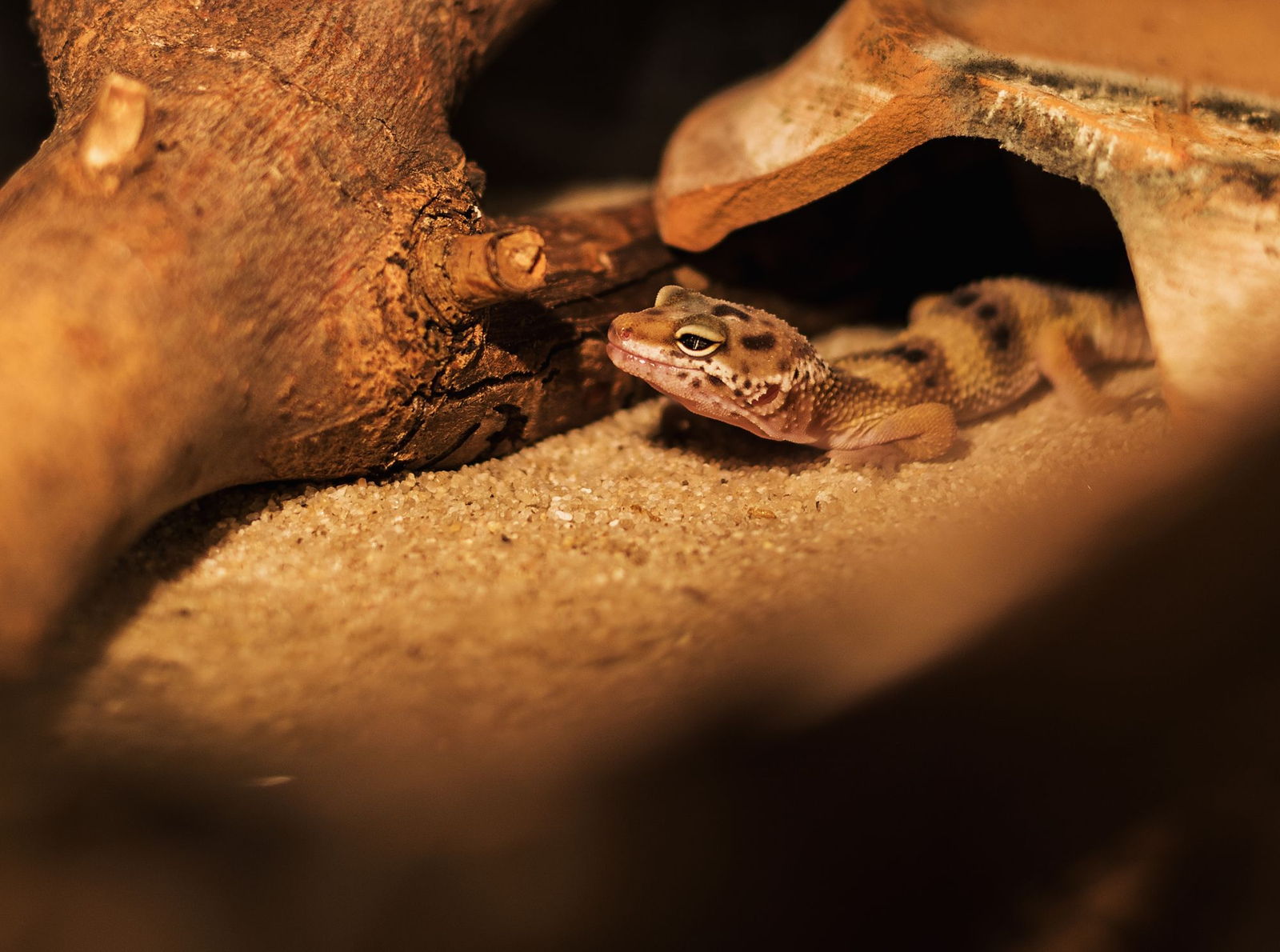
The leopard gecko is often called one of the best beginner reptiles, and it's easy to see why — they stay small, are calm to handle, and don't demand the huge, blazing-hot habitats some lizards do. The catch is that the setup is the hard part. Get the enclosure, heat, and hides right, and day-to-day care becomes genuinely simple and rewarding.
Enclosure size & type
A single adult leopard gecko needs a 20-gallon long tank at the absolute minimum, and bigger is genuinely better — most keepers now aim for a 36x18x18 enclosure (about a 40-gallon breeder), because the extra floor space lets your gecko explore and spreads out the warm and cool zones. A front-opening enclosure makes daily care easier and is far less stressful than reaching down from above, since geckos are ground-dwellers who don't love things swooping in overhead.
Heat & lighting
Leopard geckos warm up the way most lizards do — from above — so an overhead heat bulb over one end is the modern first choice, with an under-tank heat mat as an optional extra beneath the warm hide. Aim for a warm side around 90°F and a cool side around 75°F so your gecko can choose where to sit. Always run the heat source on a thermostat — this is non-negotiable, as an unregulated mat can overheat and burn. Keep a thermometer and hygrometer on hand to track temperature and humidity. Because leopard geckos are nocturnal to crepuscular (active at dusk and night), they don't rely on strong daylight, but a low level of UVB is optional and beneficial for their long-term health.
Hides & shedding
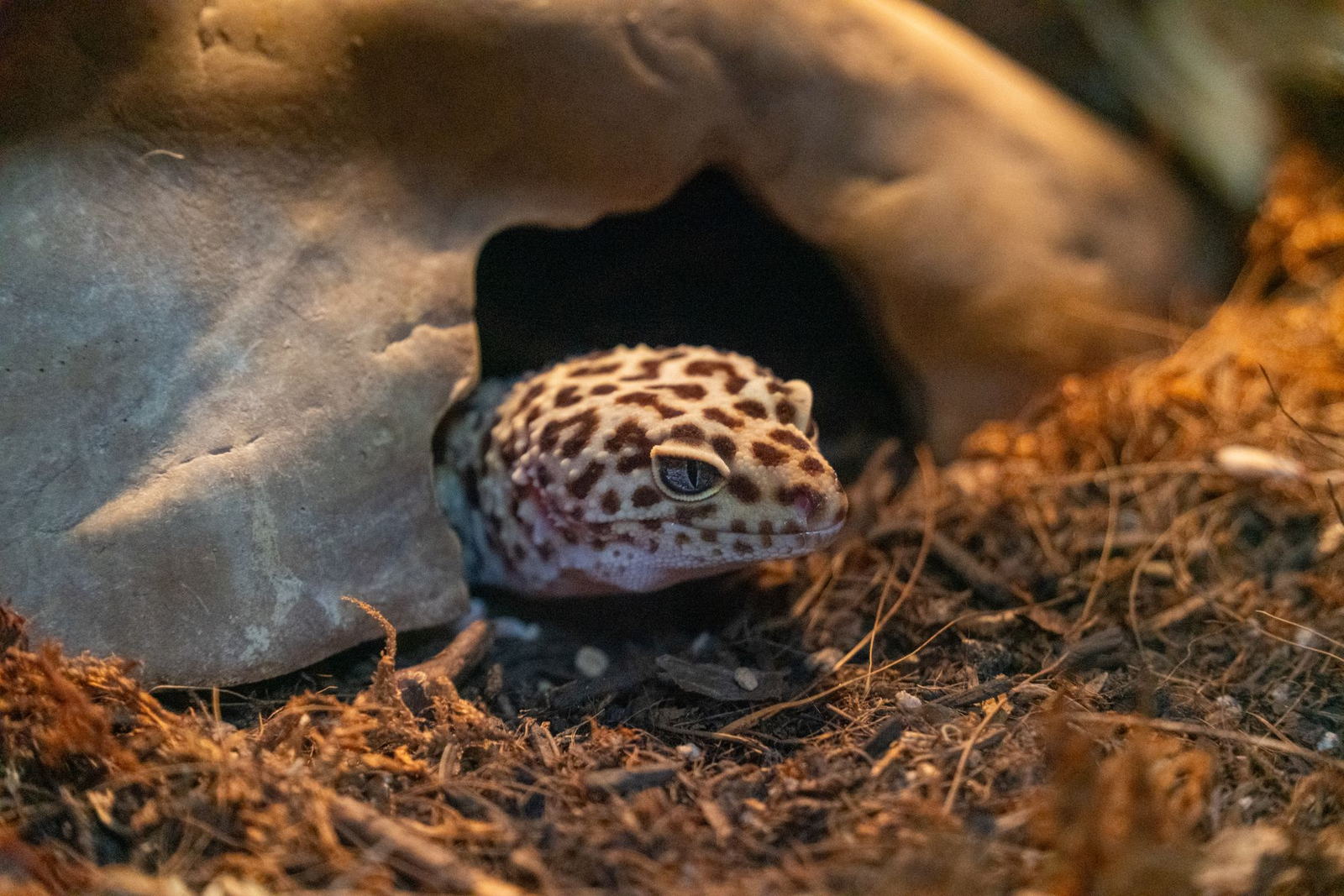
Hides are where leopard geckos feel safe, and you want three of them: a warm hide on the heated side, a cool hide on the other end, and a humid hide in the middle filled with damp moss. That moist hide is essential — it helps your gecko shed its skin cleanly, which prevents stuck shed around the toes and eyes. Check and re-dampen the moss regularly so it never dries out.
Substrate
Use a solid substrate such as tile or paper towel, especially for young geckos. Avoid loose sand, which a gecko can accidentally swallow while snapping at food and which can cause impaction. Solid flooring is also easier to keep tidy and lets you monitor your gecko's droppings for signs of trouble.
Feeding
Leopard geckos are strict insectivores — they eat live bugs and nothing else. Offer gut-loaded crickets or dubia roaches dusted with calcium. "Gut-loading" simply means feeding the insects nutritious food before they go to your gecko, so your pet gets that nutrition secondhand. Feed appropriately sized prey (nothing wider than the space between the gecko's eyes) and dust with calcium regularly to keep bones strong. One pairing matters: if you run a low-level UVB light, use plain calcium; if you don't, use calcium with vitamin D3, because without D3 your gecko can't use the calcium at all.
Daily & weekly care
Day to day, check that temperatures are holding, refresh the water dish, and keep the humid hide moist. Feed on a schedule that suits your gecko's age, and spot-check the enclosure for anything out of place. Handling can begin once your gecko has settled in — go slowly, support the body, and keep sessions short at first. Leopard geckos are famously mellow, and with good care they can live 15–20 years, so a little patience early on pays off for a long time.
Quick setup checklist
- 20-gallon long minimum, front-opening, bigger is better
- Overhead heat over one end, with a mat as an optional extra; warm side ~90°F, cool side ~75°F
- Heat source ALWAYS on a thermostat
- Thermometer and hygrometer to monitor conditions
- Three hides: warm, cool, and a humid hide with damp moss
- Solid substrate (tile or paper towel), not loose sand
- Gut-loaded crickets or dubia dusted with calcium — plain calcium if you use UVB, calcium with D3 if you don't
- Optional low-level UVB for added health
Weighing your options among easy first reptiles? Compare notes with our beginner reptiles guide, peek at a bearded dragon setup for contrast, and take our free pet quiz to find your perfect match.
🛒 Recommended supplies
Hand-picked gear for this guide. Affiliate links — we may earn a commission. The $/$$/$$$ badges are a rough budget guide, not live prices.
🧽 Cleaning & maintenance
Spot-clean daily: remove droppings, shed skin, and uneaten feeder insects as soon as you see them, and refresh the water dish. Wipe the glass and disinfect the food and water bowls weekly. Every month or two do a deeper clean — replace or sift the substrate and scrub the enclosure and décor with a reptile-safe disinfectant (such as diluted chlorhexidine or an F10 solution), rinsing and drying fully before the gecko goes back in. Avoid household disinfectants and strong fumes, which can be toxic to reptiles, and always wash your hands after cleaning to prevent germs like salmonella.
Cleaning supplies for this habitat. Affiliate links — we may earn a commission. The $/$$/$$$ badges are a rough budget guide, not live prices.
⚠️ Common gecko setup mistakes
Already have one and something feels off? Start here. These catch almost everybody — none of them mean you have done badly, and every one of them is fixable.
Can a heat rock burn my leopard gecko?
The mistake: Using a heat rock in the tank.
Heat rocks develop scorching hot spots, and a gecko will happily sit right on one. Belly burns are one of the most common injuries reptile vets see, and they take months to heal.
Try this: Unplug it today and warm one end from above with a heat bulb instead. If you want belly warmth as well, a heat mat under the warm hide is fine — as long as it runs through a thermostat.
Can two leopard geckos live in the same tank?
The mistake: Housing two leopard geckos in one tank.
Leopard geckos don't need company, and one usually takes charge of the warm hide and the food. The other slowly loses weight or picks up bites, often with no fighting you'd ever catch them at.
Try this: Give each gecko its own tank. A second setup is real money, so until then watch closely and separate at the first sign of bite marks, a nipped tail tip, or one gecko getting thin.
Where should the thermostat probe go in a leopard gecko tank?
The mistake: Clipping the thermostat probe to the glass.
A thermostat only controls the spot its probe is touching. Stuck on a cool wall or dangling in mid-air, it reads too cold, keeps calling for heat, and lets the warm hide climb well past the number you set.
Try this: Move the probe to where your gecko actually lies — on the floor of the warm hide for a mat, or just beside the warm spot under a lamp. Then check the real surface temperature with an infrared temp gun.
Should I leave a red night light on for my leopard gecko?
The mistake: Leaving a red or blue night light on.
Colored night bulbs aren't invisible to a gecko. Burning all night they interfere with its day-night rhythm, and blue ones are thought to bother reptile eyes. Geckos need real darkness to rest properly.
Try this: Switch everything off at night — free, and an improvement straight away. If the room genuinely drops below about 65°F, add a ceramic heat emitter on a thermostat: it makes heat but no light.
Can my leopard gecko live on just mealworms?
The mistake: Feeding only mealworms from a dish.
Mealworms are the fast food of the bug world — fatty, tough-skinned, and carrying far more phosphorus than calcium. That's exactly the balance that leads to soft, bendy bones over a year or two.
Try this: Rotate crickets, dubia roaches and black soldier fly larvae through the week, feed the insects vegetables for a day before they go in, and dust with calcium. Waxworms are sweets — a rare treat, not dinner.
❓ Common questions
What does a leopard gecko need in its tank?
The essentials: a 20-gallon-long (or bigger) tank, an overhead heat source at one end run on a thermostat, three hides (a warm hide, a cool hide, and a humid hide with damp moss), solid substrate like tile or paper towel, a shallow water dish, and a thermometer to check temperatures.
What size tank does a leopard gecko need?
A 20-gallon long tank is the minimum for one adult leopard gecko, and bigger is always better. A front-opening enclosure is best — it's easier for daily care and far less stressful than reaching in from above.
Do leopard geckos need a heat lamp?
Yes — an overhead heat bulb over one end is the modern first choice, on a thermostat, giving a warm side around 90°F and a cool side around 75°F. A heat mat under the warm hide is an optional extra. Because leopard geckos are active at dusk and night, strong daylight isn't required — a low level of UVB is optional but good for long-term health.
What substrate is safe for a leopard gecko?
Use a solid substrate such as tile or paper towel, especially for young geckos. Avoid loose sand — a gecko can accidentally swallow it while snapping at food, which can cause a dangerous blockage called impaction.
How much does a gecko cost to keep?
Setting up a gecko habitat means buying the basics like 20-gallon long terrarium, heat source + thermostat, hides + humid moist hide. Day to day, a gecko runs about $20–$40 a month for food, bedding, and supplies — the one-time habitat setup and any vet care are extra.
Is a gecko a good pet for an apartment?
Yes. Geckos need only a small space, so they suit apartments and small bedrooms well — just give the habitat a stable spot out of direct sun and drafts.
How much time does a gecko need each day?
Only a little. A gecko needs a few minutes a day for fresh food and water and a quick health check, plus a bigger clean about once a week.
📚 Where this comes from
We check our care advice against vets, animal charities, and government health guidance. Here is what this page is built on.
Vets, charities & official guidance
- Leopard gecko care — RSPCA
- Leopard gecko information sheet — LafeberVet
- Reptile husbandry requirements table — Merck Veterinary Manual
Keeper & species-community guides
Checked August 2026. These are other people’s websites, and none of it replaces your own vet — if a pet seems unwell, call one.