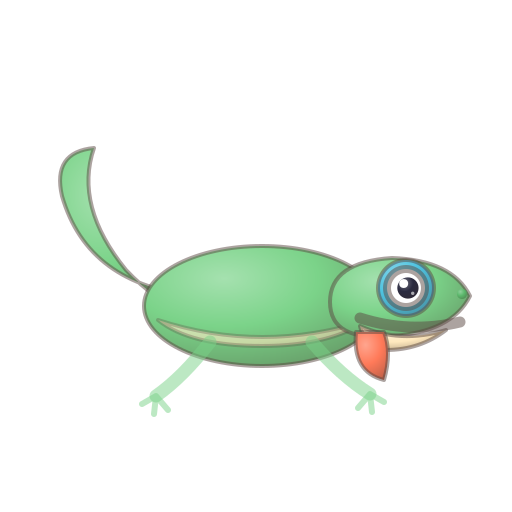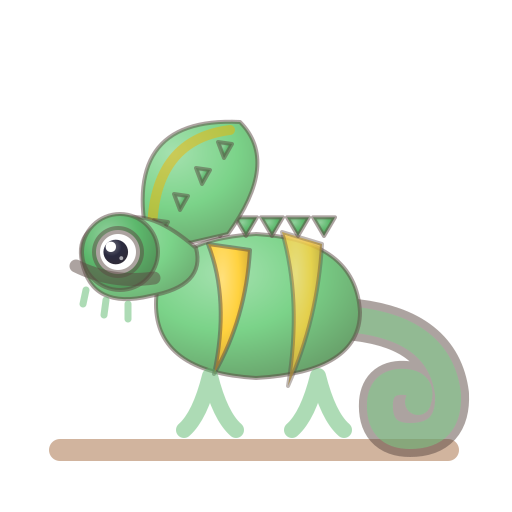
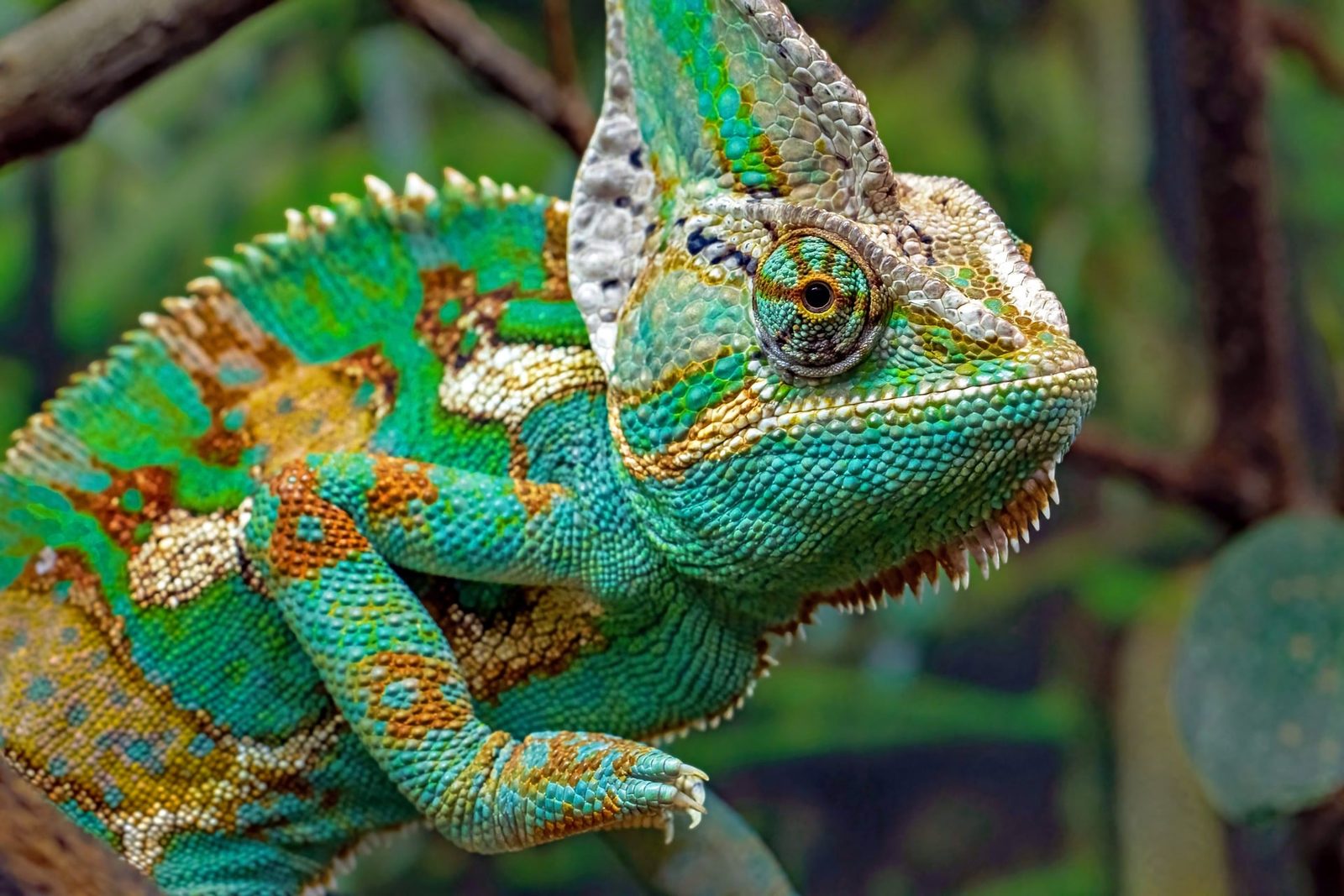
Chameleons are mesmerizing — they change color, swivel their eyes, and zap insects with a lightning tongue. But they're an advanced, hands-off pet with very specific needs (UVB, humidity, dripping water) and they get stressed easily, so they're for dedicated keepers who love to observe.
Is a chameleon a good pet for kids?
Quick answer: Chameleons are best for older kids with an adult helping. Chameleons are mesmerizing — they change color, swivel their eyes, and zap insects with a lightning tongue.
- 👍 Best for: amazing to watch — color, eyes, tongue, fascinating and unique
- 👀 Keep in mind: a watch, don't handle pet — stress easily
- ⏳ Lifespan: 5–8 years
- 💲 Ongoing cost: about $30–$60/mo (setup & vet extra)
📋 Chameleon at a glance
Should I get a chameleon?
💚 Why you'll love a chameleon
- Amazing to watch — color, eyes, tongue
- Allergy-friendly
- Fascinating and unique
- Active during the day
⚠️ Things to know
- A watch, don't handle pet — stress easily
- Very specific UVB, heat, and humidity needs
- Won't drink from a bowl (need a dripper)
- Shorter-lived and fairly delicate
The honest answer: Only if look-don't-touch is genuinely enough — a chameleon stressed by handling is a chameleon that gets sick, and five to eight years is all you get.
👍 Get one if…
- Your kid would rather watch than hold
- You enjoy dialing in humidity and UVB
- You have a quiet corner in a low-traffic room
- You're happy to buy live insects every week
👎 Think again if…
- Your child wants to hold their pet
- You have toddlers — the CDC's reptile warning applies here
- You want two — even seeing another stresses them
- You'd skip misting on a busy day
✅ Am I ready for a chameleon?
Wanting one and being ready for one are different questions. These are the ones worth answering honestly before you decide — there are no wrong answers, and a "not yet" is a perfectly good result.
Chameleons are STRICTLY watch-only — handling stresses them so much it can shorten their lives. Truly okay with never holding it?
- A color-changing marvel to observe — yes
- I'd sneak a hold sometimes
- I want to hold my pet
If that one gave you pause: Chameleons are living art, not cuddle buddies. If holding matters, a bearded dragon will make you much happier!
Chameleons don't drink from bowls — they need a dripper or misting system running daily. Can you manage the water show?
- Mister/dripper checked daily — yes
- I think so
- Sounds tricky
If that one gave you pause: Research misting systems with a grown-up — chameleons only drink moving water droplets from leaves.
How to care for your Chameleon
Chameleon care in depth
A "watch, don't hold" pet that stresses easily
Chameleons are mesmerizing to watch but are among the most easily stressed reptiles, and most dislike handling — being held raises their stress, which weakens their immune system. They're solitary, too: chameleons should be housed alone, as even the sight of another chameleon stresses them. Treat a chameleon as a beautiful animal to observe, kept in a quiet spot, and you'll both be happier. This is an advanced pet for dedicated keepers, not a hands-on pet for kids.
A screen cage with UVB, heat, and live plants
Chameleons need a tall, well-ventilated screen cage (glass tanks trap stagnant air and stress them), furnished with live plants and branches for climbing and cover. Get the lighting right: a UVB tube across the top to process calcium, a basking lamp at one end for warmth, and a temperature gradient. Dust their insect food with calcium. Get any of these wrong and metabolic bone disease follows quickly — chameleons are unforgiving of setup mistakes.
They won't drink from a bowl
Here's the detail that surprises everyone: chameleons don't recognize standing water and won't drink from a bowl. In the wild they lap water droplets off leaves, so a pet chameleon needs a dripper or an automatic misting system putting moving droplets on the plants several times a day. Without it, they quietly dehydrate — a very common cause of illness. Combined with their specific humidity needs, live insects, and short 5–8 year lifespan, this makes the chameleon a rewarding but demanding pet.
Chameleons are amazing to watch — they change color, swivel their eyes, and zap bugs with long tongues. But they're delicate and 'look, don't handle,' so they suit patient keepers. Many live 5–8 years.
✅ Before you bring a chameleon home
🗓️ Your routine — easy chores to remember
- Mist the cage (often a few times a day)
- Check temperatures and that the dripper works
- Feed gut-loaded insects, dusted with calcium
- Clean the cage and any droppings
- Check the plants and branches
- Watch they're eating and calm
- Deep-clean the enclosure
- Replace UVB bulb every 6–12 months
- Reptile-vet visit yearly
💰 Monthly cost: Higher: screen cage, lighting, plants, and a watering system add up.
🤩 Fun facts about your Chameleon
A chameleon's eyes can look in two directions at once.
❓ Common questions about chameleons
How much does a chameleon cost per month?
Plan on roughly $30–$60 per month for food and supplies. Higher: screen cage, lighting, plants, and a watering system add up.
Are chameleons good pets for kids?
Chameleons rate 2/5 for kid-friendliness — they're often more of a watch-and-learn pet for younger children. Observe, don't handle — most chameleons dislike it and get stressed.
How long do chameleons live?
Chameleons typically live 5–8 years. Make sure your family is ready for that commitment before bringing one home.
Are chameleons allergy-friendly?
No fur or dander, so allergy-friendly. Wash hands — reptiles can carry salmonella.
Should I get a chameleon?
Only if look-don't-touch is genuinely enough — a chameleon stressed by handling is a chameleon that gets sick, and five to eight years is all you get. Get one if: Your kid would rather watch than hold; You enjoy dialing in humidity and UVB; You have a quiet corner in a low-traffic room; You're happy to buy live insects every week. Think again if: Your child wants to hold their pet; You have toddlers — the CDC's reptile warning applies here; You want two — even seeing another stresses them; You'd skip misting on a busy day.
Are chameleons good pets for beginners?
Not really — chameleons are an advanced, hands-off pet. They stress easily, dislike handling, must be housed alone, and have very specific needs for UVB, heat, humidity, live insects, and moving water. They suit dedicated keepers who enjoy observing rather than holding.
Can you hold a pet chameleon?
It's best not to. Most chameleons find handling stressful, and stress weakens their health. Enjoy a chameleon by watching it in a well-planted enclosure, and keep any handling to a minimum.
How do chameleons drink water?
They don't drink from bowls — chameleons lap moving droplets off leaves. A pet chameleon needs a dripper or automatic misting system that puts droplets on the plants several times a day, or it will dehydrate.
Do chameleons need special lighting?
Yes. Chameleons need a UVB tube to process calcium plus a basking lamp for warmth and a proper temperature gradient, all in a tall screen cage. Incorrect lighting quickly leads to metabolic bone disease.
🎬 Chameleon care videos
Watch beginner-friendly care videos for your chameleon.
▶ Watch Chameleon care videos on YouTube📚 Where this comes from
We check our care advice against vets, animal charities, and government health guidance. Here is what this page is built on.
Vets, charities & official guidance
- Basic Information Sheet: Veiled Chameleon — LafeberVet
- Care and Housing for Chameleons — VCA Animal Hospitals
- Reptiles, amphibians and Salmonella — CDC
Keeper & species-community guides
Checked August 2026. These are other people’s websites, and none of it replaces your own vet — if a pet seems unwell, call one.