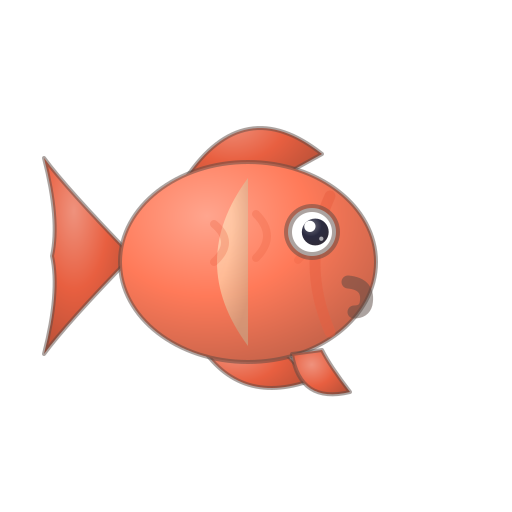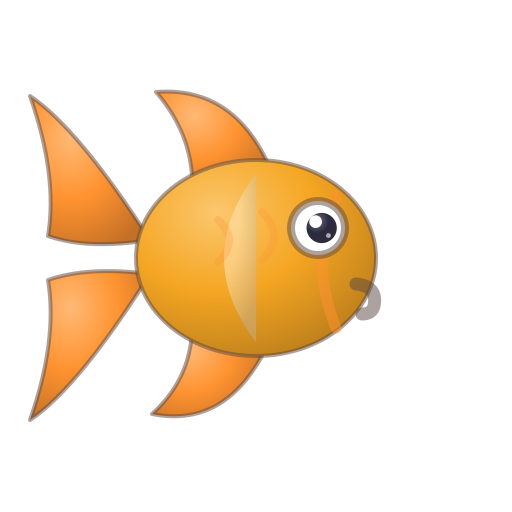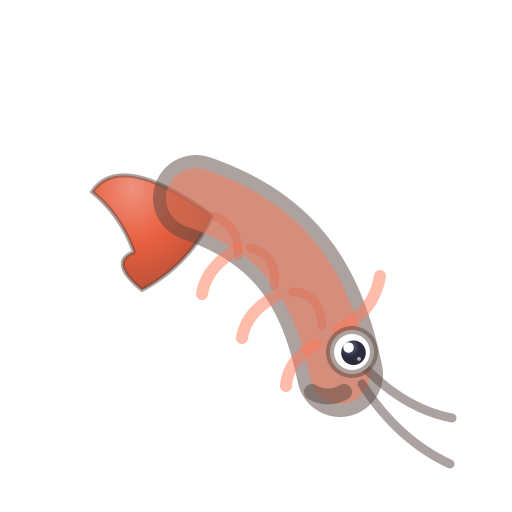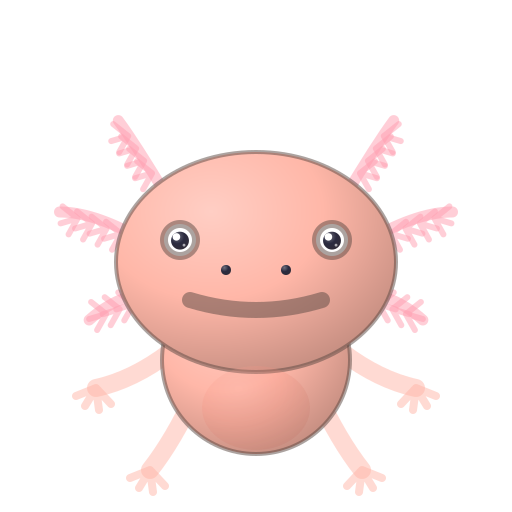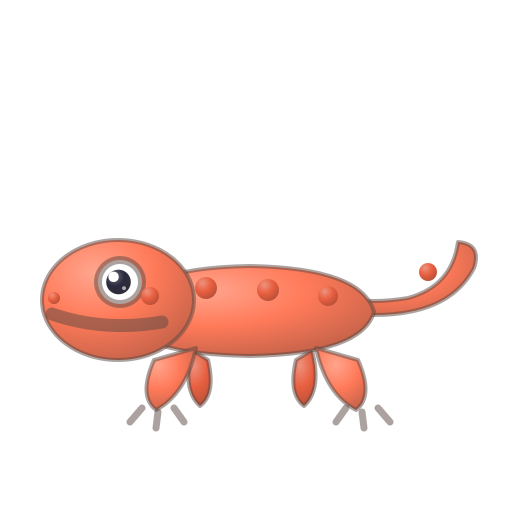

Newts and salamanders are peaceful, slow, and fascinating amphibians for watching. Many newts are semi-aquatic (water plus a land area), stay small, and live a long time. They have delicate skin, so they're a hands-off pet for gentle, patient keepers.
Is a newt & salamander a good pet for kids?
Quick answer: Newts and salamanders are good pets for the right kid. Newts and salamanders are peaceful, slow, and fascinating amphibians for watching.
- 👍 Best for: calm, quiet, and long-lived, small and low-cost
- 👀 Keep in mind: a watch, don't handle pet (delicate skin)
- ⏳ Lifespan: 10–15 years
- 💲 Ongoing cost: about $10–$25/mo (setup & vet extra)
📋 Newt & Salamander at a glance
Should I get a newt or salamander?
💚 Why you'll love a newt or salamander
- Calm, quiet, and long-lived
- Allergy-friendly
- Small and low-cost
- Some can regrow body parts
⚠️ Things to know
- A watch, don't handle pet (delicate skin)
- Need cool, clean water
- Eat live or frozen foods
- Can be shy and hide a lot
The honest answer: Yes for a patient watcher, no for a toucher: many newts carry skin toxins, so this is a pet you admire through glass rather than pick up.
👍 Get one if…
- You're patient and enjoy a shy, hiding pet
- You'll pick the exact species before buying gear
- Your teen wants a decade-long pet on a small budget
👎 Think again if…
- Your kids touch first and wash hands later
- You're squeamish about live worms and frozen bloodworms
- You can't yet tell a newt from a salamander
- Your children want a pet visible all day
✅ Am I ready for a newt or salamander?
Wanting one and being ready for one are different questions. These are the ones worth answering honestly before you decide — there are no wrong answers, and a "not yet" is a perfectly good result.
Newts are watch-only pets — many have mild skin toxins, and our skin oils can hurt THEM too. Okay with hands-off?
- A mini dragon to observe — perfect
- Mostly
- I want to handle my pet
If that one gave you pause: Newts are look-don't-touch (and wash hands if you ever must move one!). Want hands-on? Retake the quiz.
Newts like COOL water — often no heater needed, but hot summers can be dangerous. Is your home newt-temperature?
- Our house stays cool — easy
- Summers get warm
- It's hot here
If that one gave you pause: Check your room temps in summer with a grown-up — newts may need a fan or cooler room when it's hot.
How to care for your Newt & Salamander
Newt & Salamander care in depth
Choosing the right newt or salamander
"Newt" covers many species with different needs, so choose one before you buy. Fire-belly newts and Eastern (red-spotted) newts are the most common, hardy, mostly-aquatic beginner choices; tiger salamanders are largely land-dwelling and like to burrow. Buy captive-bred animals where possible — they are healthier and it spares wild populations.
Match the enclosure to the species: a semi-aquatic newt needs mostly water with a land area, while a terrestrial salamander needs mostly moist land. Getting this backwards is the number-one beginner mistake.
Tank setup and water quality
Newts are cool-water amphibians — most do best around 60–68°F, and warm water is a real health risk, so skip the heater and cool the room in summer if needed. Use gentle filtration (they dislike strong current), and always treat tap water with a dechlorinator, because their permeable skin absorbs whatever is in the water.
A secure, fully covered lid is essential: newts are escape artists and squeeze through the smallest gap. Keep water clean with small, regular changes rather than big disruptive ones.
Newt vs. salamander vs. axolotl — what is the difference?
These are easy to mix up. Newts are a kind of salamander that spends much of its life in water and has rougher skin. Other salamanders are more terrestrial with smooth, moist skin. An axolotl is a fully aquatic salamander that never leaves the water and needs its own chilled, filtered aquarium.
All three are hands-off, watch-not-hold pets, but their setups differ — so decide which animal you actually want before buying gear.
Newts and salamanders are quiet, slow-moving amphibians that are best enjoyed by watching, not handling — their skin is very delicate. Many live 10–15+ years.
✅ Before you bring a newt or salamander home
🗓️ Your routine — easy chores to remember
- Check temperature and water clarity
- Feed (amount depends on type and age)
- Quick health check
- Test and partly change the water
- Remove leftover food
- Clean the glass and check the filter
- Deeper water change
- Rinse filter media
- Restock conditioner and test kit
💰 Monthly cost: Low: a small tank and simple equipment.
🤩 Fun facts about your Newt & Salamander
Newts and salamanders can regrow a lost leg or tail.
❓ Common questions about newts and salamanders
How much does a newt or salamander cost per month?
Plan on roughly $10–$25 per month for food and supplies. Low: a small tank and simple equipment.
Are newts and salamanders good pets for kids?
They can be — newts and salamanders rate 3/5 for kid-friendliness, so they suit gentle, slightly older kids. Hands-off — their skin absorbs everything. Just watch and feed.
How long do newts and salamanders live?
Newts and salamanders typically live 10–15 years. Make sure your family is ready for that commitment before bringing one home.
Are newts and salamanders allergy-friendly?
No fur or dander, so allergy-friendly. Wash hands before and after — and never with lotion on.
Should I get a newt or salamander?
Yes for a patient watcher, no for a toucher: many newts carry skin toxins, so this is a pet you admire through glass rather than pick up. Get one if: You're patient and enjoy a shy, hiding pet; You'll pick the exact species before buying gear; Your teen wants a decade-long pet on a small budget. Think again if: Your kids touch first and wash hands later; You're squeamish about live worms and frozen bloodworms; You can't yet tell a newt from a salamander; Your children want a pet visible all day.
What is the best newt for a beginner?
Fire-belly newts and Eastern (red-spotted) newts are the usual beginner picks — small, hardy, and long-lived. Most are still caught in the wild rather than bred, and the US now bans importing them to keep out a fungus that kills salamanders, so look for a keeper who breeds their own, and match the tank to its semi-aquatic needs.
Can you hold a pet newt?
It is best not to. A newt's skin is delicate and absorbs oils, salt, and chemicals from your hands, and many newts carry a powerful toxin in their skin. It is harmless on unbroken skin, but it must never get into eyes, a mouth, or a cut. Wash your hands before and after any necessary handling, and otherwise just watch and feed.
What do pet newts eat?
Small live or frozen foods such as bloodworms, blackworms, brine shrimp, and chopped earthworms. Feed aquatic newts in the water a few times a week, and remove uneaten food so it does not foul the tank.
How long do pet newts live?
Many pet newts live 10–15 years, and some species longer, so despite their small size and low cost they are a genuine long-term commitment.
🎬 Newt & Salamander care videos
Watch beginner-friendly care videos for your newt or salamander.
▶ Watch Newt & Salamander care videos on YouTube📚 Where this comes from
We check our care advice against vets, animal charities, and government health guidance. Here is what this page is built on.
Vets, charities & official guidance
- Introduction to amphibians — Merck Veterinary Manual
- Importation of live or dead amphibians, 50 CFR 16.14 — eCFR
- Salamanders as injurious wildlife: FAQs — US Fish & Wildlife Service
Keeper & species-community guides
Checked August 2026. These are other people’s websites, and none of it replaces your own vet — if a pet seems unwell, call one.