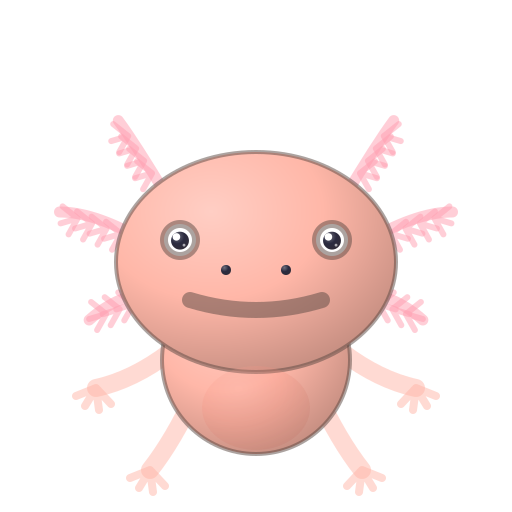
 Axolotl vs
 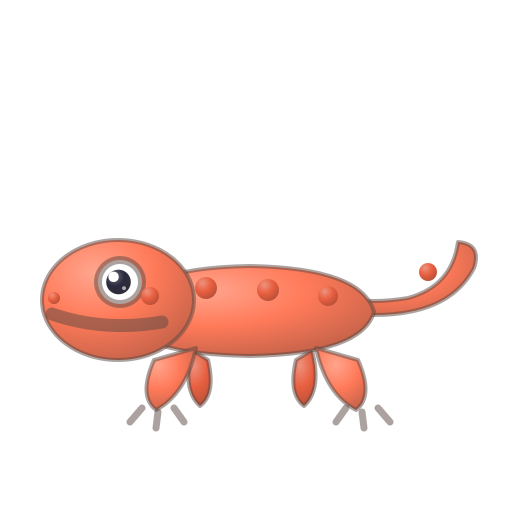 Newt & Salamander: Which Pet Should You Get?
Torn between an axolotl and a newt or salamander? Here's an honest side-by-side look at cost, care time, space, and kid-friendliness — using the same data that powers our pet quiz.
Quick answer: For most families, a newt or salamander is the easier choice — it needs less experience and costs less per month. Neither is better overall — it comes down to your family's space, time, and budget.
| Axolotl | Newt & Salamander | |
|---|---|---|
| Monthly cost | $25–$55/mo | $10–$25/mo ✓ |
| Space needed | A home with no yard | Small space |
| Daily time | Some | A little |
| Cuddle factor | Best to watch | Best to watch |
| Handling | Look, don't touch | Look, don't touch |
| Awake when | Night owl | Dawn & dusk |
| Company | Must live alone | Fine alone or paired |
| Experience needed | For experts | Some experience |
| Lifespan | 10–15 years | 10–15 years |
| Kid-friendly | ★★★☆☆ | ★★★☆☆ |
| Allergy-friendly | ✅ Yes | ✅ Yes |
Choose an axolotl if…
- you simply love axolotls — sometimes the heart knows!
Choose a newt or salamander if…
- you want the lower monthly cost (about $10–$25 vs $25–$55)
- you want a pet that's awake when your kid is (the axolotl sleeps through most of the day)
- you have less time for daily care
- you're short on space
- this is your family's first pet
Axolotl at a glance
Axolotls are smiley, alien-looking amphibians that have become hugely popular. They live underwater their whole lives, need cool water (no heater), and are watched rather than handled. They're a fascinating intermediate pet — easy once the tank is set up right, but sensitive to warmth and the wrong setup.
Newt & Salamander at a glance
Newts and salamanders are peaceful, slow, and fascinating amphibians for watching. Many newts are semi-aquatic (water plus a land area), stay small, and live a long time. They have delicate skin, so they're a hands-off pet for gentle, patient keepers.
What really makes them different
Water setup and temperature
An axolotl is fully aquatic and never leaves the water, so it lives in a fish-style tank. It needs cool water, around 60-68°F, and often no heater — sometimes even a chiller in summer. Many newts and salamanders are semi-aquatic, needing both water and a land area to climb out. So an axolotl is an all-water pet, while a newt usually needs water plus land.
Watch-only, don't handle
Both of these are look-but-don't-touch pets. Axolotls have delicate skin and gills and should not be handled. Many newts and salamanders have toxic skin that can irritate your eyes, nose, and skin, so you should avoid holding them and always wash your hands after tank care. Both can live about 10-15 years, making them fascinating, long-lived watch pets.
🧠 Test your knowledge
❓ Common questions
Can my child hold an axolotl or a newt?
No. Axolotls have delicate skin and gills and shouldn't be handled, and many newts have toxic skin. These are watch-only pets.
Does an axolotl need a heater?
Usually the opposite. Axolotls need cool water around 60-68°F, and warm rooms may even need a chiller.
How long do they live?
Both can live about 10-15 years with good care.
 Aquatic Frog vs