🎡 How to Find the Best Hamster Wheel: Size, Safety & Silence
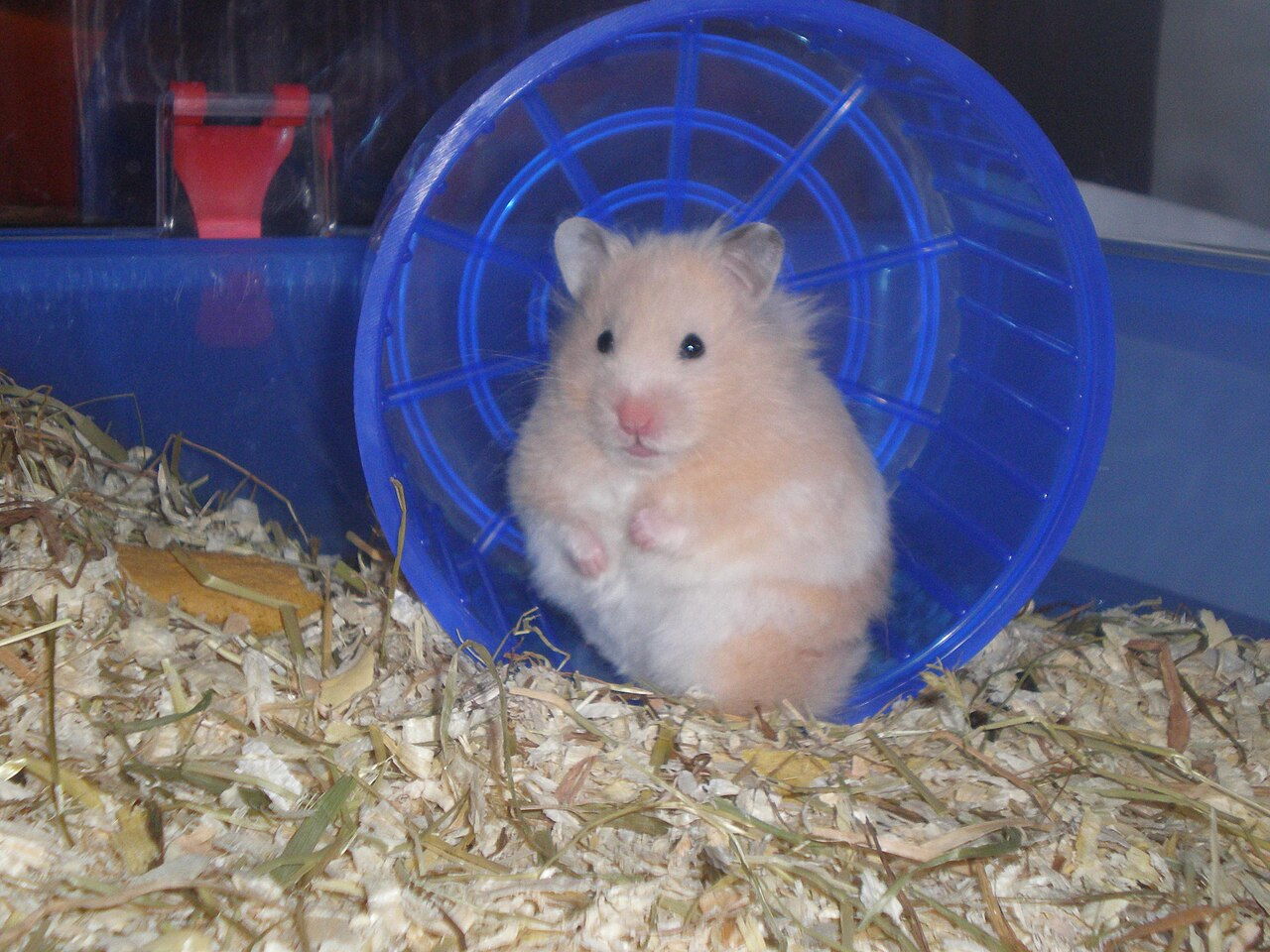
For a hamster, the running wheel is the most important item in the whole cage — so it is worth choosing carefully. Hamsters run several miles every single night, and the wheel is where most of that energy goes. A great wheel comes down to three things: it is big enough, it is safe underfoot, and it is quiet. Get those right and you will have a happy, well-exercised hamster and a peaceful night's sleep.
Why wheel size matters
Size is the number one thing people get wrong. It may seem like a small detail, but the wheel is where your hamster spends much of its waking life, so its size shapes their long-term health more than almost any other choice. When a wheel is too small, your hamster has to run with its back curved into an arch, and over time that unnatural posture can cause real discomfort and strain. The goal is a wheel large enough that the back stays flat and straight while running. Here is the catch: the small wheels bundled with many starter cages are almost always too small, no matter what the box says. Treat the included wheel as a placeholder and plan to size up.
Solid surface & safety
Look for a solid, continuous running surface with no wire rungs or mesh. On a barred or mesh wheel, little feet and legs can slip through the gaps, which leads to painful injuries and sore hocks over time. A smooth, solid floor supports the whole foot and lets your hamster run naturally and safely. Cheaper wheels often use crossbars because they are simple to make, but they are a false economy once you have seen a hamster catch a foot. If a wheel only comes with rungs, keep looking.
Silence & stability
Because hamsters run at night, a noisy wheel can keep the whole household awake. The quietest wheels spin on a smooth, well-made bearing; a wobbly or poorly fitted axle is what causes that maddening middle-of-the-night squeak. Stability matters too. Choose a wheel with a heavy, stable base or one that clips securely to the cage so it cannot tip, rock, or shift while your hamster sprints. A little upfront care here saves you from the familiar 3 a.m. rattle that has driven many owners to move the cage out of the bedroom.
Wheel size by species
Match the wheel to your pet. A Syrian hamster needs a large wheel of about 11 to 12 inches so its back stays flat. Dwarf hamsters need at least 8 inches (20cm), and most are happier on 9 to 10 inches — nothing under 8 inches is big enough for any hamster. The same rules apply to mice and gerbils, too: solid surface, correct size, and steady running. Why the fuss over an inch or two? On a wheel that is slightly too small, the difference between a flat back and an arched one is exactly the margin that keeps your pet comfortable night after night. When in doubt, size up rather than down.
Quick wheel checklist
- Big enough that your pet's back stays flat, never curved
- Syrian hamsters: about 11 to 12 inches
- Dwarf hamsters and mice: at least 8 inches, ideally 9 to 10
- Solid running surface — no wire rungs or mesh
- Quiet, smooth ball-bearing axle to avoid squeaks
- Heavy base or secure clip so it will not tip
- Same rules apply to gerbils and mice
Once the wheel is sorted, make sure the rest of the enclosure measures up too — see our guide to the best hamster habitat, or take our free pet quiz to find your perfect pet.
🛒 Recommended supplies
Hand-picked gear for this guide. Affiliate links — we may earn a commission. The $/$$/$$$ badges are a rough budget guide, not live prices.