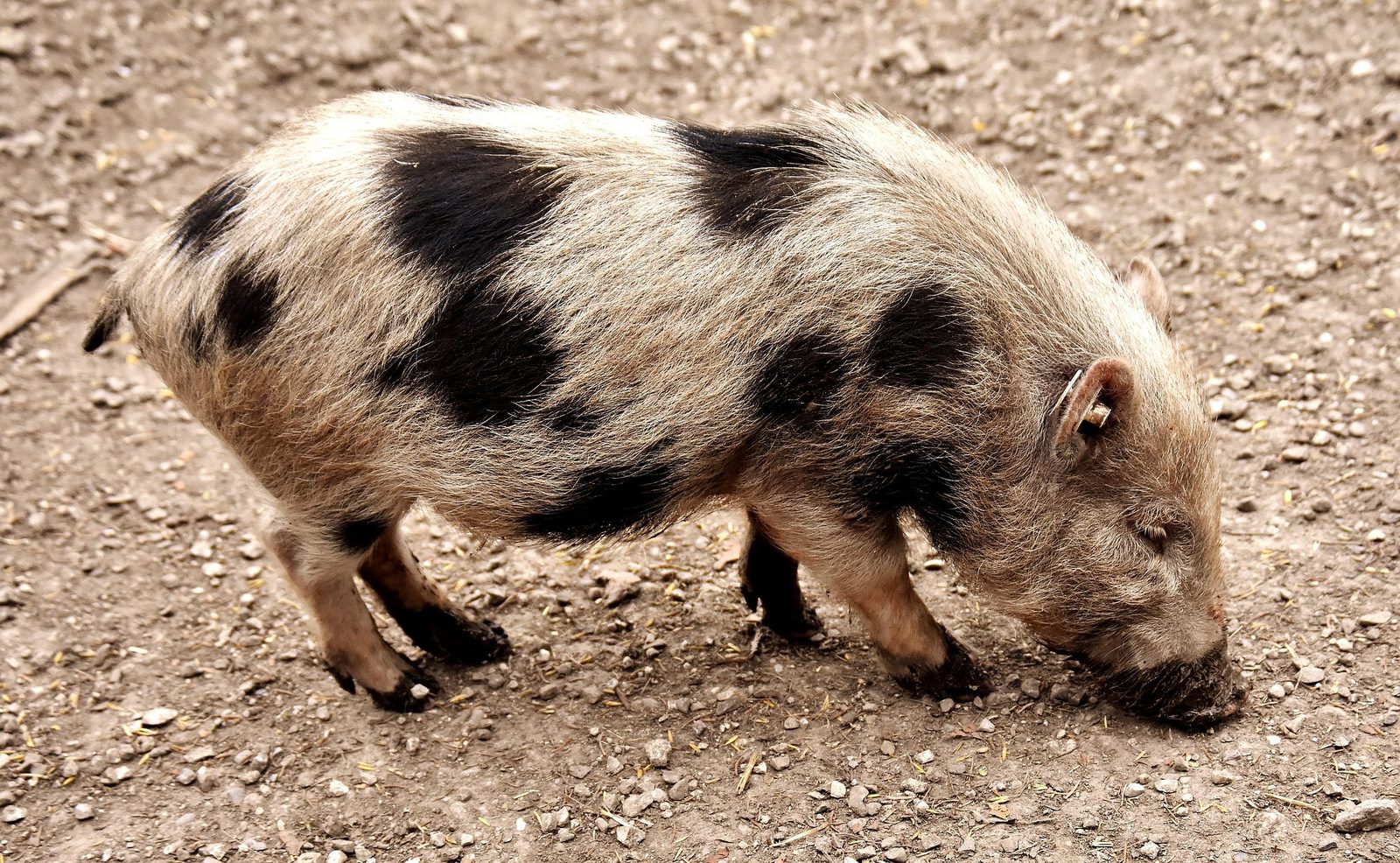
Mini pigs (pot-bellied and similar) are brilliant, affectionate, and trainable — but they are NOT teacup-tiny. Even "mini" pigs usually reach 100–150 pounds or more, take two or three years to finish growing, live up to 20 years, love to root and push, and are usually banned in cities. A wonderful but serious commitment for prepared rural families.
Is a mini pig a good pet for kids?
Quick answer: Mini pigs are good pets for the right kid. Mini pigs (pot-bellied and similar) are brilliant, affectionate, and trainable — but they are NOT teacup-tiny.
- 👍 Best for: extremely smart and trainable, can be litter/leash trained
- 👀 Keep in mind: get big — "teacup" pigs are a myth
- ⏳ Lifespan: 12–20 years
- 💲 Ongoing cost: about $50–$120/mo (setup & vet extra)
📋 Mini Pig at a glance
Should I get a mini pig?
💚 Why you'll love a mini pig
- Extremely smart and trainable
- Affectionate and bond closely
- Can be litter/leash trained
- Long-lived companions
⚠️ Things to know
- Get big — "teacup" pigs are a myth
- Usually banned in cities (livestock)
- Root, push, and need lots of space
- Need a careful diet to avoid obesity
The honest answer: Not unless you have land, zoning permission, and twenty years in mind — the teacup pig is a myth, and rescues are full of the piglets that grew up.
👍 Get one if…
- You're rural and planning two decades ahead
- You're expecting a 150-pound adult, not a piglet
- You have land to root and space for two
- You're ready to train daily and measure every meal
👎 Think again if…
- You're shopping for a teacup or micro pig
- You're in a city apartment or an HOA that bans livestock
- You're attached to your lawn and floorboards
- You'd rehome a pig once it's grown
✅ Am I ready for a mini pig?
Wanting one and being ready for one are different questions. These are the ones worth answering honestly before you decide — there are no wrong answers, and a "not yet" is a perfectly good result.
"Mini" pigs aren't mini — most grow to 70–150+ lbs (bigger than many dogs!). Is your family ready for a PIG-sized pig?
- Yes — we know "mini" means "smaller than a farm pig"
- I hoped teacup-sized
- The internet lied to me!
If that one gave you pause: Look up photos of "adult mini pig" with a grown-up — anyone promising a forever-tiny pig isn't telling the truth.
Pigs are as smart as dogs (maybe smarter) — bored pigs open fridges, flip trash cans, and dig up floors. Can you keep a genius busy every day?
- Puzzle toys, training, rooting box — daily plan ready
- Some days
- That sounds exhausting
If that one gave you pause: Plan daily enrichment like you would for a toddler: treat puzzles, training sessions, and a rooting box (a dig-friendly dirt zone).
How to care for your Mini Pig
Mini Pig care in depth
"Teacup" pigs don't exist
The single most important thing to know: there is no such thing as a teacup or micro pig. So-called "mini" pigs (pot-bellied and similar) still reach 100 to 150+ pounds as adults, and they are not full grown until they are two or three years old. Sellers who show a tiny "teacup" often do it by underfeeding the parents (which is cruel) or simply showing a baby. Countless mini pigs are surrendered when families realize the piglet became a large, strong adult. Go in expecting a big, long-lived animal.
Usually banned — and a 12–20 year commitment
Because they're classified as livestock, mini pigs are illegal in most cities and many suburbs, and HOAs often ban them too — check your zoning before you fall in love. Pigs also live 12 to 20 years, so this is a decades-long commitment on the scale of a dog's whole life or longer. They need a pig-proofed home or secure yard with a wallow and shade, plus space to root — a deep natural instinct, so they'll turn over a lawn or push at floors.
Brilliant, but they need training and a careful diet
Pigs are as smart as dogs — highly trainable, food-motivated, and affectionate — but that intelligence means a bored or spoiled pig becomes pushy and destructive, so they need structure, training, and enrichment. Diet is the other big issue: pigs overeat and gain weight fast, and obesity causes serious health problems, so feed a measured, balanced mini-pig ration plus veggies — never dog food or table scraps as a staple. They also need hoof and tusk care and a vet who treats pigs.
Pet 'mini' pigs are smart, affectionate, and trainable — but they grow much bigger than people expect and live 12–20 years. They're a serious, long commitment.
✅ Before you bring a mini pig home
🗓️ Your routine — easy chores to remember
- Measured meals and fresh water
- Outdoor rooting and exercise time
- Training and attention
- Potty clean-up
- Clean their sleeping area and potty spot
- Scrub bowls
- Health and weight check
- Deep-clean their spaces
- Hoof and skin care
- Vet visits, vaccines, and trims as scheduled
💰 Monthly cost: Higher: vet care, good food, fencing, and a 12–20 year commitment.
🤩 Fun facts about your Mini Pig
Pigs are smarter than dogs and can learn their name and tricks.
❓ Common questions about mini pigs
How much does a mini pig cost per month?
Plan on roughly $50–$120 per month for food and supplies. Higher: vet care, good food, fencing, and a 12–20 year commitment.
Are mini pigs good pets for kids?
They can be — mini pigs rate 3/5 for kid-friendliness, so they suit gentle, slightly older kids. Patient training and gentle handling; pigs hate being picked up but love scratches and games.
How long do mini pigs live?
Mini pigs typically live 12–20 years. Make sure your family is ready for that commitment before bringing one home.
Are mini pigs allergy-friendly?
Pigs have hair rather than dense fur and little dander, so some allergy-sensitive people do better with them — but no pet is allergy-proof.
Should I get a mini pig?
Not unless you have land, zoning permission, and twenty years in mind — the teacup pig is a myth, and rescues are full of the piglets that grew up. Get one if: You're rural and planning two decades ahead; You're expecting a 150-pound adult, not a piglet; You have land to root and space for two; You're ready to train daily and measure every meal. Think again if: You're shopping for a teacup or micro pig; You're in a city apartment or an HOA that bans livestock; You're attached to your lawn and floorboards; You'd rehome a pig once it's grown.
Are teacup pigs real?
No. There is no such thing as a teacup or micro pig. "Mini" pigs still grow to 100–150+ pounds as adults. Photos of tiny "teacup" pigs are usually babies or the result of unhealthy underfeeding, and many are surrendered once they grow up.
How big do mini pigs get?
Even the smallest pet pig breeds typically reach 100 to 150 or more pounds and can live 12–20 years. Plan for a large, strong, long-lived animal, not a small lap pet.
Are mini pigs legal to own?
Often not. Pigs are classified as livestock and are banned in most cities and many suburbs, and HOAs frequently prohibit them. Always confirm your local zoning and HOA rules before getting a pig.
What do mini pigs eat?
A measured, balanced commercial mini-pig feed plus vegetables. Pigs overeat and become obese easily, which causes serious health problems, so portion control matters — and never feed dog food or table scraps as a staple.
🎬 Mini Pig care videos
Watch beginner-friendly care videos for your mini pig.
▶ Watch Mini Pig care videos on YouTube📚 Where this comes from
We check our care advice against vets, animal charities, and government health guidance. Here is what this page is built on.
Vets, charities & official guidance
- Overview of miniature pet pigs — Merck Veterinary Manual
- Feeding miniature pet pigs — Merck Veterinary Manual
- Keeping a pet pig — Texas A&M School of Veterinary Medicine
- Keeping pigs as pets — RSPCA
Keeper & species-community guides
Checked August 2026. These are other people’s websites, and none of it replaces your own vet — if a pet seems unwell, call one.